Zoysia turning brown usually means it’s dormant, not dead: the blades brown while crowns and roots stay alive below ground storing energy, so don’t rip it out yet. Do a gentle tug or dig a 2–4 inch plug to check for firm, light‑brown/white roots and intact crowns, water deeply but sparingly to avoid rot, and wait for soil temps near 60–65°F for green‑up. Now follow a few simple checks and care steps to confirm recovery and next actions.
Some Key Takeaways
- Brown, flexible blades with firm crowns usually indicate dormancy, not death — roots remain alive below ground.
- Check roots/crowns by digging 2–4 inches; firm, light-brown/white roots signal viability.
- Perform a gentle tug test; living turf resists removal and brings soil with the root mass.
- Wait for consistent soil temperatures near 60–65°F for green‑up rather than relying on air temperature.
- Water moderately and avoid late high‑nitrogen fertilizer or heavy traffic while turf is dormant.
Search Intent and Best Format: Informational Explainer Plus Practical How-To
Because you’re probably trying to figure out whether your Zoysia is merely sleeping or actually dead, start by treating this topic as both an explanation and a how-to guide: I’ll explain what dormancy is, what to look for, and then walk you through simple tests and next steps so you can act with confidence. You’ll want an informational explainer that also gets practical, because when your Zoysia grass turns brown you need context and clear steps, now. Dormancy means the blades brown while roots and growing points stay alive underground, and the key is recognizing flexible, golden-brown blades and uniform browning from cool soil temps, then doing a tug or digging a small patch to check firm roots. If roots cling, irrigate normally, avoid heavy feeding or traffic, and wait for sustained warmth to prompt green-up. Regular light maintenance with the right lawn care equipment helps lawns recover faster and stay healthy, especially for zoysia grass.
What Dormancy Looks Like in Zoysia : Why Brown Doesn’t Equal Dead
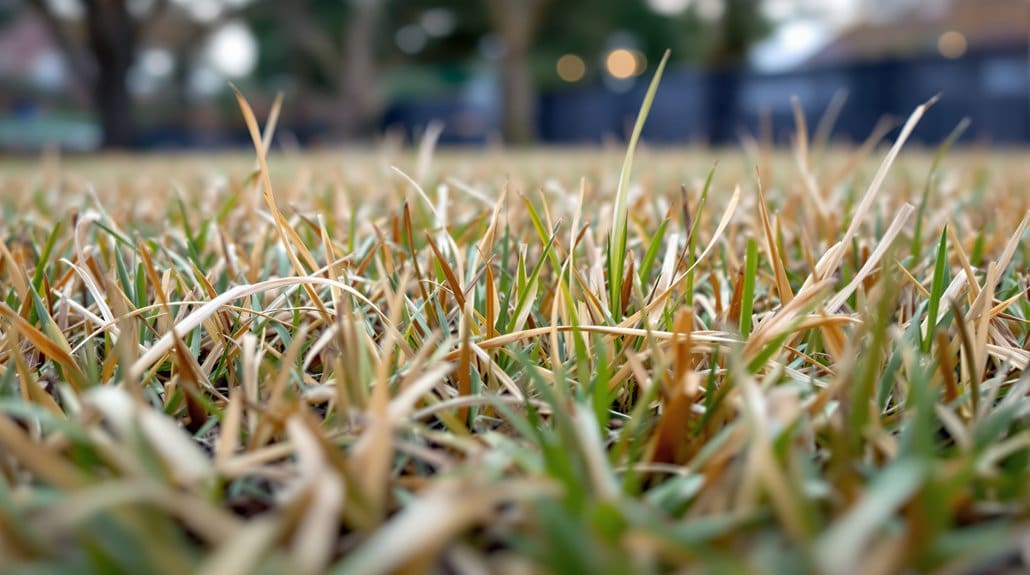
You’ll notice zoysia turns golden‑brown above ground in dormancy, but that doesn’t mean it’s dead—roots and growing points stay alive below the surface, keeping the turf viable even when blades lose chlorophyll. Now, the key is to check soil temperature and moisture rather than the air: when soil warms to about 65°F consistently and you begin deep, infrequent watering during active growth, the grass will green up from those living crowns and roots. If blades stay flexible and resist a gentle tug, leave them alone and avoid fertilizing or heavy traffic until you see new green shoots, because pushing it while the plant’s still dormant can cause damage and won’t help. Homeowners who mow and water regularly should also consider improving soil health with soil conditioners to support recovery and long-term turf vigor.
Dormant Root Activity
When your zoysia turns that familiar golden‑brown, don’t assume it’s gone—what you’re usually seeing is dormancy above ground while the real work continues below the surface, and the key is knowing how to check for life in the roots. You’ll find that roots remain firm and often light brown to white, holding moisture and nutrients, and that the growing points at the soil surface stay alive, ready to green up. Now, the essential driver is soil temperature, not air temperature, so don’t panic on a cool morning; once soil temps hit about 60–65°F consistently, growth resumes. This is where a simple plug test helps—gently tug a small sod plug, feel for roots clinging, water deeply, then watch for recovery over warm days. Proper lawn care tools and timely maintenance improve recovery and help ensure zoysia returns lush and green.
Blade Color Changes
If your zoysia has gone that familiar golden‑brown, don’t assume it’s dead—what you’re seeing is usually dormancy above ground while the crowns and roots stay alive below the soil, and the key is learning how to tell the difference so you don’t overreact. On a Zoysia lawn, dormant grass keeps a tan or golden-brown tone and the blades stay somewhat flexible, you’ll sometimes spot isolated green tillers at growing points, which is a good sign, and that contrasts with true brown grass that’s pale, brittle, and crumbles. Now check blades gently, tug near the crown, and note uniform browning versus patchy collapse; soil temperature controls green-up, so wait for consistent warmth before treating, this is where patience pays. For homeowners managing their lawns, using the right tools and products helps maintain zoysia through dormancy and into spring growth, so consider lawn care equipment that’s designed for routine maintenance.
Response To Watering
You’ve already learned to read the blades and crowns, now let watering be your next test: give the lawn a series of deep irrigations totaling about 1–2 inches a week for a few weeks and watch for the subtle signs of life that separate dormancy from death. Now, water deeply but thoughtfully, because zoysia’s return hinges on soil temperatures and living roots, not just green blades; when roots are firm and pale they’ll clutch the soil and respond, when they’re dark and mushy they won’t. This is where patience pays: in cool, wet springs a warm afternoon won’t cut it, the key is consistent warmth at the root level. If you’re unsure, nudge the system with those deep waters, then wait for the telltale green. Consider pairing this approach with drought-resistant grass seeds to further improve recovery and long-term resilience.
How Zoysia Dormancy Works: Roots Survive While Blades Pause Growth
Now you’ll see that when soil temps dip below about 65°F (18°C), Zoysia’s blades turn golden‑brown while the root system stays alive, storing carbohydrates and keeping the plant ready. This is where the grass pauses leaf growth, redirects energy to growing points at the soil surface and to root reserves, and preserves firm, usually white to light‑brown roots that won’t pull away like dead turf. The key is to watch soil temperature and moisture—if roots stay hydrated they’ll hold through dormancy for weeks to months and, once conditions warm or rehydrate, you’ll get a reliable green‑up. Proper lawn care tools and accurate pH testing help homeowners monitor soil moisture and health to support Zoysia through dormancy.
Roots Stay Alive
When zoysia goes dormant and the blades turn a clear golden‑brown, don’t assume the lawn’s dead—what’s happening is the plant’s above‑ground parts are pausing growth while the root system stays alive, holding onto water and stored carbohydrates so the grass can spring back when conditions improve. You’re part of a community that cares for this turf, so know the roots stay alive through dormancy, often firm and light‑colored rather than rotten, and you can check by digging 2–4 inches to feel roots clinging to soil. The key is soil temperature, not air, so don’t rush recovery; wait until soil is consistently near 65°F, then provide moisture and gentle encouragement, and those viable buds will regenerate new growth. For healthier recovery, consider improving soil and using proper soil amendments to support root health and spring green-up.
Blades Pause Growth
Often the top growth simply takes a break, and you’ll see zoysia blades turn a clear golden‑brown because the plant has shut down leaf activity while protecting the living parts at the soil line. You’ll notice chlorophyll fades, leaves crisp and brown, yet crowns and buds at the surface stay viable, cushioned by insulating leaf tissue; the key is that roots remain alive, just slower, storing energy and conserving water so they can restart. Now, if heat or drought caused dormancy, deep watering can prompt quicker green‑up because roots are still responsive; this is where a small soil check helps, you’ll look for firm, light roots that cling to soil, not dark, rotten ones. Trust the process, act deliberately, and you’ll see recovery. For healthier recovery and stronger roots, consider using potassium-rich fertilizers to support stress tolerance and overall turf vigor, especially when managing potassium fertilizers for home lawns.
Quick Checks to Tell Dormant Zoysia From Dead Turf
You’ll want to run through a few quick checks to figure out whether your zoysia is merely sleeping for the season or actually gone, and the key is a simple, hands-on approach that gives you fast, reliable answers. Start by looking for signs of Zoysia Dormancy: golden-brown blades with some flexible tips and scattered green patches mean it’s likely still alive, while pale, brittle straw suggests trouble. Now, do a root/soil check by digging 2–4 inches; firm, whitish or light-brown roots indicate life, dark mushy or crumbly roots mean death. The tug test gives a quick confirm: dormant turf resists and holds roots, dead turf pulls out easily. If you still doubt, water about an inch weekly for 2–3 weeks and watch for green-up.
The Tug Test: How to Inspect Roots Without Specialist Tools
Now try a quick grip test: gently grasp a small tuft of Zoysia and pull straight up, because the way the soil and roots come away tells you a lot about root condition. If the soil lifts with light-colored, firm roots still attached, the grass is likely dormant and you’ll see the crown stay put, but if the clump comes away easily, with dark, mushy roots and the crown detaches, that usually means the grass is dead. The key is to check several spots—sunny, shaded, low areas—and after you bump up irrigation for a few days, repeat the tug test to watch for firmer root attachment or green regrowth as clear signs of life.
Quick Grip Test
Grab a small tuft of grass and give it a firm tug, because the quick grip test is the simplest way to tell whether your zoysia is truly dormant or actually dead. You’ll feel resistance when roots are holding, and that resistance, after a bit of watering, often precedes a reliable green up, so don’t panic if blades look brown. Now, do the tug test in several spots, sunny and shaded, since dormancy is usually uniform while isolated death shows mixed results; if clumps pull out with little soil, that’s a warning. This is where patience pays: avoid ripping aggressively, retest in 2–3 weeks as soil warms toward 65°F, and let the root response, not just leaf color, guide your next steps.
Root Condition Check
If the grass feels loose when you tug it, don’t ignore that warning, but if the crown and a bit of soil resist and come up with the pull, you’ve probably got living roots—this quick check, done gently in a few spots, tells you more than blade color alone and helps decide whether to wait or intervene. Now, dig a small 2–4 inch plug, gently inspect the roots; healthy, dormant zoysia roots will be firm, white to light brown, and cling to soil, while dead roots look dark, brittle, or rotten. Squeeze blades at the base for moisture, smell the root zone for earthiness, and after thorough watering repeat the tug test in 7–14 days to watch for signs that roots are still alive.
Interpreting Results
You’ve already got a feel for how the turf behaves under a gentle tug, and this is where you convert those small checks into a confident read of root health; the key is to look for consistent physical cues across several spots and to compare what you see with how the soil feels. Now, if clumps resist and soil stays attached, that’s a strong sign the grass is dormant, the roots intact, so don’t rush to tear it out; if crowns pull away easily and roots are loose or missing, that points to death. Dig a small plug to confirm—firm, light-colored roots mean dormancy, dark mushy roots mean decay. After you give about an inch or two of water per week, repeat the tug test to watch for recovery.
The Watering Test: When Extra Water Will Revive Zoysia and When It Won’t
Think of the watering test as a careful experiment you run on your lawn: now that Zoysia has gone brown, the key is to give it enough water to show whether those roots are merely dormant or actually dead, and to avoid the two common mistakes—too little, which won’t revive stressed but living turf, or too much, which can hide root failure and cause rot. Start by noting soil temperatures, because Zoysia won’t green until soils warm to about 65°F even with added water, and this is where patience matters. For heat or drought dormancy, deep water 0.5–1 inch once or twice weekly, check roots 2–4 inches down for firmness, and if no flex, new blades, or greening after 10–14 days, accept replacement.
Soil and Root Excavation: The Definitive Dead-vs-Dormant Inspection
Grab a small trowel and get ready to dig a few 2–4 inch (5–10 cm) plugs in different spots, because the quickest way to tell dead from dormant Zoysia is down in the soil at the roots and crown; the key is to look for firm, light-colored roots that cling to the soil and plump, intact crowns—signs the turf is dormant—or for dark, mushy, crumbling roots and shriveled crowns that mean the grass is gone. Now, perform a gentle plug test and tug the sample, you’ll feel resistance if roots are alive, and loose plugs if they’re dead, this is where soil moisture and smell tell you more, soggy, sour soil hints rot, dry soil suggests dormancy. If unsure, water and recheck for white root tips or green shoots in 7–14 days.
Short-Term Care for Dormant Zoysia : What to Do (And Avoid) Now
Now that you’ve checked roots and crowns and can tell whether your Zoysia is sleeping or gone, it’s time to give dormant turf the gentle care it needs so it survives until warmth returns. You’ll want to keep foot traffic and heavy items off the lawn, because dormant crowns recover slowly and crushing them can create lasting damage, and the key is patience. Water sparingly, about a quarter inch every two weeks or just enough to prevent desiccation, avoiding deep, frequent irrigation that invites disease. Don’t fertilize until soil temps hit roughly 65°F and green-up starts, and mow minimally at a higher setting to protect growing points. Now inspect doubtful spots with a small tug/root test before assuming replacement is needed.
How to Repair Truly Dead Patches: Overseed, Sod, or Replace?
When a patch is truly dead, you’ll want to act deliberately rather than guess—this is where a quick tug test or a small 2–4 inch plug dig can save you time and money, because dead turf pulls out easily and shows dark, mushy, or absent roots while dormant zoysia will have firm, pale roots that won’t come away. If the spot is under a square foot, rake out dead material, loosen the top 2–3 inches, then choose seed or a plug/patch-sod piece, keep it lightly moist 2–3 times daily until it roots, and keep off it. For larger areas, remove dead turf, add 1/4–1/2 inch topsoil, then overseed cool-season or plug/patch-sod zoysia in late spring when soil hits about 65°F, water to total ~1 inch weekly, and wait 4–6 weeks before fertilizer so new roots establish.
Preventing Prolonged Dormancy and Winter Kill in Future Seasons
If you want your zoysia to bounce back faster and skip prolonged dormancy or winter kill, start treating fall as the essential prep season, because the work you do now pays off when soil temperatures drop. Now, the key is balanced timing: apply a low-nitrogen fertilizer (think 3-1-2) six to eight weeks before hard frost so roots store carbohydrates without pushing tender top growth, and avoid high-nitrogen after mid- to late-October. This is where aeration helps—core aerate in late spring or early fall to relieve compaction, improve oxygen and water flow, and prevent summer stress that deepens dormancy. Mow at proper heights, limit late irrigation so turf hardens off, and choose cold-hardy cultivars, planted early enough to root well before winter.
Some Questions Answered
Does Brown Grass Mean It's Dead?
Not necessarily — brown grass often means dormancy, not death, and during winter care you’ll want to check soil moisture and roots before panicking. Now, tug gently: dormant turf resists and has firm roots, while dead grass pulls out easily and looks rotten, and this is where you also inspect for insect damage that causes patchy browning. The key is patience, targeted watering, and occasional repairs once green returns.
Will Brown Zoysia Come Back?
Yes, brown zoysia usually comes back if it’s dormant from cool weather, now the key is patience and checking root health indicators, because it’s a warm season grass and waits for soil warmth to recover. Water about an inch weekly, avoid heavy traffic, and dig a small plug to see whitish, firm roots. Recovery timing varies with soil temps, but you should see green shoots within a few weeks once conditions improve.
When Sod Turns Brown, Is It Dead?
Not always — brown sod can be dormant, not dead, now check roots and soil contact: tug or dig a small patch, because winter recovery hinges on living roots, and soil compaction or insect damage can hide importance. If roots are firm and hold soil, water deeply and relieve compaction, the grass should green; if roots crumble or fail to root after proper care, replace the sod, you’ll know by consistent lack of recovery.
How to Tell Between Dead and Dormant Grass?
You can tell dead from dormant by checking roots, blades, and response to water: gently tug a clump, note root depth and firmness—dormant roots stay attached and look white to light brown, dead roots pull out dark and mushy—test blade flexibility, and try a short irrigation timing test, applying about an inch over days; now watch for greening in a week or two, this is where soil compaction can mask recovery, so loosen if needed.