Identify your grass (cool‑season vs warm‑season) first, then time tasks to soil temps: for cool‑season lawns plan winterizer fertilizer and debris removal in December, aeration and overseeding in early fall or as soon as soil warms in spring, and pre‑emergent when soils hit ~50–55°F; for warm‑season turf water lightly in dormancy, winterize irrigation, and overseed temporary ryegrass in October–November for winter color. Missed a window? Spot‑treat, test soil, and schedule repairs for the next best season to get predictable results—more specifics follow.
Some Key Takeaways
- Identify your grass type (cool‑ vs warm‑season) and check soil temps to set region‑appropriate winter task timing.
- December–February: service equipment, remove debris, and apply winterizer for cool‑season lawns 2–3 weeks before freeze.
- February–March (north): order seed, run soil tests, and spot‑treat winter annual weeds before green‑up.
- March–April: inspect damage, apply spring pre‑emergent at ~50–55°F soil temps, then core aerate and time first fertilizer.
- In transition zones, favor shade‑tolerant cool‑season species, plan fall overseeding, and use local extension data for exact windows.
Identify Your Grass Type and Winter Timing (Cool‑Season vs Warm‑Season)
If you want your lawn to come through winter strong, the first step is knowing whether you’ve got cool‑season or warm‑season grass, because that choice sets the clock for every late‑season task; cool‑season types like Kentucky bluegrass, tall fescue, and perennial ryegrass stay active into the cooler months and respond best when you time overseeding and a “winterizer” fertilizer after soil temps drop below about 65°F, while warm‑season grasses such as Bermuda, Zoysia, and St. Augustine need earlier wrap‑up because they go dormant as temperatures fall. You’ll check soil temperature, do a quick field test to identify which group greets spring first, and consider if you’re in a changeover zone where shade favors cool‑season grasses, then use soil test and local guidance for seasonal timing, pre‑emergent herbicide windows, and exact overseeding or winterizer fertilizer dates. For homeowners planning renovations or seeding, choose quality Kentucky bluegrass seed and proper equipment to get the best establishment results.
Northern Zones: January–March to Prep Dormant Cool‑Season Lawns
When winter settles in, you’ll want to treat January through March as your quiet prep window, because the work you do while cool‑season turf is dormant can prevent spring headaches and set your lawn up to green up strong. In January, keep debris off dormant cool‑season turf to avoid matting and snow mold, and service lawn equipment now—sharpen blades and change filters—so you're ready. In February, watch for and spot‑treat winter annual weeds like chickweed and clover, and consider a winter‑appropriate fertilizer if recommended. As March thaws, lightly rake dead material, check for bare spots, schedule a soil test and plan core aeration for the proper season, and inspect your irrigation system so spring reactivation goes smoothly. Also use this downtime to maintain and sharpen mower blades and other tools to ensure clean, even cuts and extend equipment life.
Transition Zone: When to Aerate, Overseed, and Apply Pre‑Emergents
Now’s the time to plan your shift‑zone aeration and overseeding windows, because the key is matching timing to the grass type—core aerate in early fall when soil’s still warm for cool‑season or tall fescue blends, and hold off on warm‑season overseeding until spring. If you want quick winter color, consider a perennial rye/ryegrass mix in October, but for lasting establishment aim for seed-to-soil contact with soil temps consistently above about 50–65°F; use local Cooperative Extension soil‑temperature data to pick the exact day. Finally, don’t forget pre‑emergent timing: apply the spring crabgrass barrier when soil hits roughly 50–55°F and a second treatment for winter annuals in late summer to early fall as soils cool below ~70°F. Consider investing in reliable aeration and overseeding tools to make these tasks easier and more effective for regular homeowners lawn care equipment.
Best Timing Windows
Because the shift zone sits between cool- and warm-season grasses, timing your core aeration, overseeding, and pre‑emergent applications matters more than you might think, and the key is to match each task to soil temperatures and plant stress levels so you get strong seedlings and fewer weeds. In the overlap zone you’ll aim for early fall, late August–September, for core aeration while soil temperature stays above about 60°F, now overseed cool-season blends right after aeration so seed meets warm soil that will cool into the 50–65°F germination window, this avoids summer stress and beats spring seeding. Apply pre‑emergent in spring at 50–55°F or a fall treatment under ~70°F, and don’t pre‑emergent within 4–6 weeks of seeding unless it’s equipment-specific.
Grass-Type Considerations
If your yard sits in the shifting zone, the first step is to identify what grass you have—tall fescue and other cool-season types behave very differently from Zoysia or Bermuda—and that determines when you should core aerate, overseed, and apply pre‑emergent herbicides. In the intermediary zone you’ll treat cool-season grasses like tall fescue by aerating in early fall, overseeding in September so seed meets warm soil and cool nights, and avoiding late seedings that usually fail; now, this is where warm-season grasses need action in late spring to early summer for core aeration and, if you want winter color, overseeding with rye in early October. The key is watching soil temperature for pre‑emergent herbicide timing—50–55°F in spring, under 70°F for fall—so your dormant lawn and active turf both get the right care. For homeowners maintaining Zoysia, using the right mower height and seasonal equipment makes a big difference for healthy home lawns.
Southern Zones: Winter Watering, Ryegrass Overseed, and Irrigation Care
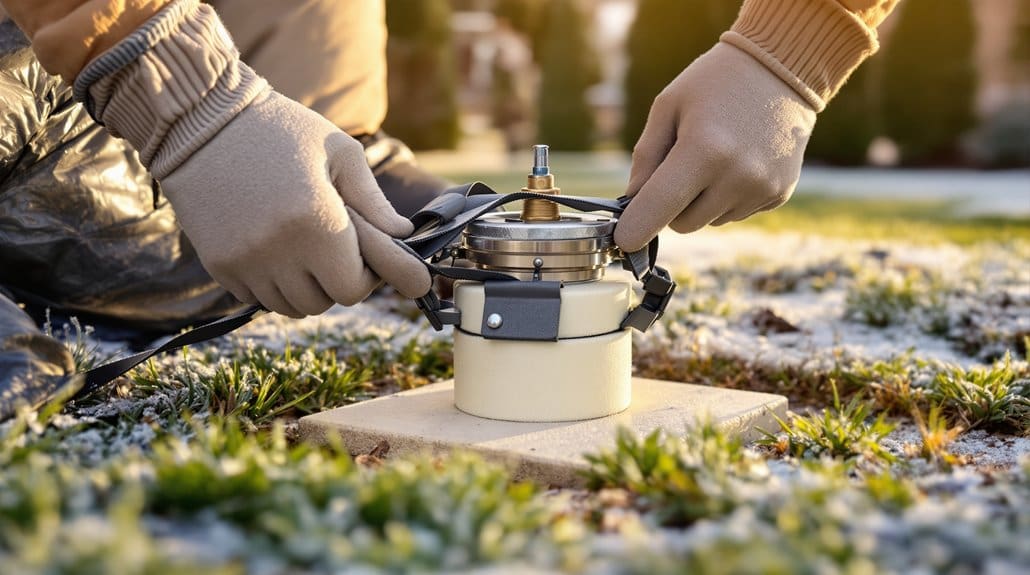
Now’s the time to get your irrigation ready for winter and decide if you’ll lay down perennial ryegrass for seasonal color, because in Southern lawns warm‑season turf goes dormant and only needs one to two light, deep waterings a month unless soil temps stay above about 40°F or you hit a long dry spell. If you overseed with ryegrass, plant in October when soil temps are under roughly 75°F and keep the surface consistently moist for germination, watering shallow and often for seedlings until they reach mowing height, then shift to deeper, less frequent cycles. Before freeze season hits, shut off and drain above‑ground irrigation, insulate exposed components, and pause automatics during frost events, then schedule a spring reactivation once nighttime temps regularly climb into the mid‑40s. Consider investing in essential winterization tools like a quality manual or electric blowout kit to protect your system’s above‑ground components from freeze damage and make winter care easier essential gear.
Winter Irrigation Maintenance
Tending irrigation through the southern winter keeps your warm‑season lawn alive and, if you’ve overseeded with ryegrass, looking good without wasting water or inviting disease. You’ll water dormant turf sparingly, about once or twice monthly when temps stay above roughly 40°F, because the crowns need moisture but not saturation, and you’ll winterize your sprinkler system before freezes for freeze protection. When overseeding ryegrass, keep seedbeds evenly moist with light daily waterings until germination, then shift to about 1 inch per week. The key is monitoring soil moisture and using a rain gauge to adjust your watering schedule, running sprinklers briefly for supplemental watering only when rainfall falls short, testing zones on restart, and keeping applications light to avoid disease while preserving community pride in your yard. Use a simple rain gauge to measure rainfall and fine‑tune watering rather than guessing.
Temporary Ryegrass Overseeding
Seeding ryegrass in a southern lawn gives you green color through the cooler months, but doing it right means matching timing, moisture, and irrigation care so you don’t harm the warm‑season turf underneath. If you and your neighbors want a lush winter carpet, plan an October–November ryegrass overseed, choose annual ryegrass for quick color or perennial ryegrass for longer persistence, and stick to the seeding rate — 5–10 lb/1,000 sq ft for annuals, 3–6 lb/1,000 sq ft for perennials. The key is watching soil temperature and night lows before you sow, avoiding pre‑emergent herbicide for 6–8 weeks, keeping light irrigation 2–3 times daily until germination, then shifting the irrigation schedule to deeper, infrequent watering, and mowing at a safe mowing height so underlying bermuda or zoysia stays healthy. Consider having a few essential overseeding tools on hand, like a spreader and irrigation equipment, to make the job easier and protect your turf.
Month‑By‑Month Winter Checklist by Zone (Dec–Feb, Mar–Apr Actions)
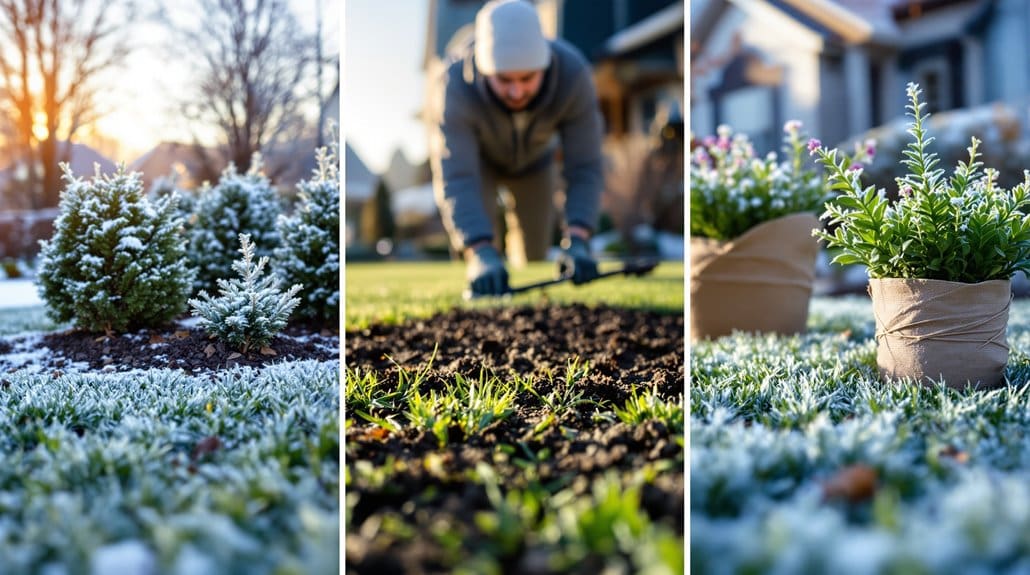
If you want your lawn to come through winter healthy and ready to grow, start with a clear, zone‑specific plan that runs from December through April, because the work you do in each month sets the stage for spring recovery and summer resilience. December you clean and store equipment, remove leaves and branches to prevent snow mold, and for cool‑season lawns apply a winterizer fertilizer 2–3 weeks before freeze; January means avoid foot traffic on dormant turf in cold zones, clear debris, and in warm‑season areas minimize activity and skip irrigation except rare warm spells. February you monitor winter weeds, plan a soil test and order seed for overseeding. Now in March and April you inspect damage, rake, apply pre‑emergent by soil temps, then core aerate and time first fertilizer.
Missed Windows and Quick Damage‑Control Steps for Each Region
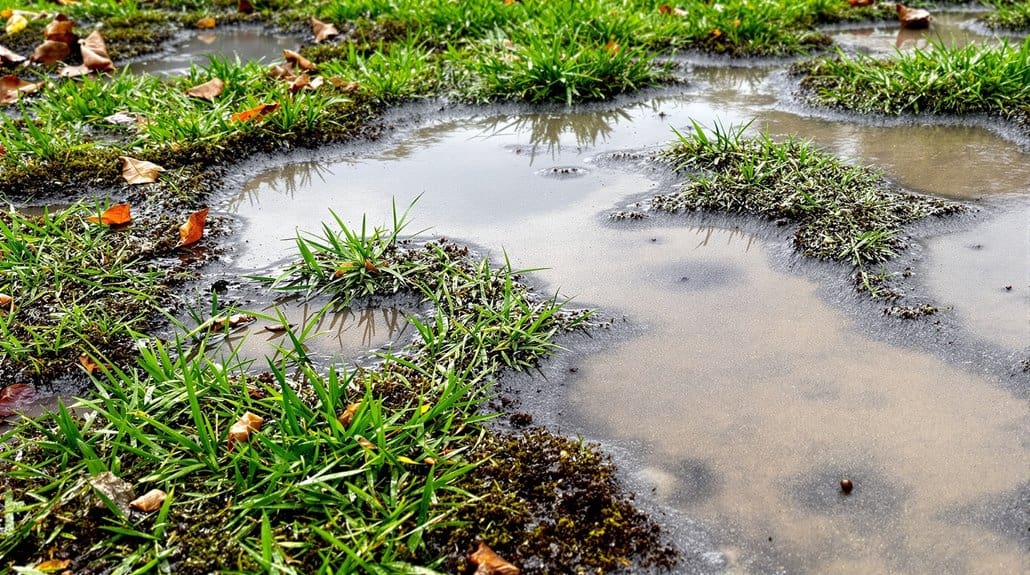
Even when you miss the ideal window, you can still cut your losses and set your lawn up for a strong recovery, so start by diagnosing what was skipped and prioritize fixes that prevent long‑term damage; for example, if you missed fall core aeration in cool‑season regions, don’t try to cram heavy seeding now—instead aerate as soon as the ground thaws to relieve compaction and plan major overseeding for next fall, while limiting any spring seeding to small, targeted patches. Now, if you missed pre-emergent timing switch to post-emergent spot treatments and mark next year’s dates; for warm-season lawns adjust fertilizer timing, run a soil test, irrigation winterize or, if you skipped it, drain lines and repair leaks promptly, then overseeding only as a planned fall repair.
Some Questions Answered
What Is the 1/3 Rule in Lawn Care?
The 1/3 rule means you never cut more than one‑third of the grass blade, so you protect root depth and nutrient uptake; now check mower height and blade sharpening before you start, this is where clipping removal and watering frequency matter because scalping stresses roots and raises soil compaction and thatch thickness. If growth stages or seasonal dormancy change, mow less or more slowly, and reduce height over two mowings to keep turf healthy and resilient.
What Is the Correct Order of Lawn Care?
Start with soil testing to know pH and nutrients, now move into thatch removal so seed meets soil, then pick seed selection and winter overseeding timing for your grass, next follow mowing sequence and edging timing to shape growth, set irrigation scheduling and traffic management to protect new roots, apply fertilizer timing and weed prevention as scheduled — this order gives you clear steps, steady results, and a lawn you’ll belong to and trust.
What Yard Work Should Be Done in the Winter?
You should clear snow removal and ice management first, then prune trees, protect evergreens, and insulate plants against freeze—this prevents storm damage and limits wildlife deterrence needs. Now, test soil for nutrients, apply mulch and consider light winter fertilization to feed roots, and service equipment so you’re ready in spring. The key is steady, sensible attention, you’ll see less winter loss and faster recovery when temperatures rise.
What Is a Good Lawn Care Schedule?
A good lawn care schedule matches your grass types, seasonal timing, and soil testing, so you plan spring and fall for cool-season grasses and summer for warm-season, now adjust mower height as growth slows. Set watering frequency to about 1–1.5" weekly, monitor pests, manage shade by thinning canopy, control thatch and mulch where helpful, and time fertilizer for growth peaks, this is where records stop guessing and give consistent, observable results.