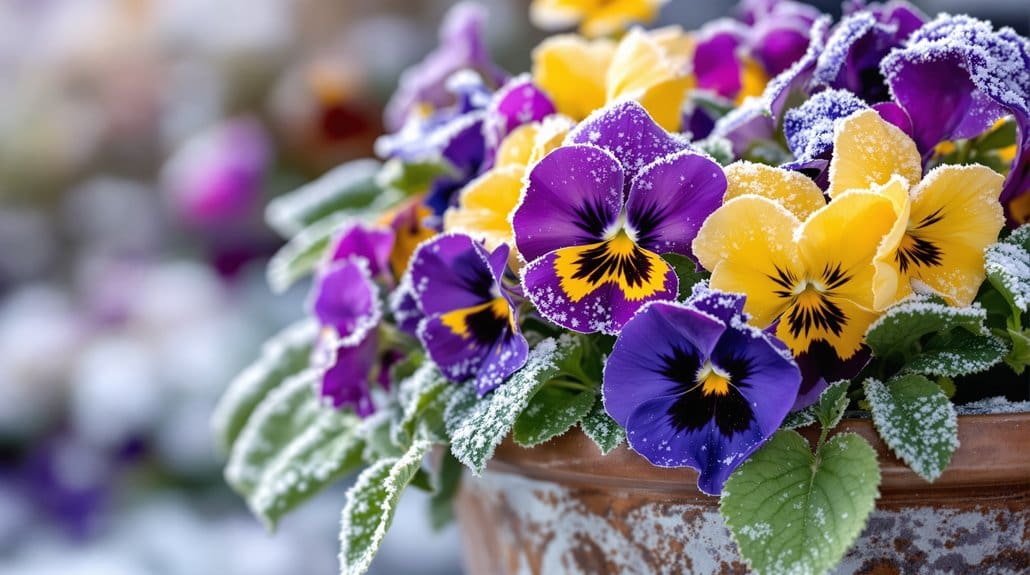
Plant pansies, violas, and other cold‑hardy annuals in early to mid‑fall, once days cool but before hard freezes, so roots can grow into loosened, well‑drained soil; space plants about 4–6 inches for drifts or containers, tuck spring bulbs 4–6 inches deep beneath them for layered color, mulch lightly to prevent heaving, and water every 2–3 days until established, then about twice weekly—this approach gives steady winter bloom and stronger spring performance, and next you’ll learn specific varieties, companions, and setup tips.
Some Key Takeaways
- Plant pansies and violas in early–mid fall (Sept–Oct) before hard freezes for strong root establishment and winter blooms.
- Choose cold‑hardy cultivars (Panola, ColorMax, Cool Wave, Majestic Giant) and hardened‑off plants for best winter performance.
- Use well‑drained, loose soil amended with 4–6 inches compost or soil builder and plant in full to part sun.
- Space plants 4–6 inches in three‑ to five‑plant drifts, tuck high‑impact groups at entrances and along paths.
- Mulch lightly, water every 2–3 days while establishing, then reduce to about twice weekly; avoid standing water to prevent rot.
When to Plant Pansies & Violas for Best Winter Color
Early to mid-fall is the sweet spot to plant pansies and violas if you want steady winter color and a head start on spring, so get them in the ground once daytime temperatures start cooling but before hard freezes set in; the key is to give roots several weeks to establish in well-drained, loose soil amended with 4–6 inches of organic soil builder, because healthy roots mean plants that sit through winter and keep blooming into April. You’ll aim for September and October plantings, now, placing plants about 4–6 inches apart in sun or part sun in hot sites, tamping soil gently, mulching lightly to prevent heaving, and watering every few days until they’re established, then reducing frequency. For best results, pair them with proper equipment and quality ground cover seed for overall lawn health and appearance, especially when prepping beds with soil builders.
Why Fall Planting Gives Bigger, Longer-Lasting Displays
You’ve already got the timing down from planting in September and October, so now let’s look at why that schedule pays off in bigger, longer-lasting displays: when you put pansies and violas in the ground in fall they keep growing roots through cool, moist weather instead of shutting down from summer heat, so their root systems get deeper and more extensive before the hard freezes arrive, and the key is those stronger roots — they help the plants survive winter, take up water and nutrients more efficiently, and produce more flowers once temperatures moderate. Now, fall planting also lets roots settle around spring bulbs for layered color, cooler soil and rains promote steady growth, and a slow‑release fertilizer at planting plus a March top‑dress rewards you with larger, longer-lasting blooms. Homeowners who follow regular seasonal care also benefit from steady maintenance that keeps lawns and beds healthy year‑round.
Choosing Cold-Hardy Varieties and Companion Annuals
Now's the time to pick fall-bred, cold-hardy series like Panola, ColorMax, Cool Wave, or Majestic Giant, because these cultivars are bred to persist in Middle Tennessee from fall through about April and give you the best winter show. Pair larger-bloom pansies with small, prolific violas and add spreading types for containers or Panola mixes for mass plantings, spacing plants about 4–6 inches so you get layered texture, continuous bloom, and high flower counts. The key is to combine them with spring bulbs planted 4–6 inches deep, use a slow-release fertilizer at planting, mulch to prevent heaving, and keep moisture steady (water every 2–3 days when dry, then twice weekly once established) for reliable cold-season flowering. For best long-term results, select plants and layouts that complement regular lawn and garden maintenance, including proper edging, mowing, and seasonal cleanup to keep beds tidy and healthy lawn care.
Select Hardy Cultivars
If you want winter color that actually lasts, start by choosing pansy and viola cultivars bred for cold weather—these fall or “winter” selections, like Panola (a pansy×viola hybrid), Cool Wave, and Majestic Giants, were developed to tolerate frost, stay compact, and keep producing big blooms longer into the season. Now pick fall-bred Cool Wave Pansies or similar spreading types for containers, they fill space fast and resist freeze-thaw cycles, this is where ColorMax violas shine for steady, low-maintenance flowering with smaller blooms that often self-deadhead. The key is buying hardened-off plants that look firm and actively blooming, and choosing cultivars noted for winter performance in your region, so you’ll enjoy layered, lasting color with minimal fuss. For best results in home landscapes, match your winter annual choices to your local climate and maintenance routine and consider companion planting with cold-hardy annuals suited to regular homeowner care.
Complementary Companion Plants
Think of companion planting as a way to build a resilient, layered display that carries color from fall into spring, and start by choosing cold-hardy varieties that share the same light, soil, and moisture needs as your pansies and violas; for example, pair low, spreading Cool Wave pansies or ColorMax violas at the front of beds or containers with mid-height snapdragons and dianthus that tolerate frost, and tuck ornamental kale or cabbage and chrysanthemums behind them for structure and winter foliage contrast. Now, match bloom times and sun needs, plant spring bulbs 4–6 inches deep beneath them so tulips and daffodils emerge later, add slow-release fertilizer and mulch to protect roots, and enjoy continuous, confident color through cold weather. Choose mulch that conserves moisture and moderates soil temperature to protect roots and extend the season for these plants, especially when applied around the base of containers and beds conserves moisture.
Site Selection: Sun, Soil, and Drainage for Winter Blooms
Now pick a spot that gets at least six hours of direct morning sun, because pansies and violas hold their best color and bloom when they warm up early and get steady light. The key is well-draining, loose soil amended with 4–6 inches of compost or an organic soil builder, which prevents winter root rot and helps new roots establish quickly. Avoid low, water-collecting hollows and, for containers, use a high-quality potting mix placed where it's sunny but sheltered from harsh winds, then mulch lightly to moderate temperature and prevent root heaving. Consider using peat moss or an organic soil builder to improve moisture retention and soil structure.
Full Sun Preferred
Why choose the sunniest spot you have? You’ll get brighter, longer-lasting blooms when plants get full sun—aim for six or more hours of direct light—so plant pansies where they’ll soak up daylight, now and through colder months. The key is consistent energy: sunlight fuels flowers and keeps leaf growth tight, which resists winter wear, and you’ll see steady color rather than sparse, floppy plants. This is where site choice matters, pick a place that stays dry and open to the southern or eastern sky, and use loose, amended soil so roots can take advantage of light without sitting wet. Do this, monitor moisture in containers, and you’ll enjoy dependable winter cheer that feels like belonging. Choose a location near your lawn-care activity so you can easily maintain healthy turf and keep both grass and winter annuals looking their best.
Well-Drained Soil
You’ve picked a sunny spot, which is half the battle, but soil and drainage will make or break your winter display, so let’s get those basics right. Start by ensuring the bed is well-drained, plant in loose, organic soil amended with 4–6 inches of compost so roots don’t sit in cold water, and avoid low spots where pools form; now, if you’re working with containers, choose a quality potting mix and confirm drainage holes so soggy roots can’t freeze. This is where slight mounding or raised beds help reduce freeze–thaw heaving, and the key is balance: keep moisture but prevent saturation. Finish with a 1-inch layer of mulch around plants to insulate roots, reduce air pockets, and protect your winter blooms. Consider adding a nearby compost bin to regularly supply fresh, nutrient-rich compost for your beds and containers, which supports healthy winter blooms and reduces waste by turning garden trimmings into usable soil amendment — compost bin tips.
Planting Steps : Beds, Bulbs, and Containers
Begin by prepping the beds and containers so your pansies and violas have the best start, because the key is good soil and correct placement; loosen the ground, work in 4–6 inches of Master Nursery® Bumper Crop® Soil Builder to improve drainage and fertility, and rake the surface smooth so roots can spread evenly. Now place spring bulbs 4–6 inches deep and 6–12 inches apart, then set your pansies or violas above them at the same level or slightly higher, spacing plants about 4–6 inches so they knit together. Choose full sun sites with at least six hours daily, tuck containers and borders where you’ll see them often, apply a slow‑release fertilizer like Osmocote at planting, and mulch to reduce air pockets and protect roots.
Watering, Mulch, and Winter Moisture Management
When temperatures drop and soil begins to firm up, think of moisture management as the single most important habit that’ll keep your pansies and violas looking bright through winter; the key is to keep soil consistently moist without letting it sit wet, so water newly planted beds and containers every 2–3 days when rain is scarce, then back off to about twice a week once plants are established, and always soak the root zone thoroughly before an expected hard freeze to give roots extra insulation. Now, watch containers closely because potting mix dries faster in cold wind, so soak containers and check drainage, avoid pooled areas that cause rot, and apply a 1-inch layer of mulch to reduce air pockets, conserve moisture, and prevent root heaving.
Feeding, Deadheading, and Low-Maintenance Care
Fairly often a little attention goes a long way with pansies and violas, so plan to feed lightly at planting with a slow‑release fertilizer—like Osmocote—to give plants a steady supply of nutrients through winter, then top‑dress again in March to boost spring color; the key is steady, low‑effort care that keeps roots happy without constant fuss. You’ll water every 2–3 days while they establish, then back off to twice weekly in winter, watching containers so they don’t dry before a hard freeze, and avoid pooled water by letting soil dry slightly between irrigations. Dead-headed pansies benefit from regular spent‑bloom removal, while violas mostly self‑clean, and a thin mulch and occasional clip of dead foliage keep displays tidy.
Design Ideas: Color Combos, Bulb Interplanting, and Placement
You’ve already set the stage by feeding, deadheading, and keeping maintenance low, so now you can use design to make those healthy plants sing through winter and into spring: think in repeats and layers, planting pansies or violas in three‑ to five‑plant drifts spaced about 4–6 inches apart so their color reads clearly from a distance, and arrange darker hues at the back, mid‑tones in the middle, and pale or white varieties up front or in containers to create depth and seasonal contrast. Now, use bulb interplanting by setting bulbs 4–6 inches deep, then sow pansies about 4–6 inches above so the annuals carry fall color while bulbs sleep and later pop in spring; place high‑impact drifts at entrances, along paths, and on walls so you and your neighbors enjoy steady, layered cheer.
Some Questions Answered
What Month Do You Plant Winter Pansies?
You should plant winter pansies in September through October, aiming for that planting timeline so roots establish before freezes. Now, the transplant timing is early to mid-fall, when cooler weather and any recent rain help reduce watering. This is where you dig amended, well-drained soil, space plants 4–6 inches apart, water thoroughly, mulch lightly, and keep them watered every 2–3 days until established, then taper.
What Are the Best Cold Hardy Pansies?
The best cold hardy pansies are fall-bred cold resistant cultivars like Panola and the Matrix series, and compact varieties such as Cool Wave and ColorMax violas, which hold color through freezes. Now, choose those labeled for winter use, plant in full sun with well-drained soil, mulch, and give steady moisture, and you’ll get lasting blooms; this is where thoughtful planting and a slow-release fertilizer pay off.
What Are the Hardiest Winter Blooming Flowers?
Pansies, violas, and other frost tolerant varieties are the hardiest winter-blooming flowers, and you'll see them survive freezes and rebloom. Now, choose full sun sites, plant in fall so roots establish, and mulch to insulate—this is where cold-hardy annuals shine. Night blooming types are rarer, but some hardy evening primroses tolerate cold, so try them in sheltered spots. Trust the process, water consistently, and you’ll get steady winter color.
Do Pansies and Violas Need Full Sun in Winter?
Yes, they need strong winter light but not blazing heat, so aim for about 6+ hours of light duration to maximize blooms; the key is warmer soil temperature on sunny days, which keeps roots active and plants floriferous. Now, if you only have morning or dappled sun, that’ll often suffice in Middle Tennessee, so place containers and beds where days warm, mulch to steady soil temperature, and water consistently for best results.