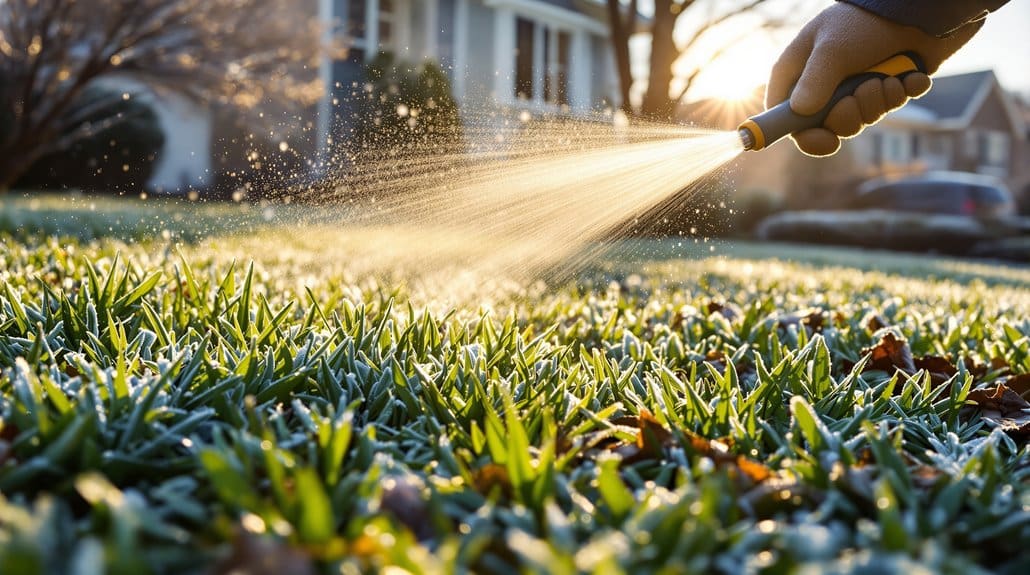
Do you need to water your lawn this winter? Usually not—rain and snow do most of the job. Now, poke 2–4 inches with a screwdriver or spade; if it’s dry and temps are above about 40°F and ground isn’t frozen, give a deep soak, not light sprays. Something to keep in mind: new sod, sandy sites, evergreens, or thin patches need more attention. Don’t water before frost. Keep going for a few more tips on timing and technique.
Some Key Points
- Most lawns don’t need regular winter watering because rain and snow usually supply sufficient moisture.
- Only water when the top 2–4 inches of soil are dry, checked by a spade or screwdriver.
- Irrigate only if air and soil temperatures are above about 40°F and the ground is unfrozen.
- New sod, recent seedings, sandy sites, and evergreens need more frequent, deep watering during dry spells.
- Give deep, infrequent soaks (wetting the root zone) rather than light surface sprays to avoid shallow roots and disease.
Do You Need to Water Your Lawn This Winter?
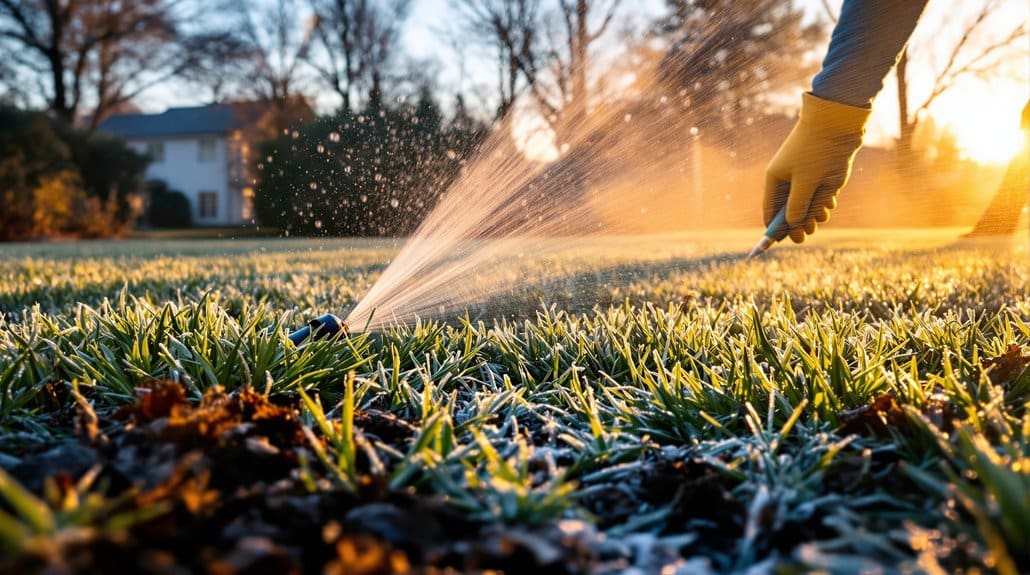
If your lawn looks thin or the soil feels dry when you dig a few inches with a spade, you’ll want to contemplate watering this winter, but most lawns won’t need regular irrigation because rain and snow usually do the job. Now, check if you really need to water my lawn: dig to the root zone, feel for moisture, don’t guess. If it’s dry, water deeply once a month rather than frequent light sprays, which make soil lose moisture and cool down faster. Something worth pondering: only irrigate when air and soil are above about 40°F, mid-day is best, and sandy sites or new sod need attention more often. Do this, not that—deep and rare beats shallow and often. Also consider keeping a small set of essential tools on hand for seasonal care, like a spade and hand rake for checking soil and basic lawn maintenance.
Check Root‑Zone Moisture: How to Test Soil Before You Water
Now grab a spade or screwdriver and push it 3–4 inches beside the grass crown, you’ll feel right away if the tool goes in easily and the pulled soil is cool and slightly damp — if so, don’t water. If the soil you pull from 2–3 inches down is dry and powdery, you’ll need to water, so check that root depth rather than guessing from surface wetness or morning dew. Something worth noting: sandy soils need checks every 1–2 weeks and clay soils every 3–4 weeks, or use a probe/tensiometer for a quick numeric read when you want to be sure. For more consistent readings and to avoid guesswork, consider using a moisture meter designed for home lawns to monitor root-zone moisture levels.
Dig With A Spade
Before you reach for the hose, grab a spade or a long screwdriver and test the soil where the grass is actually growing, because eyeballing the surface often tricks even experienced gardeners. Now dig about 2–4 inches into the turf, not on top of a blade, and remove a small wedge to check Moisture and the health of root systems; moist soil will stick together and feel cool, dry soil will crumble and feel powdery. Do this in several spots, sunny and shaded, high and low, since one hole lies to you. Something worth noting: clay holds together, sand dries fast, so judge “moist” by texture. Do it monthly in winter or after wind, then water only if that root zone is dry. For more consistent results and to care for your lawn like a typical homeowner, consider keeping a few essential tools on hand, including a reliable soil pH test and a sturdy spade.
Feel Soil Moisture
You’ll want to check the root zone before you reach for the hose, because surface wetness can fool you and overwatering will do more harm than good; start by pushing a spade or long screwdriver about 3–4 inches into the turf near where the grass is actually growing, pull it back, and feel the soil—cool, slightly crumbly soil that holds together means you can wait, dusty or powdery soil that crumbles apart means it’s time to water. Now dig a 2–3 inch test hole and squeeze the soil; it should form a loose ball that holds, not dust. Something to keep in mind: sandy ground often needs water sooner, clay can hide moisture deeper. If probing meets hard resistance, you need to water to keep soil moisture in the root zone. For homeowners maintaining their lawns, using a core aerator periodically helps improve moisture penetration and reduces the need for frequent watering.
Check Root Depth
Check the root depth by probing the soil where your grass is actually growing, because surface dampness can lie to you and overwatering will hurt more than help. Step 1 — probe gently: insert a spade or screwdriver 3–4 inches near the roots; if it’s hard to push or dry at that depth, your root zone needs water. Step 2 — pull moisture plug: pull a small 1–2 inch plug and inspect, you want uniform moisture through the root zone, not just wet at the top. Now, the squeeze test: crumble dry soil, loose ball = good, oozing = too wet. Something to ponder: aim 4–6 inches for cool-season, 2–4 for warm-season. Check monthly, more in sand. Regular aeration improves root access to air and water, so consider core aeration to help maintain deeper, healthier roots.
Climate Rules of Thumb: What to Do in Humid, Temperate, Arid, and Cold Regions
If your yard’s in a humid region like the Southeast, you can usually relax a bit because winter rain and dew do a lot of the work for you, but don’t assume it’s fine—probe the top 2–3 inches of soil and only water when that layer’s dry; otherwise, a deep soak once a month during an unusually dry spell will keep roots happy. Now, in temperate continental zones check soil and give a single deep 1-inch irrigation every 3–6 weeks during long dry stretches to protect your lawn and encourage spring green-up. In arid areas plan about 1 inch every 1–2 weeks, winds dry fast. Cold regions: don’t water frozen ground, irrigate mid-day above 40°F. Something to keep in mind: new Grass Seed or sod needs steady moisture regardless. For routine upkeep and to make winter watering easier, keep basic lawn care tools on hand so you can monitor soil and apply water efficiently.
When and How Much to Water in Winter: Timing, Frequency, and Target Depth
Now, check soil temperature and moisture before you act — water mid-day when it’s above about 40°F so moisture soaks in and won’t turn to surface ice overnight, and probe a few inches down with a spade or screwdriver to confirm the root zone is actually dry. Something worth noting: for most lawns one deep soak to wet several inches of soil about once a month is plenty when there’s no rain, but in desert or windy spots you’ll need closer to an inch every one to two weeks, while newly sodded or seeded areas still need regular watering for 6–8 weeks until roots establish. Do this, not short shallow sprays — aim for slow, thorough irrigation that reaches the roots, and if you’ve been overwatering out of habit, ease back and trust the soil probe. Consider also using liquid fertilizers as part of a regular lawn-care routine to provide nutrients efficiently during the growing season.
Timing And Temperature
Although winter seems like a time to forget about the sprinkler, you’ll want to water strategically when temperatures are right so your lawn doesn’t suffer from drought stress or shallow roots, and yes, I’ve learned the hard way that sprinkling lightly every few days won’t cut it. Timing and Temperature — Do this: Water Your Lawn only when air temperatures are above about 40°F and the soil is unfrozen, pick midday to early afternoon so water soaks in before night, and always check the forecast to avoid freezes. Something to keep in mind: new sod needs steady moisture for 6–8 weeks, while established turf benefits from a deep soak monthly in dry winters. Don’t water before a frost.
Frequency And Depth
Regularly check the soil, because watering only when the root zone is dry will save you time and prevent shallow roots—trust me, I learned the hard way that a quick spray every few days just keeps the surface moist and never reaches the roots. Now, do this: probe a few inches down with a spade or screwdriver, if it’s moist, skip it. In most winters a single deep soak about once a month is enough, but in desert areas or with strong drying winds aim for roughly one inch of water every one to two weeks. Something to keep in mind: water when temps are above about 40°F, mid-day so it soaks in before night, and give new sod six to eight weeks of consistent care.
Winter Watering Precautions: Avoid Freezing, Overwatering, and Turf Damage
When temperatures dip, don’t water on a whim—wait until the air’s above about 40°F and pick a warm, sunny part of the day so the moisture soaks in before night brings freezing, because watering too early or too late can leave a slick sheet of ice that’ll damage your turf and make you cringe (been there). Now, water our lawn only when soil probes dry several inches down, use deep, infrequent soakings, and skip shallow sprays that pool and invite fungus. Something to ponder: overwatering while your grass goes dormant drowns roots and breeds disease, so check with a spade or screwdriver first. Water New turf carefully per establishment needs, then drain hoses, protect sprinklers, and never irrigate during frost advisories.
Special Cases: New Sod, Recently Planted Beds, Evergreens, and Problem Patches
Now, let’s walk through the exceptions you can’t treat like the rest of the lawn — new sod, fresh plantings, evergreens, and those sad thin spots each need different care, so don’t just crank the sprinkler and hope for the best. Step 1 — new sod: keep it evenly damp for 6–8 weeks, frequent watering sessions early, then stretch out frequency as roots anchor, not soggy, learned that the hard way. Step 2 — recently planted beds: water regularly through the first winter, typically every 1–4 weeks depending on rain and soil, deeper so roots explore. Step 3 — evergreens: they lose moisture through foliage, give a deep soak in dry spells. Problem patches? Probe 3–4 inches, then deep spot-water, not light sprays.
Some Questions Answered
Are You Supposed to Water Your Lawn in the Winter?
Yes — sometimes. 70% of lawns stay fine on natural precipitation, yet you’ll check soil moisture with a probe, because roots aren’t fully dormant and need occasional help. Now, water deeply on warm days above freezing, avoid frozen irrigation, and focus on dry spells, not routine soaking. Something worth noting: sandy turf needs more attention, new sod needs regular watering, and yes, we’ve all overwatered — don’t repeat that.
Is It Necessary to Winterize Your Lawn?
Yes — you should winterize your lawn to protect soil health, reinforce root dormancy, and deter winter pests. Now, do this: water in fall to build reserves, check soil moisture before any winter watering, and avoid irrigation during frost or below 40°F. Something to keep in mind: new sod needs steady moisture for weeks, established turf doesn’t. Don’t overwater; that invites disease. You’ll thank yourself next spring.
How Long Can Grass Go Without Water in the Winter?
You can usually let grass go weeks to a couple months in winter, depending on dormant tolerance and root resilience, but don’t push it. Now, check the top 2–4 inches with a probe; if it’s dry, give a deep soak. Something to keep in mind: sandy or windy spots need water every 1–2 weeks, clay holds longer. Do this, not that—water deeply, rarely, and avoid panicked quick sprays.
Should I Stop Watering My Lawn in October?
No — don’t stop automatically; you’re not abandoning your lawn to a drought apocalypse. Now, keep watering if rainfall’s low, focusing on deeper soakings to encourage root respiration and fight soil compaction, adjust your irrigation scheduling as temperatures drop, and check moisture before you irrigate. Something to contemplate: lower frequency, not depth, and give new seed or sod consistent moisture for 6–8 weeks. You’ve learned from past skimping.