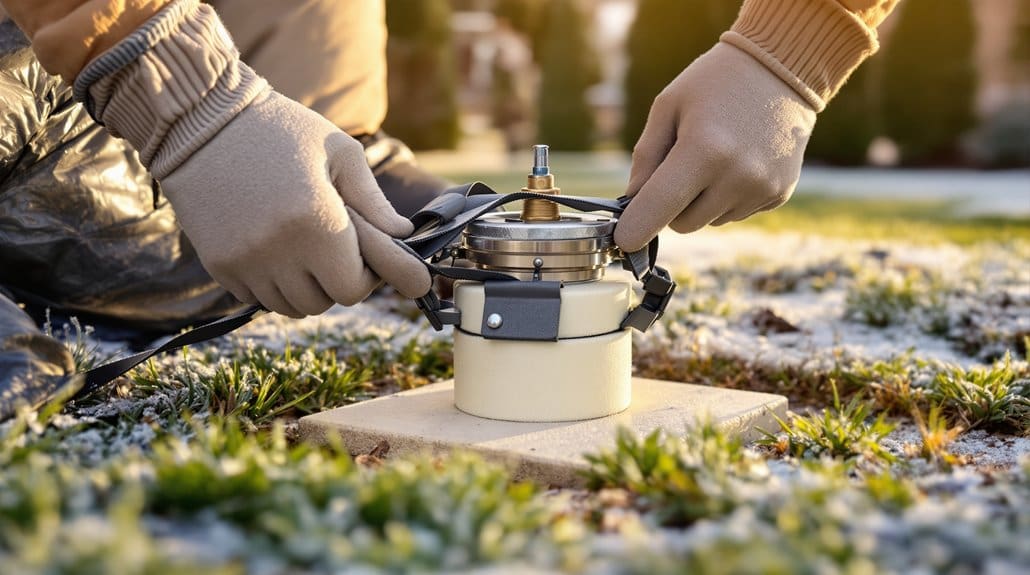
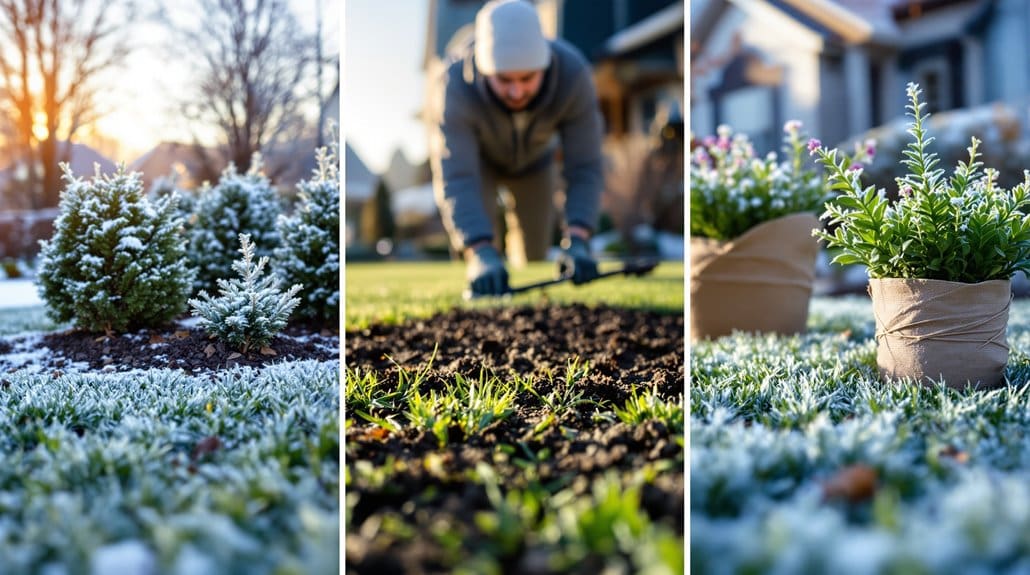
What Soil pH Is and Why It Matters for Turfgrass — You’ll want to test first, because pH (0–14, 7 neutral) controls nutrient availability and root health, so don’t guess. Now, take several samples across sunny, shady, and high-traffic spots and send a composite to a lab or use a reliable kit. If pH is below ~6.0, add lime; above ~7.0, apply elemental sulfur slowly. Something to ponder: retest in 6–12 months to fine-tune, and learn how to apply rates safely.
Some Key Points
- Soil pH (0–14) measures acidity; most turf thrives between pH 6.0 and 7.0.
- pH controls nutrient availability: optimal nutrient uptake occurs around pH 6.0–7.0.
- Very acidic (<5.5) or alkaline (>7.5) soils cause nutrient deficiencies, toxic metals, and weaker roots.
- Test soil every 1–2 years (or before amendments) using lab tests or DIY kits for accurate pH and recommendations.
- Raise pH with lime (apply in fall; 2–6 months to act) and lower pH with elemental sulfur (apply in measured, split doses).
What Soil pH Is and Why It Matters for Turfgrass

Because your lawn’s soil pH controls what nutrients are actually available to grass roots, it’s one of the first things you should check before pouring on fertilizer or blaming the mower. You’ll want to know that soil pH measures acidity on a 0–14 scale, with 7 neutral, below 7 acidic, and above 7 alkaline, because most turf performs best in slightly acidic to neutral conditions, roughly pH 6.0–7.0, where nutrient availability for N, P, K is ideal. Now, don’t beat yourself up if you skipped this; many of us did. Something to keep in mind: soil testing gives the facts, and because pH changes slowly, it’s how you decide to lime, add sulfur, or adjust fertilizer. Do this, not guess. For reliable results, use an accurate pH test kit and basic lawn tools to test and manage your soil.
How pH Changes Nutrient Availability (Which Nutrients Lock Out at What pH)
When you first check your soil pH, don’t treat the number like a suggestion — it actually tells you which nutrients your grass can grab and which are effectively locked out. Now, read this like we're troubleshooting together: soil pH around 6.0–7.0 gives you best nutrient availability for nitrogen, phosphorus and potassium, so your lawn actually benefits from what you apply. If you’ve battled acidic soils below about 5.5, phosphorus gets fixed by iron and aluminum and becomes unavailable, while micronutrients like iron, manganese, zinc and copper become overly soluble — sometimes too much. Something to weigh: above about 6.5–7.0 those micros fade, and calcium and magnesium rise. Do this: aim for that sweet spot, not extremes. Slow-release fertilizers can help maintain steady nutrient availability and complement pH management for healthier turf, especially when used with consistent maintenance.
How Extreme pH Harms Grass Beyond Nutrients (Toxic Metals, Microbes, Root Health)
If your soil’s pH drifts well outside the 6.0–7.0 sweet spot, you’ll see more than just nutrient quirks — you’ll watch the whole root system and the soil life that supports it start to fail, and that’s a harder problem to fix than missed fertilizer shots. You care for your lawn, and when soil pH levels go acidic below about 5.5, toxic metals like aluminum and manganese leach free, burning root tips and shrinking roots, even with fertilizer on board. Now, alkaline swings make micronutrients unavailable, causing yellowing and limp roots. Something to weigh: extreme pH also shifts microbes, favoring fungal foes and cutting helpful mycorrhizae, so root health, drought resistance, and disease tolerance all fall apart. Do this, not that: aim for balance, act early. Many homeowners find that applying lawn lime at the recommended rate helps bring acidic soils back into that optimal range.
How to Test Your Lawn’s pH : Lab vs. DIY and Where to Sample
Now here's what to do: collect 10–15 subsamples from 6–12 inches deep across representative spots—sunny, shady, bare, weedy—mix them into one composite, dry about a cup or two for a lab, and label each area so you can map pH differences later. You can skip the waiting and use a DIY kit or handheld meter on the spot—just use distilled water, follow the instructions, and test in spring or early fall for steadier readings, though I’ll admit I’ve once trusted a strip that lied to me. Something to ponder: labs (often through your Cooperative Extension) give precise pH plus nutrient and organic-matter analysis but take days to weeks, while DIY is fast and useful for routine checks and for deciding whether to retest treated areas in 6–12 months. For homeowners, choosing the right products and tools helps maintain results over time and prevent recurring pH problems like compaction or nutrient lockup; see topsoil tips for guidance.
Lab Testing Benefits
Because soil pH has a big say in how well your lawn absorbs nutrients, getting a solid test result first will save you money and headaches later, so start by choosing whether you want a DIY quick check or the more reliable lab route. Lab Testing Benefits — Do this: send a proper soil sample, a composite of 10–15 subsamples (or at least sunny, shady, bare, weedy spots), dried and mailed to Cooperative Extension or similar. Professional lab tests give accurate soil pH testing, nutrient readings, and lime/sulfur recommendations, so you’ll know exact rates, not guesswork. Now, don’t rush: labs take days to weeks and charge a fee, but they give the reliable baseline you’ll thank yourself for later. Consider also stocking essential lawn care tools like a soil probe and spreader to make sampling and applying amendments easier essential tools.
DIY Test Steps
When you’re ready to check your lawn’s pH, start by thinking like a scientist but act like a practical homeowner: grab a trowel, a clean bucket, and plan to sample the different zones that show up on your yard—sunny patches, shady corners, bare spots, and the weedy areas you swear you’ll fix someday—because those differences matter; collect 10–15 subsamples about 6–12 inches deep for turf, mix them into one composite, or for a quick DIY check take small samples from at least four locations, remove any surface thatch, and use distilled water in your test to avoid skewing the results with tap-water minerals; send 1–2 cups of air-dried composite soil to a cooperative extension for the most reliable pH and nutrient readings when you want exact lime or sulfur rates, but use strips or a meter for fast on-the-spot checks in spring or fall, just know they’ll be less precise and you’ll want to retest the same spots after any treatment. Now, do this: label samples, avoid freshly treated areas, and sample to a professional when you need definitive answers. Something to bear in mind: DIY kits save time, labs save guessing. For routine maintenance, keep a set of essential tools like a soil probe and timer to schedule regular checks and treatments essential tools.
Sampling Locations & Depth
If your lawn looks like it’s wearing different moods in different spots, treat those areas as separate experiments: collect 10–15 cores from across the yard—mix sunny, shady, bare, and weedy patches—so your composite sample truly represents the lawn, but if you’ve got obvious trouble spots, pull a second set for those alone. Now take samples from the root zone: 2–3 inches deep for warm-season grasses, 4–6 inches for cool-season, or deeper for future shrubs. Avoid fertilizer piles, dog spots, or fresh disturbances; I’ve learned the hard way that nearby lime skews results. For lab testing, air-dry 1–2 cups, label with sun/shade notes. DIY kits want fresh wet Soil and distilled water. Good testing, we’re in this together. Homeowners should also keep basic tools like a soil probe or grass catcher on hand for consistent sampling.
Quick Fixes: Raise pH (Lime) or Lower pH (Sulfur) - What Works and Timelines
Now start by using lime (ground limestone) to raise acidic soil pH, because it slowly dissolves and reacts over about 2–3 months so you’ll see real change if you apply in fall or early spring and water it in. Something to ponder: elemental sulfur or sulfate products take longer—several months to a year as microbes turn sulfur into sulfuric acid, and they work faster in warm, moist soils—so don’t expect a quick flip and plan repeat, measured applications rather than one big dose. Trust a soil test for rates (sandy needs less than clay), spread evenly with a broadcaster, water after applying, and retest in 6–12 months so you don’t overcorrect like I’ve done before.
Lime: How It Works
Lime works by neutralizing excess acidity in your soil, so you’re really adding calcium (usually as calcium carbonate) that binds up free hydrogen ions and gradually nudges the pH upward; I’ve learned the hard way that it’s not an instant fix, it starts helping in weeks but can take three to six months to finish the job.
Step 1 — Test: always start with a soil test, don’t guess, it tells you how much lime you need. Step 2 — Apply: match application rates to your soil texture, sandy soils take about half the lime clay soils do. Now spread evenly, water in, and be patient. Something worth pondering: mild acidity needs annual liming; stronger acidity may need two timed applications. Retest in 6–12 months.
Sulfur: Timelines & Use
You’ve just learned how lime raises pH over weeks to months, and lowering pH with sulfur works on a similar clock but in reverse, so don’t expect magic overnight. Now, here’s what to do: choose finely ground elemental sulfur when you want faster change, spread according to soil texture — sandy needs less, clay needs more — and follow the recommended application rate, typically 1–3 pounds per 100 sq ft for modest drops. Water it in to wake up soil microbes that convert sulfur into sulfuric acid, changing soil pH over 2–6 months. Something to bear in mind: test before and after, don’t overapply, and remember mulch or uneven spreading are common mistakes I’ve made too. Patience wins.
Practical Application Rates and Timing for Common Lawn pH Problems
If your lawn’s pH is off, start with a clear plan so you don’t overdo it and create a new problem; small, measured corrections done at the right time work far better than dramatic one‑time fixes that leave you re-testing in frustration. Step 1 — test: get a lab soil test, sample 6–12 inches deep, and use that result to set rates. Step 2 — acidic? For pH under 6.0 apply agricultural lime, 40–50 lb/1,000 sq ft on sand or 50–80 lb on clay, repeat yearly and retest in 6–12 months. Step 3 — mild acidity? Use 20–30 lb/1,000 in fall for maintenance. Step 4 — alkaline? Apply elemental sulfur in 1–3 lb/1,000 doses, split every 4–8 weeks, retest later. Now water lightly after application. Something to contemplate: avoid big guesses.
Ongoing Monitoring and Cultural Tips to Keep Lawn pH Stable
Now that you’ve set a sensible correction plan and resisted the urge to dump a big bag of lime or sulfur on the lawn, keep the work going with regular checks and smart cultural habits that prevent the problem from coming back. Step 1 — Test your lawn’s soil pH every 1–2 years, or yearly if you overwater or fertilize heavily; multiple samples from sunny, shady, and high-traffic zones stop you from over-treating. Step 2 — Apply soil amendments only on test advice, timing lime or sulfur in fall, water afterward, and treat spots, not the whole yard. Step 3 — Use nitrate or slow-release fertilizers, add modest compost, and avoid repeated ammonium feeds. Now, keep at it; slight chores save big fixes.
Some Questions Answered
Can pH Affect the Effectiveness of Weed Control Herbicides?
Yes — pH changes herbicide stability and can cut effectiveness. Now, test spray pH and adjust it, because high spray pH can speed microbial degradation or change adsorption rates in soil, and that hurts uptake. Here’s what to do now: lower or buffer spray pH if the label says so, avoid alkaline mixes, and don’t assume one-size-fits-all. Something to keep in mind: I’ve burned mixes before, so double-check labels.
How Does pH Interact With Soil Salinity and Drought Stress?
You’ll see pH change ion mobility and worsen salt toxicity, so roots struggle with root uptake and microbes face microbial osmotic stress. Imagine a tired traveler lost in salty dust, feeling small but not alone. Now, lower pH can free toxic ions, higher pH can lock nutrients, so adjust lime or sulfur gently. Something to ponder: flush salts, water wisely, and test often — don’t guess like I used to.
Will pH Amendments Harm Beneficial Earthworms or Pollinators?
Yes—properly timed pH amendments usually won’t hurt earthworm behavior or pollinator exposure, but you’ve got to be careful. Now, do this: apply lime or sulfur at recommended rates, avoid piles that contact soil directly, and time application when plants aren’t blooming to cut pollinator exposure. Something to keep in mind: soil microfauna recover if you don’t overdo rates, and amendment timing matters—do spring or fall, not midday in hot dry spells.
Can Overseeding or Species Selection Compensate for Poor pH?
Yes — you can partly compensate with overseeding and species selection, but don’t expect a miracle. Start with a seed mix that includes lime tolerance, sow in proper timing windows for cool- or warm-season grasses, and watch germination rates closely. Now, do this: choose tolerant varieties, overseed lightly, monitor progress, and avoid overwatering. Something to keep in mind: fixing pH is smarter long-term, though you can get decent, temporary results today.
Do Irrigation Water and Fertilizer Choice Change Soil pH Over Time?
Yes, irrigation alkalinity and fertilizer acidification will shift soil pH over time, so you’ve got to act. Now, test water for saline irrigation and high alkalinity, because that raises pH; choose slow release fertilizers with acidifying formulations when you need to lower pH, and avoid quick salts that spike it. Something worth pondering: monitor regularly, adjust slowly, and don’t beat yourself up if you misstep—learn, tweak, repeat.