Don’t walk on frosted grass — it’s brittle and snaps, and one careless step can leave brown footprints or compact the soil beneath. Here’s what to do now: avoid shortcuts, keep pets off, and use paths or lay a board if you must cross; don’t mow until thaw. Now, we may regard soil type and traffic: clay, short turf, and shaded spots are worst. Something to ponder — single cautious crossings often recover, but repeat passes won’t, and more tips follow.
Some Key Points
- Avoid walking on frosted grass when possible because frozen blades and soil are brittle and easily damaged.
- One cautious step may bruise blades but repeated passes or heavy loads cause lasting thinning or bare spots.
- Frozen ground transfers weight to crowns and roots, increasing compaction and delaying spring recovery.
- Use paved routes, boards, mats, or reroute pets and deliveries to spread weight and reduce traffic.
- Wait until sun thaws frost and soil warms, then assess damage for 2–6 weeks before repairing or reseeding.
Primary Intent and Format: Quick Answer + Practical Guide
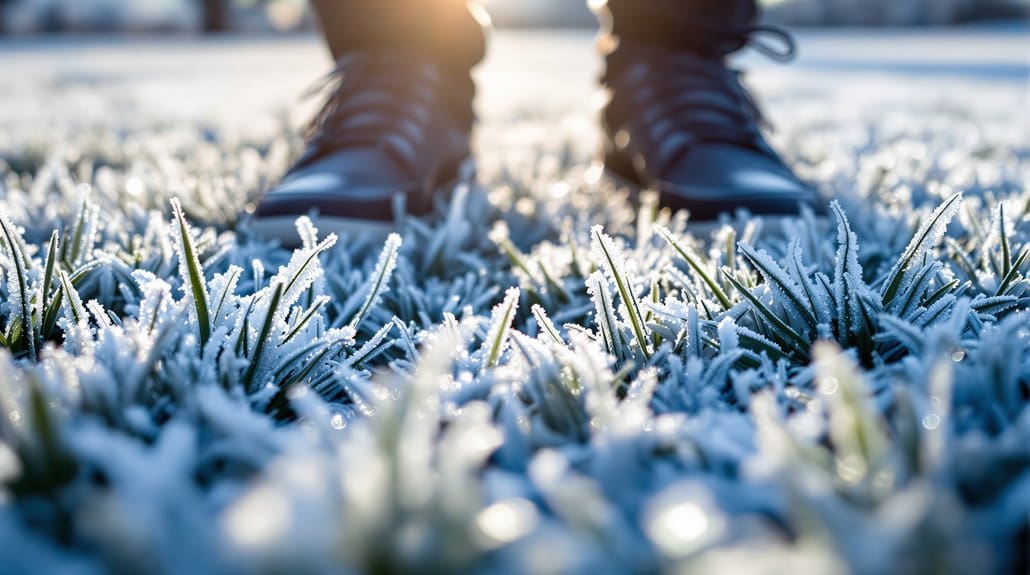
If you can, don’t walk on frosted grass—because when blades are iced over they’re brittle, and a single step at very cold temps can crush tissue and leave brown prints that last until spring. Quick answer: avoid it when you can, and if you must, take one careful step, don’t trample. Primary intent here is practical guidance, so I’ll be blunt and friendly: treat frozen turf like thin glass, don’t test it. Now, we may ponder this—walking on frozen lawns after a hard freeze, or repeated traffic, raises the risk of lasting thinning, so use paths, delay chores, and keep pets off common routes. Something to mull over: taller grass tolerates the occasional step better, but patience is smarter. Trust me, your lawn will thank you. Proper tool care, including keeping blades sharp with sharpening stones, helps minimize damage from maintenance tasks.
Can Walking on Frosted Grass Actually Harm My Lawn?
Now, we may ponder this: when blades are frozen and brittle, a single step can bruise or snap them, leaving brown “footprints” until growth resumes, so don’t expect a quick shrug-off if you stomp across the lawn. Something to ponder is that firm, frozen soil still gets compacted, and repeated traffic or heavy loads can crush crowns or roots, which slows green-up or even kills patches by spring—been there, stepped there, learned the hard way. So, do this not that: avoid walking on crunchy turf until it thaws, watch for that telltale crunch underfoot, and save the boots and carts for later. Consider reducing winter traffic and using proper lawn care practices to minimize frost damage.
Frozen-Blade Fragility
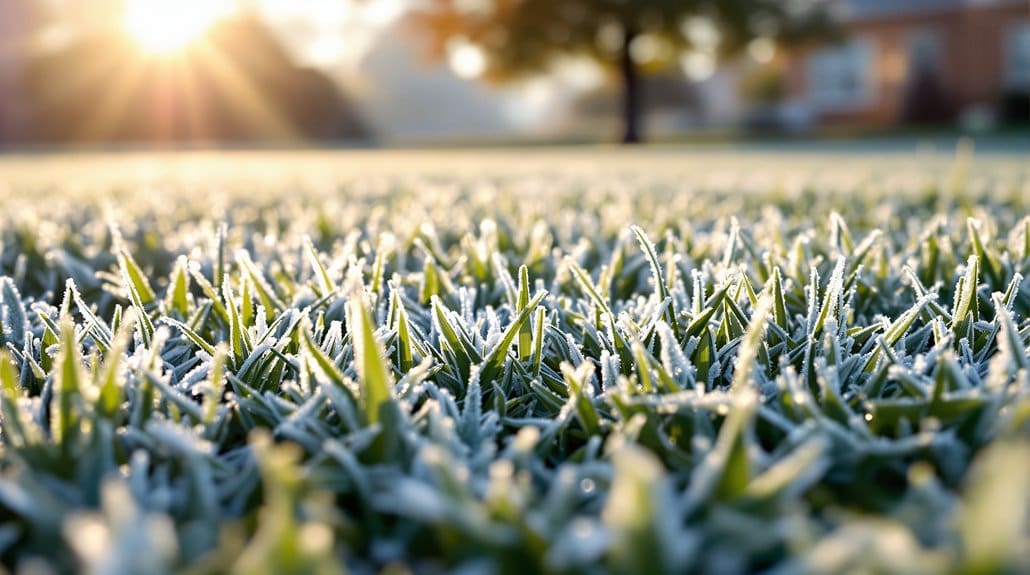
Walk lightly: when grass is frosted, those pretty crystals you see on the blades are literally turning the tissue into glass, and a single step can snap frozen blades or bruise crowns beneath the soil. You’ve probably learned the hard way — that crunchy walk across the lawn leaves footprints that last. Now, here’s what to do: don’t walk on frozen grass if you can avoid it, keep kids and pets off until the frost thaws, and resist the urge to shortcut across the yard. Something to bear in mind, shorter turf suffers more and repeated traffic makes damage stick, so if your lawn’s low, be extra careful. We’ve all trod where we shouldn’t; next time, wait it out. Consider doing regular maintenance on your riding mower and other equipment to keep your lawn healthy year-round and reduce damage from avoidable foot traffic, especially routine upkeep.
Soil Compaction Risk
Thinking about compaction, you might shrug and say one quick step won’t matter — but you’d be surprised how much weight gets funneled into the root zone when the surface’s frozen solid, since that brittle layer can’t cushion or spread your pressure; what was a soft give in warm months becomes a rigid plate that transfers force down into the soil, squeezing out air and water from the pores below. Now, we may regard this with your lawn in mind: a single cautious pass is less harmful than repeated trips, but pets, deliveries, and carts over the same line really add up. Something to contemplate, lawns with short turf or clay soils are most at risk. Here’s what to do now: avoid traffic, reroute, and be honest — it’s easier to prevent compaction than fix it later. For routine home lawn care, keeping blades sharp and mowing at the proper height can help turf recover more quickly from stressors like compaction and frost, as blade maintenance supports overall grass vigor.
Recovery And Timing
If you’ve ever trudged across a yard at dawn and watched your footprints sit there, brown and crispy, until spring, you’re not imagining things — frozen blades and stiff soil really do take a beating and can leave marks that last. Recovery and timing matter: if you only take a single cautious walk across a frosty lawn, in many home lawns it will often green back by mid‑spring as new growth covers the crushed blades, but at very low cut heights or with repeated traffic, bruising and compaction can create lasting bare spots. Now, we may regard this — don’t walk until frost melts and soil thaws, and don’t mow frozen grass. Something to ponder: severe damage might mean reseeding in spring, lesson learned. Choosing the right equipment, including the appropriate spike aerator for your lawn, can help relieve compaction and promote recovery.
Why Frozen Grass and Soil Are More Fragile
Now, we may give thought to this: when temperatures drop below freezing, water in grass blades and leaf cells turns to ice, making the blades brittle so they'll snap underfoot — don’t be that person who tests them with a boot. Something to ponder is that frozen soil loses its cushion and compacts easily, so a single step can press roots and crowns, bruising tissue that can’t take up oxygen or water. I’ve learned the hard way that even short, repeated traffic on frosty turf causes microscopic cellular ice damage that slows green‑up, so wait for full thaw before you walk, not after. For routine care and to avoid compaction issues, consider using essential tools that help maintain healthy lawns and accurate pH testing.
Brittle Grass Blades
Beneath that tempting carpet of frost, frozen grass blades and the soil they sit on act like glass instead of rubber, so take it easy and don’t stomp out of habit. Step lightly, because when grass freezes even mildly, water inside cells forms ice crystals that lock leaves rigid, and they’ll crack instead of bend under your shoe. Now, we might ponder this: a crunchy feel underfoot is your clue—don’t ignore it. Something to reflect on, I’ve squashed my share of turf by rushing; you’ll bruise blades and make brown patches if you repeatedly load brittle crowns. Do this: walk around or use a path, not that: pounding straight across the lawn. A single gentle step on taller, unfrozen blades is far kinder. Also, consider how choosing the right mower blade can improve blade health by producing cleaner cuts and reducing stress on mower blades, which helps prevent additional damage.
Frozen Soil Compaction
When soil freezes and the water in its pores turns to ice, the ground stops acting like a cushion and starts acting like a board, so you’ve got to change how you move on it. Frozen Soil Compaction: here’s what to do now — when frost melts later, you’ll see the spots that got squashed, and they won’t welcome your excuses. You’ll want to avoid walking on short, low turf or paths you already use, because frozen pores can’t spring back and each step drives extra pressure into crowns and roots. Now, we may take into account this: repeated passes over days of subfreezing weather make it worse, compounding compaction that chokes air and drainage once thawed. Something to keep in mind — skip the shortcut, it’s worth the detour.
Cellular Ice Damage
We’ve talked about how frozen ground turns from a sponge into a board, and that sets the stage for a smaller, nastier problem: ice inside the grass itself. Now, we may contemplate this: when winter nights dip below freezing, ice crystals form in blade cells and vacuoles, expanding and rupturing membranes, so the plant leaks and can’t recover. Something to contemplate — frozen blades are brittle because intracellular ice replaces liquid water, so your walking pressure easily snaps tissues and severs the tiny conductive cells that feed roots. Even short, damp freezes do this, and after thaw you’ll see brown, translucent spots where chloroplasts died. Here’s what to do now: avoid early‑morning walking, wait for thawed turf, and don’t repeat the rookie mistake of trampling frosted grass.
Visual Signs of Frost Damage to Look for This Winter
Step out carefully and listen to the crunch under your feet, because that sound alone tells you a lot: frozen blades are brittle, and walking on them will bruise or snap the turf, so don’t tromp across frosted areas if you can avoid it. Now, look for crisp grass and brown or tan footprint shapes where shoes or pets pressed down, that’s classic winter injury. Something to note: if spots stay flattened after thawing, you’ve likely compacted soil or hurt crowns, not just browned blades. If patches lag behind in greening or stay thin after a few mowings, the plants didn’t recover. Finally, watch for pink or gray mold in and around frosted prints — fungal growth shows weakened turf that needs your care.
Which Turf Types and Lawn Conditions Are Most at Risk
If your lawn looks like it’s been through a blizzard of footsteps, don’t panic — but do pay attention to which grass is underfoot and where you’re walking. Here’s what to do now: cool‑season grasses like Kentucky bluegrass, perennial ryegrass, and fine fescues are most prone to frost bruising because blades stay flexible while cells turn brittle, so footprints brown easily. Now, we might view this: short‑mown turf, under about an inch or two, and thin stands lack insulating leaf length, especially when wet, so one walk can leave marks. Something to ponder, too, is soil—compacted or frozen ground sends pressure to crowns and roots, and shaded or poorly drained spots hold ice longer. Do this, not that: avoid trampling those vulnerable areas until thaw.
How Much Traffic Causes Lasting Damage (Footsteps, Pets, Vehicles)?
Often you can get away with a single cautious walk across frosted turf, but repeated passes or heavy, concentrated loads are what really cause lasting harm, so here’s what to do now: avoid crossing the same frozen patch more than once, steer pets and carts onto paved paths, and wait for a thaw when possible. You’ll learn that single footsteps usually only bruise blades and green up again in spring, but multiple passes at or below freezing, especially on short or delicate turf, lead to lasting bare spots. Now, we may contemplate pets and vehicles: heavy loads, like an SUV tire or a dog curled up in one spot, can crush crowns and compact soil, so do this, not that—reroute, delay, or carry on icy days. Something to ponder.
Simple Prevention: What to Do Before and During a Freeze
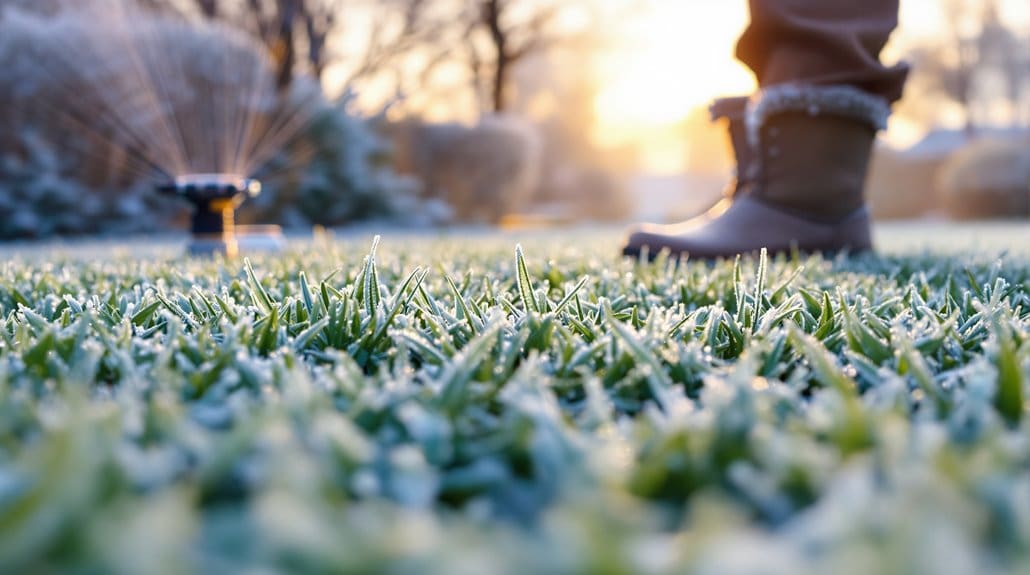
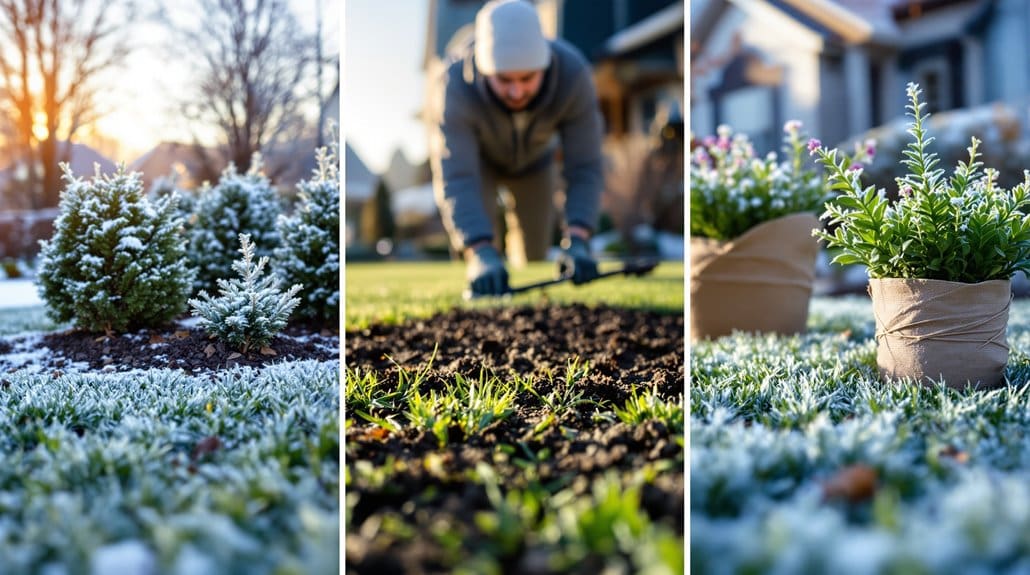
Now, before the frost sets in, do this: put down paved routes for people and pets, mow a touch higher and apply a late‑autumn “winterizer” so roots are stronger, because I’ve learned the hard way that a crushed blade doesn’t fix itself. If you spot frost, don’t walk on it—step only on compacted surfaces like driveways or mulched beds, something to ponder when you’re trying to get somewhere in a hurry. Delay mowing until the ground and grass have thawed, a few hours after sunrise on sunny days, and reroute traffic during multi‑day freezes to protect high‑traffic areas for spring.
Avoid Walking On Frost
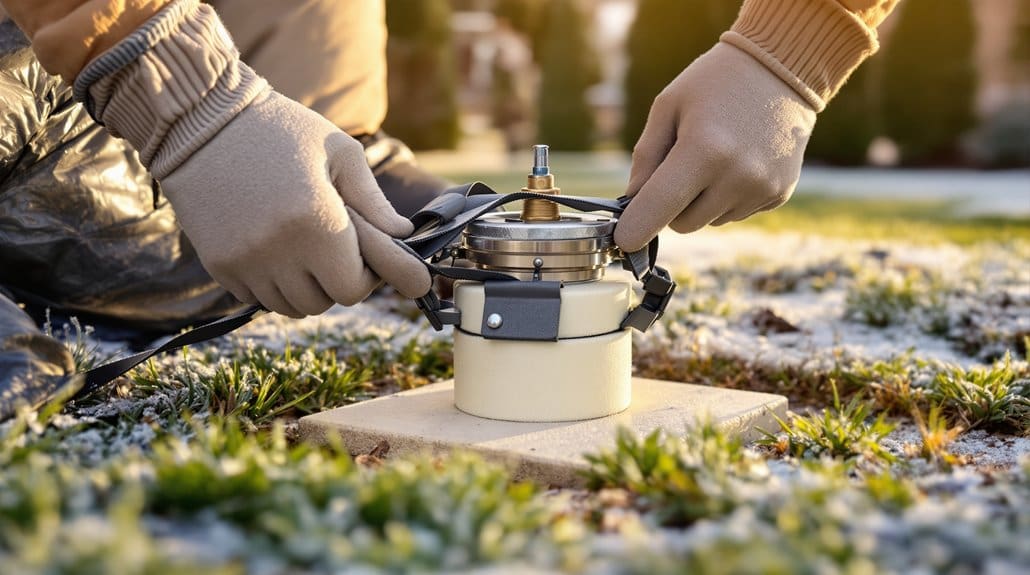
When frost coats your lawn and the air feels like it could snap, resist the urge to tromp out and check things immediately, because those glittering crystals make grass blades brittle and every footstep can turn healthy turf into shredded straw. Step 1 — do this, not that: don’t walk on frost-covered grass until the sun melts it and air and soil climb above freezing, since ice crystals inside blades make them snap. Now, we might ponder this: if you must cross, choose paving or lay a board or mat to spread weight, don’t repeat the same path, and keep pets and deliveries off the lawn. Something to ponder — delay mowing or any heavy work until the ground thaws. Disconnect irrigation before deep freezes.
Protect High‑Traffic Areas
You’ve already learned not to stomp across glittering blades, so let’s focus on the spots that see the most traffic and how to protect them before and during a freeze.
Protecting high‑traffic areas starts with simple redirection: create paved or mulch routes, or lay temporary boards to steer feet away from vulnerable turf on frosty mornings, especially to mailboxes or feeders. Now, we may opt for soft‑soled shoes and a single quick crossing if avoidance isn’t possible, don’t repeat trips — been there, regretted it. Something to weigh: block pet and delivery access during freezes, or ask for a later drop. Mow a few days before a freeze to avoid short, brittle blades, and keep about two inches going into winter for tougher grass.
Delay Winter Mowing
Delaying your last mow until the ground and blades are pliable is one of the simplest, smartest moves you can make, and trust me, it’s a habit I wish I’d learned sooner — fewer shredded tips, less brown patch, and less regret. Step 1: do this — aim to finish a few days before a freeze, raise the deck to about 2–2.5 inches for cool‑season turf, and avoid cutting frosty or frozen grass. Now, we may contemplate this: if a hard overnight freeze hits, wait at least 48–72 hours and only mow once leaves are thawed and flexible. Something to ponder: don’t mow crunchy turf, don’t scalpe; if forced, cut no more than a third.
Safe Short-Term Alternatives to Crossing the Lawn
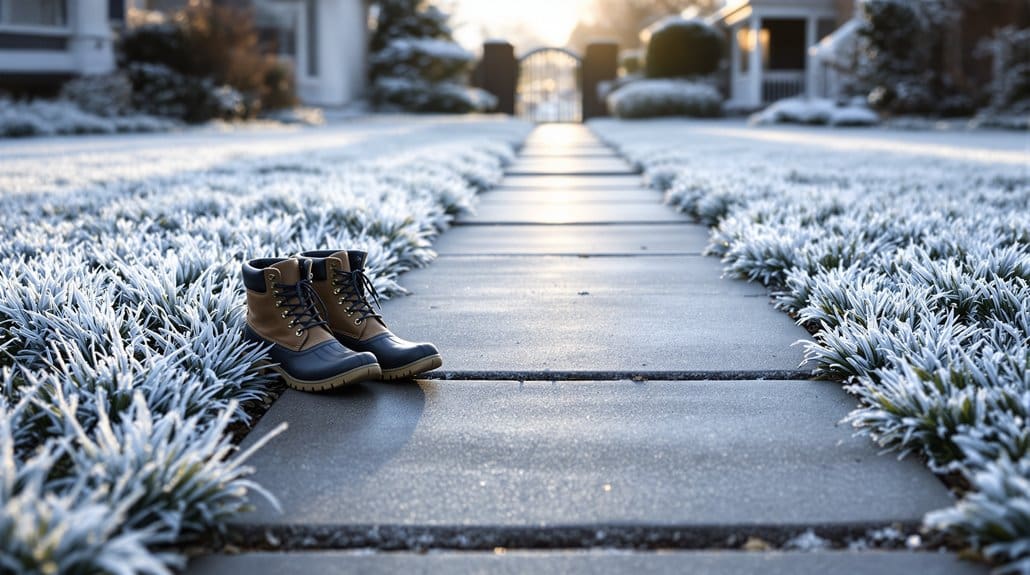
To protect your lawn and still get where you need to go, start by picking a firmer route—driveways, sidewalks, or mulched garden paths are your best friends on frosty mornings—because frozen blades snap easily and leave brown footprints that can stick around until spring. Step 1: choose those solid surfaces, reroute deliveries and pet paths, and resist the short-cut urge; I know, you've done the diagonal dash before, we've all been there. Now, we may contemplate timing: if you must cross frost-covered turf, wait until mid-morning when the frost melts and temps rise, or lay down a board or plastic sheet to spread your weight. Something to ponder: wear soft-soled shoes, walk light and slow, avoid repeated passes, and favor stepping stones when possible.
How to Assess Frost Damage in Early Spring
When spring warms the ground and the sun finally melts the last of the frost, that’s the moment to take a close look at your lawn — not immediately after thawing, but on a clear, sunny day when blades are dry and colors show true. Step 1: scan for frost‑bruise footprints, brown or tan marks that stand out once blades dry; single faint prints usually bounce back. Now, we might weigh timing: if patches don’t green up by the time surrounding turf is actively growing, around 50–55°F soil, they’re suspect. Step 2: gently probe crowns and roots; soft crowns or roots that pull away mean dead turf. Something to ponder: monitor for 2–6 weeks and one or two mowings before acting.
Repair Options: From Spot Fixes to Reseeding
Now that you’ve watched suspect patches for a few weeks and poked at crowns to confirm what’s dead and what’s not, it’s time to pick a repair strategy that actually works for the size of the problem. Step 1 — spot fixes: for small brown footprints that stubbornly won’t green, use a bare-patch repair mix (seed, mulch, slow‑release fertilizer/tackifier) so you don’t overdo it, and keep it moist. Now, we may contemplate soil prep: if soil’s hard, lightly rake the top 1/4–1/2 inch, add a thin 1/4 inch of screened topsoil or compost, then overseed. Step 2 — larger areas: core aerate, overseed at proper rates, topdress 1/4–1/2 inch, and protect new seed until established. Something to consider: you might need reseeding in bigger trouble spots; plan timing and traffic control.
Seasonal Care That Reduces Future Frost Injury (Fertilizer, Mowing, Aeration)
Usually a few smart, seasonal moves will keep your lawn safer from frost than hoping for a mild winter, so let’s walk through the key steps you'll want to do now. Start with a late-fall, high-potassium, low-nitrogen “winterizer” to strengthen the root system, about 2–6 weeks before your average first hard freeze, roughly 1 lb actual K per 1,000 sq ft; growth slows, so don’t overdo nitrogen. Now, we may contemplate mowing slightly higher—around 2–2.5 inches for cool-season turf—so blades trap insulating air; don’t mow on frosty days, wait 48–72 hours. Something to ponder: core aerate in fall to relieve compaction, then topdress and seed thin spots, helping roots go deeper and recover faster next spring.
When to Call a Pro: Persistent Patches, Disease, or Compaction
If patches that were walked on still look brown or sunken by mid‑spring, don’t shrug it off hoping they’ll fix themselves—call a turf pro, because persistent, slow‑recovering spots usually mean root or crown damage rather than just bruised blades. Here’s what to do now: get an assessment when those areas stay last to green up, since compaction or crown injury often needs core aeration and overseeding, not patience. Something to ponder: if you spot white or pink mycelium after thaw, that’s snow mold — bring a pro for diagnosis and targeted fungicide or cultural fixes. Do this, not that: don’t guess about mushy, smelly crowns or enlarging bare spots, call early. Ask for a soil test and compaction check, you’ll thank us.
Some Questions Answered
Should You Walk on Frosty Grass?
Like a whispered warning bell, don’t. Early morning frost makes blades brittle, and if you care about plant stress, avoid crossing the lawn. Now, we might ponder this: walk on paved paths, wait for thaw, keep pets off grass. Something to ponder: one light mistake won’t ruin everything, but repeated traffic will. Be patient, save the shortcuts, and you’ll keep the turf healthy — trust me, I’ve learned the hard way.
Should You Walk on Grass in Winter?
No, you shouldn’t walk on grass in winter when it’s frozen; winter dormancy and root protection matter, so avoid stepping on brittle blades. Now, we may contemplate this: stick to paths, delay travel until frost thaws, and don’t repeat crossings. Something to ponder: short turf and busy routes get hurt fastest, so wear soft soles if unavoidable. I’ve stepped wrong before, trust me — small choices save your lawn.
What Happens if You Mow Frosted Grass?
If you mow frosted grass, you’ll snap brittle blades and cause blade damage, and you’ll likely make turf compaction worse, slowing recovery. Now, we may contemplate this: don’t mow until frost melts and ground thaws, set the deck higher if you must, and wait several days after heavy frost. Something to ponder, I’ve rushed this before and regretted it—patience saves your lawn, and you’ll thank yourself in spring.
Can You Walk on Frozen Greens?
Yes, you can sometimes, but don’t if you want to avoid cold damage and footing hazards. Like stepping carefully across thin ice, you’ll want to wait until frost melts and blades are pliable, or use pavement instead. Now, we may contemplate grass height and traffic: shorter turf and repeated crossings get hurt. Something to ponder: walk once if needed, not repeatedly, and save heavier loads for thawed ground — lesson learned, trust me.