Tall fescue survives winter because it sends energy down to deep roots and crowns, so you don’t need to panic over brown tips; do less late mowing and avoid a last‑minute fertilizer binge, instead feed modestly in fall with slow‑release or follow a program. Now, we may contemplate aeration and overseeding in early fall to boost roots and density, something worth pondering if you’ve skimped before. Keep off frosted turf, and if you want more, there’s a clear plan next.
Some Key Takeaways
- Tall fescue enters top-growth dormancy while roots remain active, sustaining the plant through winter.
- Deep, fibrous roots store carbohydrates and nutrients for rapid spring regrowth.
- Improved cultivars have greater cold tolerance and disease resistance for winter survival.
- Late-fall, modest fertilization and slow-release nutrients boost root energy reserves.
- Frost mainly causes cosmetic leaf-tip injury; crowns and roots typically remain viable.
How Tall Fescue’s Physiology Supports Cold-Season Survival
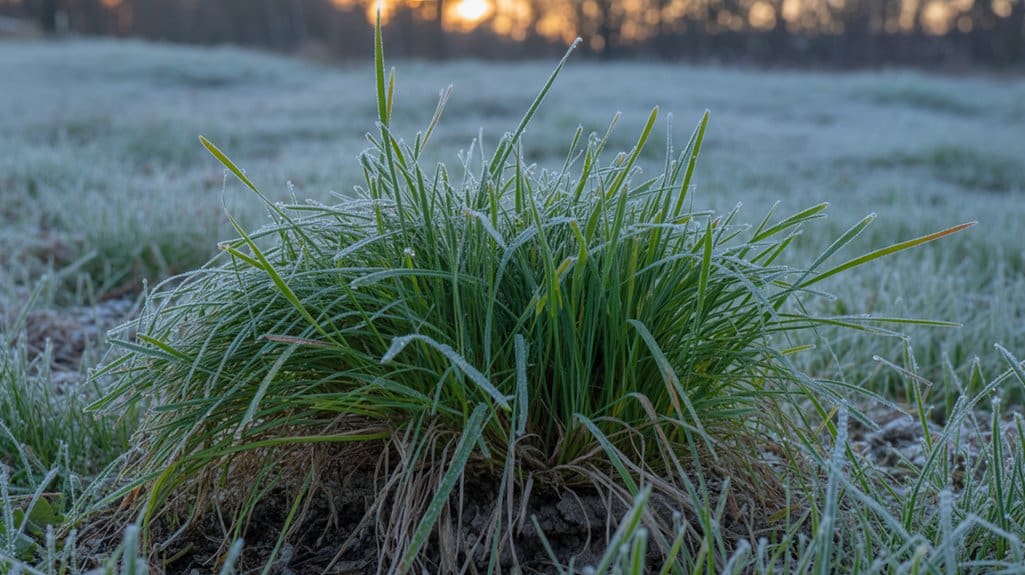
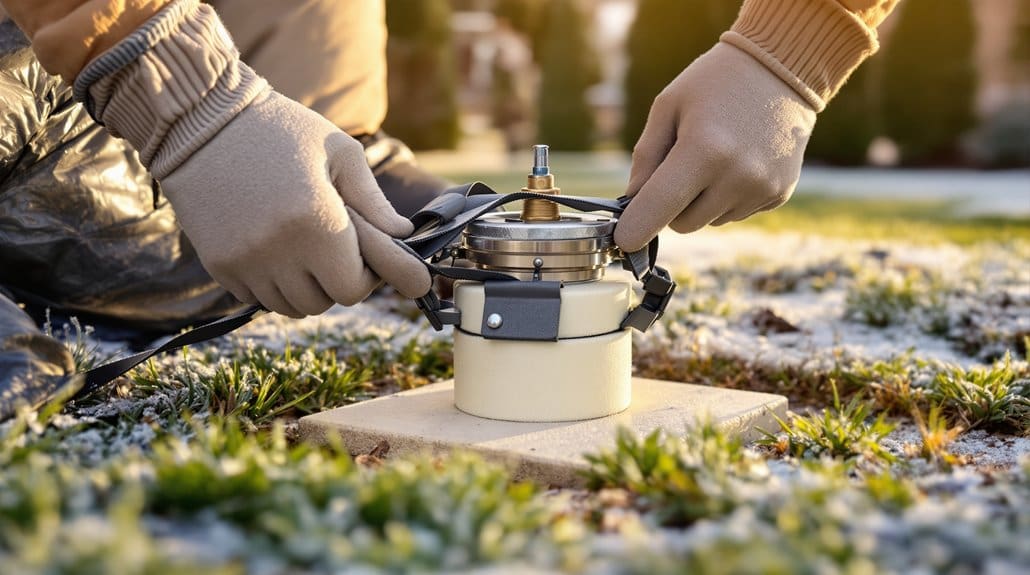
If you want your tall fescue to come back strong each spring, remember that the plant shifts gears as temperatures fall, so don’t treat a dormant top as a dead lawn. You’ll see blades slow in dormancy, yet root growth keeps working, deep roots pulling nutrients and thickening for cold-season survival. Now, we may contemplate this: focus on winter fertilization to boost carbohydrate storage in roots, that energy helps with cold tolerance and drought tolerance later. Don’t panic if leaves look tired; modern cultivars even offer better disease resistance and wider temp ranges. Something to ponder — avoid mowing or overwatering late, that weakens roots. Here’s what to do now: feed smart, let roots grow, trust the process. Consider also using pH test kits to check soil acidity before fertilizing so you apply the right products.
Deep Roots and Energy Storage: The Hidden Winter Work
Because your lawn’s top growth may look sleepy, don’t assume nothing’s happening below the surface; tall fescue is quietly doing the hard work of pushing sugars and building thicker, deeper roots so it can sprint back in spring. You’ll want to understand the root system, because deep roots reach inches to over a foot, and during winter dormancy the plant moves carbs into crowns and storage organs. Now, we may contemplate this: promote root growth with late fall fertilization timed right, not fertilizer binges that waste effort. Something to ponder, you probably skipped this before — been there — but boosting carbohydrate reserves helps winter resilience and spring regrowth. Do this: feed modestly late, avoid cutting too short, trust the roots. Proper lawn care also includes choosing the right equipment and products for fescue maintenance, such as mowing and fertilizing tools, to support those deep roots.
Frost and Dormancy: What Winter Damage Looks Like and Why It’s Usually Temporary
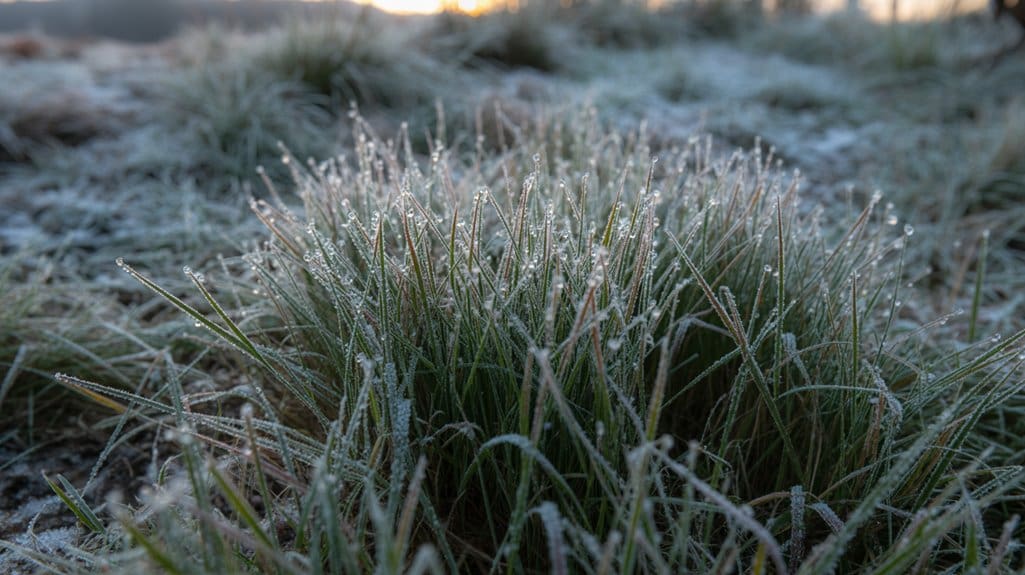
When freezing nights arrive and the grass goes quiet, your tall fescue is switching gears—slowing top growth while roots can still nibble away at cool soil, so don’t panic at the pale, straw-like tips you see; that bleached look usually means leaf-tip cells ruptured from frost and not that the plant is dead. Heading: Recognize frost damage and dormancy. Now, we might ponder this: frost damage shows as leaf-tip injury and winter browning, but dormancy and cold tolerance keep crowns and root activity alive. Something to weigh: avoid walking on or mowing frosted turf, don’t assume the worst, and remember most tip damage is cosmetic. Here’s what to do now: protect crowns with gentle lawn care practices and expect recovery in spring. Many homeowners improve recovery by using lawn striping kits to maintain even mowing and reduce stress on turf, especially when preparing for spring regrowth; see lawn striping for details.
Winter Care That Strengthens Fescue for Spring Recovery
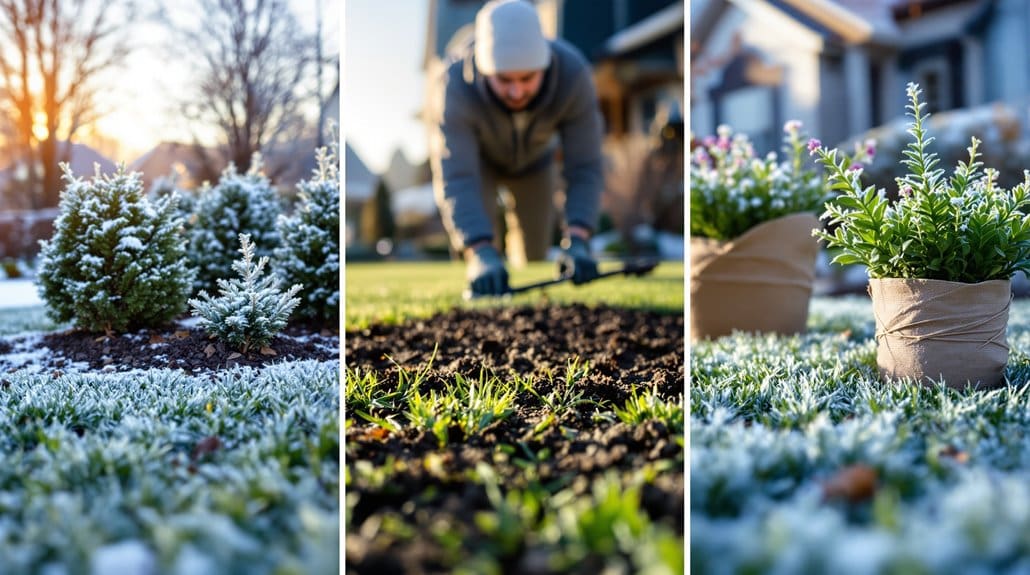
Now’s the time to give your tall fescue the quiet support it needs so spring comes back strong: don’t panic at brown tips, instead focus on feeding roots, protecting crowns, and fixing soil so the turf can bounce back. Step 1 — Feed: use a winter fertilizer and plan late-fall feeding to build carbs for root development, and continue light, targeted feeding through winter per program guidance. Step 2 — Protect: keep mow height around 3.5 inches, avoid scalping, and minimize foot traffic, especially on frosty mornings, to prevent crown injury. Step 3 — Repair: aerate in fall, overseed to lift turf density, reduce compaction, and give your lawn a better spring head start. Trust the process. Consider choosing slow-release fertilizers to provide steady nutrients that support root growth and reduce burn risk.
Choosing Varieties and Seed Mixes for the Best Winter Resilience
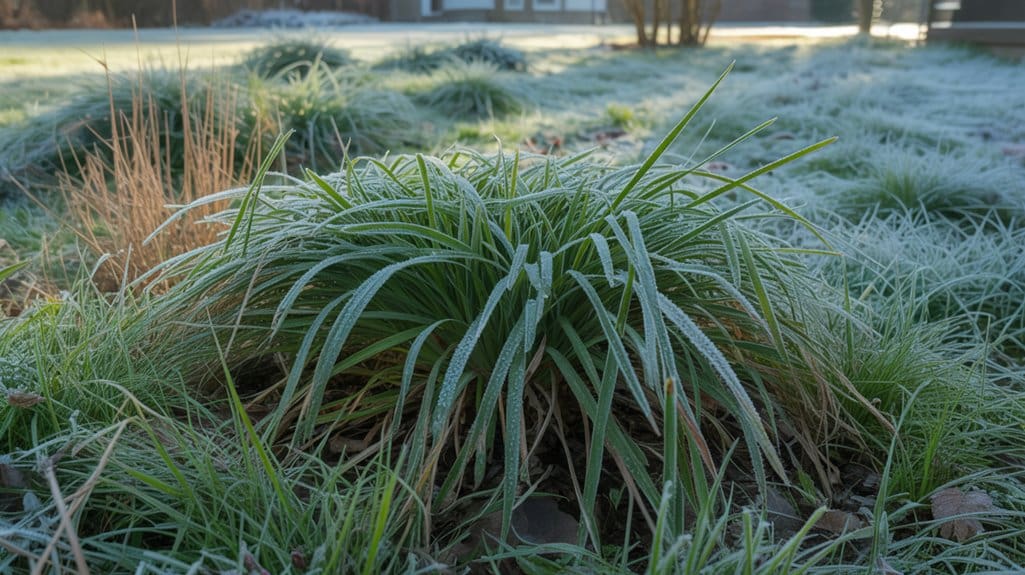
If you want a lawn that actually holds up through the cold, start by picking the right tall fescue types and mixes—trust me, I’ve learned the hard way that pretty seed bags don’t always equal winter survival—so aim for “improved” or “turf‑type” cultivars with proven cold tolerance and disease resistance, and choose a blend of two to three complementary varieties to combine strong roots, finer texture, and better overall hardiness. Now, do this: pick seed blends with certified seed purity and germination, follow seeding rates (about 5–10 lb per 1,000 sq ft), and favor varieties noted for root vigor and winter hardiness. Something to take into account: overseeding in early fall gives roots time, avoids warm‑season mixes, and cuts disease risk. Also remember to test your soil pH and amend with lime as needed to promote nutrient availability and healthy roots for winter resilience (soil pH).
Some Questions Answered
What Happens to Tall Fescue in the Winter?
Tall fescue mostly enters cold dormancy in winter, you’ll see growth slowdown and leaf senescence while roots keep root survival and carbohydrate storage going underground. Now, we may regard this like a huddled village using soil insulation and freeze tolerance to endure temperature triggers; crowd competition lessens. Something to ponder: don’t walk on frosted turf, fertilize late to help carbohydrate storage, and remember, small mistakes cost spring recovery—learn and adjust.
What Are the Downsides of Tall Fescue?
Downsides? You’ll face coarse texture, clumping and slower seedling vigor, higher maintenance demands, and thatch buildup that needs attention. Now, we may contemplate this: tall fescue has good clay tolerance and root depth, but shade adaptation isn’t perfect, and disease susceptibility and pest attraction crop up in warm, humid spells. Something to weigh: it shows salt sensitivity and loses ground to competitive weeds, so overseed and monitor, not ignore.
How to Keep Fescue Grass Green in Summer?
About 1 inch weekly keeps it alive: Proper watering matters. You’ll water deeply in mornings, avoid evening damp that invites disease prevention issues, and accept that Drought stress still happens. Now, we may contemplate Mowing height at about 3.5", Shade tolerance when planting, and Soil testing for fertilizer timing in early summer only. Something to ponder: Core aeration, Overseeding techniques, weed control, honest maintenance beats quick fixes, don’t skip it.
Should Fescue Be Cut Back in the Fall?
Yes — cut fescue in fall, but do it smartly. Start by setting blade height to about 3–3.5 inches, do final fall mowing and handle seed head removal, avoid late fertilization, and use leaf mulching so clippings feed soil. Now, we might weigh stubble management and delay dethatching. Something to weigh: overseeding timing, soil testing, weed control, and traffic reduction to protect crowns — don’t scalp, you’ll thank me later.