You’ll want to think of a modest 2–4 inch snow blanket as a warming layer, not just a nuisance, because it insulates crowns and roots, keeping soil near freezing rather than swinging through damaging thaw–freeze cycles; this steadier temperature and slow melt soaks into the root zone instead of running off, while also delivering a small nutrient pulse. Now, avoid compacted or long-lasting ice, clear debris and aerate in fall, and keep going—there’s more practical guidance ahead.
Some Key Takeaways
- A modest 2–4 inch snow blanket insulates soil, keeping grass crowns near just above freezing and reducing freeze–thaw stress.
- Snowpack slowly releases meltwater, soaking into the root zone and recharging soil moisture more effectively than heavy rain.
- Fresh snow cushions turf from extreme cold and reduces harmful frost heaving that can expose crowns and roots.
- Prolonged wet snow or compacted ice can suffocate crowns, encourage snow mold, and increase winterkill risk.
- Fall aeration, debris removal, and avoiding late nitrogen reduce snow-mold susceptibility and improve winter recovery.
How Snow Insulates Soil and Preserves Turf Crowns
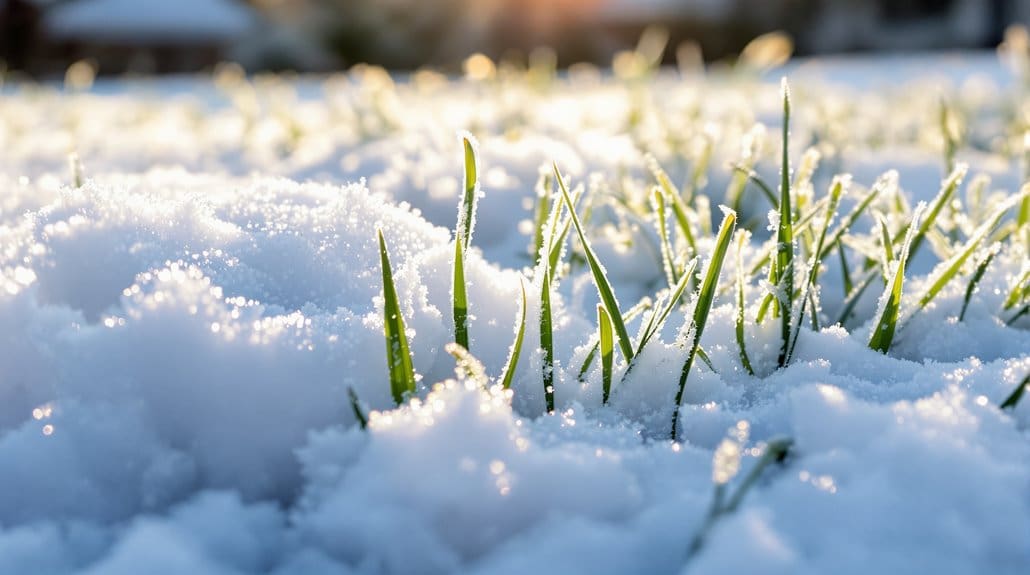
Often you’ll find that a modest blanket of snow is one of your lawn’s best winter allies, because it acts like a natural insulating layer that keeps the soil and grass crowns—those low-growing growth centers at the plant base—closer to just above freezing, so dormancy holds steady instead of cycling through damaging freezes and thaws. You’ll see soil temperature stay steadier under 2–4 inches of fresh snow, insulation that cuts harmful freeze–thaw cycles and reduces frost heaving that can expose turf crowns and roots. Now, this is where winterization matters: aerate and avoid late high-N fertilizer so crowns are healthy, because long-lasting compacted snow or ice can block gas exchange and cause crown damage or winter desiccation, so don’t habitually remove fresh snow. Proper seasonal care and using soil amendments at the right times helps maintain healthy turf and better winter resilience.
How Snowpack Stores Water and Delays Spring Germination
Thinking of snow as a slow, natural reservoir will help you see why that white blanket matters for spring, because about 10 inches of snow only yields roughly 0.4–1.0 inch of water, and that gradual release soaks into the soil as it thaws instead of running off like heavy rain. You’ll learn that a stable snowpack delivers slow-release water, meltwater infiltrates more effectively, and root zone moisture recharges steadily, which means healthier turf when growth resumes. Now, the insulation snow provides also enforces cold stratification for surface-scattered seed, delaying sprouting until conditions are safe, so you don’t get premature green-up from a midwinter thaw. The key is improving infiltration in fall, so rapid melts replenish soil moisture instead of ponding or running away. Properly measuring precipitation with a home rain gauge helps homeowners understand seasonal water inputs and plan fall lawn care accordingly.
How Snow and Melt Promote: or Prevent: Snow Mold and Nutrient Input
When snow piles up and then melts, it does more than just wet the ground — it both supplies a bit of dissolved nitrogen and creates the damp, smothered conditions that let snow mold take hold, so you’ll want to read how each effect balances out. You’ll see that snowpack captures atmospheric nitrogen — called nitrogen deposition — but only about 3–6 lb N/acre annually, far below your lawn’s seasonal need, and snow melt slowly delivers that small pulse while moderating soil temperatures. This is where problems start: prolonged wet cover and matted turf encourage gray snow mold, which leaves straw-colored patches, and pink snow mold, which can harm crowns. The key is fall aeration, debris removal, and evaluating damage before spring fertilization, then raking and removing lingering piles to restore airflow. Regular maintenance and using the right moss control equipment helps keep turf healthy and less susceptible to winter diseases.
How Ice, Melt–Freeze Cycles, and Compaction Harm Dormant Grass
You’ve already seen how a long, wet blanket of snow can feed molds and hold heat, and now you need to watch what happens once that blanket starts to melt and refreeze, because ice and repeated thaw–freeze cycles introduce a different set of problems for dormant grass. When warm spells melt snow cover, then cold nights form ice layers, ice crystals can rupture grass crowns, causing delayed brown patches and root damage, especially in annual bluegrass and perennial ryegrass. Repeated melt–freeze cycles cause soil heaving, they stress cells and weaken roots, and compacted soil from foot traffic or piled snow limits recovery. This is where deicing salts worsen crown desiccation and winterkill, so the key is to minimize loads and salt near turf to reduce freeze-thaw harm. Proper phosphorus management and choosing the right phosphorus products can help support turf recovery and reduce long-term damage phosphorus fertilizers.
Practical Winter Practices to Protect Your Lawn Under Snow
Start by treating snow as a tool rather than a nuisance: a 2–4 inch blanket can actually keep soil near the crown dozens of degrees warmer than bare ground, so leave natural snow in place and focus your winter work on reducing risks that come with too much or too little of it. Now, think about protecting your lawn proactively: remove leaf debris in fall, avoid late‑season fertilizer after mid‑October, and consider fall aeration to boost meltwater infiltration during thaws, which lowers ice and snow mold risks. Don’t pile plowed snow or build snowbanks on turf, and minimize foot traffic on soggy melting snow to prevent soil compaction and crown suffocation. If ice persists, don’t chip it off; gently rake matted areas after melt to restore airflow and speed recovery. Also consider keeping essential winter tools on hand to make maintenance easier and protect turf seasonal lawn care.
Some Questions Answered
Is Snow Cover Good for a Lawn?
Yes — snow cover helps your lawn by creating a winter dormancy-friendly insulation layer that offers freeze protection and root cushioning, now the key is to watch snowmelt timing so moisture retention aids green-up without promoting ice smothering. You’ll encourage healthy microbial activity and maintain soil aeration by avoiding late high-N fertilizer, raking matted patches after thaw, and removing only lingering piles, this keeps your lawn resilient come spring.
How Many Inches of Snow to Cover Grass?
Aim for about 2–4 inches of snow depth as your ideal snow blanket, because that insulating layer gives reliable turf insulation and crown protection, now reducing harmful freeze thaw swings. If snow compaction happens, expect less insulation, so avoid packing it down; this is where melt timing matters, since slower melt aids root thawing and moisture recharge. If you get several feet, watch for prolonged dampness and snow mold, and remove lingering piles.
Why Is Snow Called Poor Man's Fertilizer?
You call snow a “poor man’s fertilizer” because snowmelt nutrients give your lawn a small, slow pulse of nitrogen and trace elements, now and during freeze-thaw cycles, while the white blanket and snowpack chemistry buffer soil temperature, reduce frost heaving, and protect plant dormancy. This helps the soil microbiome and carbon sequestration modestly, and limits snow algae issues; the key is to test soil, then supplement deliberately when results show need.
Will Snow Help Grass Grow?
Yes, snow usually helps grass grow because its insulation value keeps crowns warmer, preserves root respiration, and provides winter hydration as it melts, now supporting soil microbes that prime spring growth. This is where microclimate buffering prevents frost heave and photosynthesis pause damage, but watch for ice encasement or piled snow that invites snow algae or mold; the key is gentle management and seed stratification timing, so plan your spring care accordingly.