You can stop panicking over winter brown spots: limit dog trips to a small gravel or mulch potty zone, leash and steer them there, and flush fresh frozen spots with warm water to dilute salts; don’t let repeated visits concentrate nitrogen on dormant crowns. Now, we may contemplate rotating zones and raking gently at thaw, then in spring test soil, apply gypsum or lime as needed, dethatch, topdress and reseed. Something to ponder: follow this plan and you’ll see exactly how to repair and prevent more.
Some Key Points
- In winter, frozen or waterlogged ground prevents urine dilution, concentrating nitrogen and salts that bleach and kill grass crowns.
- Create a designated potty zone (mulch, gravel, or artificial turf) and train pets to use it to protect lawn areas.
- After fresh winter urination, pour warm (not hot) water on frozen spots or flush thawed areas to dilute salts immediately.
- In spring, inspect recurring brown patches, gently rake dead blades, test soil salinity/pH, and prioritize larger or repeat spots for repair.
- Repair by leaching salts with deep watering, applying gypsum if needed, dethatching, then overseeding or replacing turf where crowns are dead.
Why Pet Urine Worsens in Winter and What That Means for Your Lawn
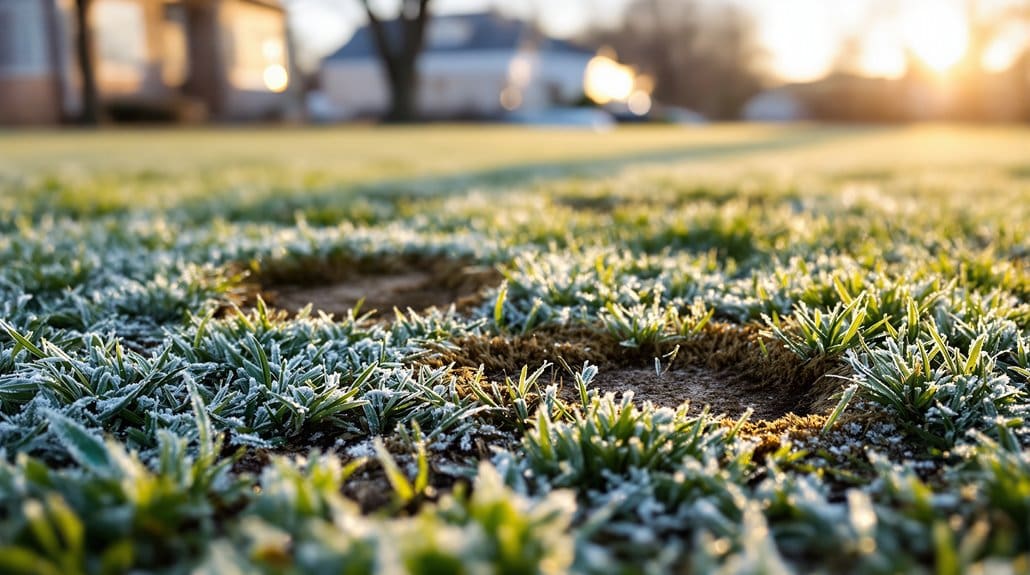
When winter sets in and the ground freezes or stays waterlogged, your dog’s urine doesn’t soak away like it does in warm months, so the nitrogen and salts sit right where the grass needs to grow, and that’s why those yellow or dead spots look worse now than they did in summer. You’ll notice snow can trap urine against turf, prolonging exposure and worsening pigment loss, and cold-stressed grass can’t repair itself the way it does in warmer weather. Now, we may take into account this: don’t assume it’s dead; crowns can appear dormant. Something to consider is repeated winter urination concentrates salts through freeze–thaw cycles, so try flushing or watering deeply in spring before overseeding. Yes, we’ve all waited too long. Consider adding deer repellent applications as part of seasonal yard care to reduce additional stress on weakened turf.
How to Identify Frozen-Turf Urine Damage vs. Other Winter Brown Patches
Start by taking a close look at the spots, because you can often tell what's going on just by how they sit on the lawn: urine burns usually show up as small, irregular yellow-to-brown patches clustered along your dog's regular routes or favorite pee spots, while true winterkill or desiccation tends to leave larger, more uniform brown areas across wider swaths. Now, we may ponder this: check whether patches recur in the same places each year, that points to urine damage. Something to ponder, gently rake a patch in spring; green crowns under dead blades mean likely recovery, exposed brown crowns and brittle roots mean chemical burn and reseed. Soil salt or nitrate spikes confirm concentrated urine, not broad winter injury. Trust your pattern, not panic. Tow-behind sweepers can help collect debris and dead grass clippings to aid in lawn cleanup and spring repair.
Immediate Winter Actions: Limit Concentrated Pet Visits to Protect Dormant Grass
Step 1 — designate a potty zone and train your pet to use mulch, gravel, or a paved spot, because when grass is brittle and frozen, repeated visits to the same patch can concentrate urine salts and kill crowns that won’t regrow. Now, limit yard access and redirect future trips if ground is icy, and if you catch fresh spots when it’s thawed you can flush them with a bucket to dilute the nitrogen — don’t bother flushing frozen soil, it’s mostly useless. Something to keep in mind: protect edges and high-traffic areas with temporary boards, straw, or pea gravel, and mark frequent spots so you’ll know exactly where to test and repair come spring. Consider using dog repellents or temporary surface coverings to discourage concentrated visits and protect your lawn.
Designate A Potty Zone
Pick a single hardy spot and stick with it, because concentrating winter potty breaks away from your lawn will save you a lot of spring heartbreak. Step 1 — designate a potty zone: choose gravel, mulch, or compacted soil several feet from fragile turf, and lead your dog there each time, leash in hand, until it’s habit. Now, train consistently, reward success, clear deep snow, add pea gravel or wood chips for traction, and mark it with a rock border or flag so your pup finds it even in blizzard mood. Something to bear in mind: if your dog’s a frequent user or big, rotate into an adjacent area to prevent dog urine overload. Do this, not let them wander on dormant grass. For long-term durability, use proper connectors and fittings to keep your watering and cleanup tools ready hose connector tips and reduce lawn maintenance headaches.
Limit Yard Access
You’ve already picked a potty zone, and that makes the next move simple: limit how much of your lawn your dog actually uses while the grass is sleeping. Now, we may contemplate this: keep them on a short leash, steer to the designated spot on mulch or pea gravel, and avoid concentrated visits that pile up nitrogen and salt on frozen crowns. Something to ponder, if you can, shovel a clear path so they actually go where you want. When that’s impossible, rotate access across different lawn sections so one patch doesn’t take all the wear. Do this, not that: postpone training and heavy play until green-up, don’t let repeated yard peeing become a spring regret. Yes, we’ve all rushed outside; try better. For additional help protecting dormant turf, consider using post-emergent herbicide products and proper lawn-care equipment designed for homeowners.
Protect Dormant Turf
If you want your lawn to still look alive come spring, act now to protect dormant turf from concentrated pet urine—don’t let the same spots take every hit while the grass is brittle. Step 1: reroute pets to a designated area, gravel or mulch works, and yes, it feels weird at first but your neighbors will still like you. Now, we may take into account this: block off sensitive or newly seeded patches so they don’t become pee magnets. Step 2: if pets must use the lawn, dilute each spot with 1–2 gallons of water when temperatures allow, that simple step saves a lot of dog urine grass repair work later. Something to ponder: avoid multiple dogs on one patch, please. Consider providing a dedicated pet area with gravel or mulch to preserve lawn health and simplify cleanup.
Quick On-the-Spot Fixes During Thaw Windows (Flush, Clear Snow, Dilute Salts)
When thaw windows open, act fast and simple — flood any exposed urine spots with a steady hose or sprinkler for at least a minute or two so concentrated nitrogen and salts get diluted before they sink into the soil, and while that water’s running, gently clear melted snow and matted grass so air and sunlight can reach the turf and speed recovery. Immediately water the area, dilute the urine, and let that flush do the heavy lifting; you’ll feel better than patching a problem later. Now, gently rake debris away, but don’t stomp soggy ground — compaction kills roots. Something to bear in mind: light gypsum can help displace salts, water it in, and hold off seeding until it’s consistently thawed and firmer. Consider using an automated hose timer to ensure consistent, measured flushes during thaw windows so you don’t over- or under-water vulnerable spots.
Create and Prep a Winter Potty Zone: Low-Maintenance Surfaces That Hold Up
Now, you’ll want a dedicated winter potty zone that’s both durable and low‑fuss, so think a 4–6 inch gravel pad over landscape fabric, not letting your dog use the same soggy lawn spot that turns into a brown mess. You can also use an artificial turf strip — it looks cleaner, drains if you slope it, and you won’t be shoveling gravel out of the porch every week like I did the first winter. Something to ponder: size it for your dog, position it by a door and away from beds, and refresh the surface yearly so you’re preventing concentrated urine and salt buildup, not just masking it.
Durable Gravel Pad
Dig in and get the base right—this is the part you’ll thank yourself for on the first thaw. Step 1: excavate and lay geotextile fabric, then add 4–6 inches of crushed stone (¾-inch minus) so your gravel pad drains and won’t mix with soil; trust me, I’ve fixed lumpy mistakes before. Step 2: edge with treated timber or aluminum on a compacted base to stop freeze-thaw heave, it keeps a neat boundary and helps future Lawn Repair look easier. Now, we may deem it necessary to slope: grade 1–2% away from buildings so urine and meltwater run off to a safe outlet. Something to ponder: top with 1–2 inches of pea or rounded gravel, include a perforated drain below for low-maintenance year-round use.
Artificial Turf Strip
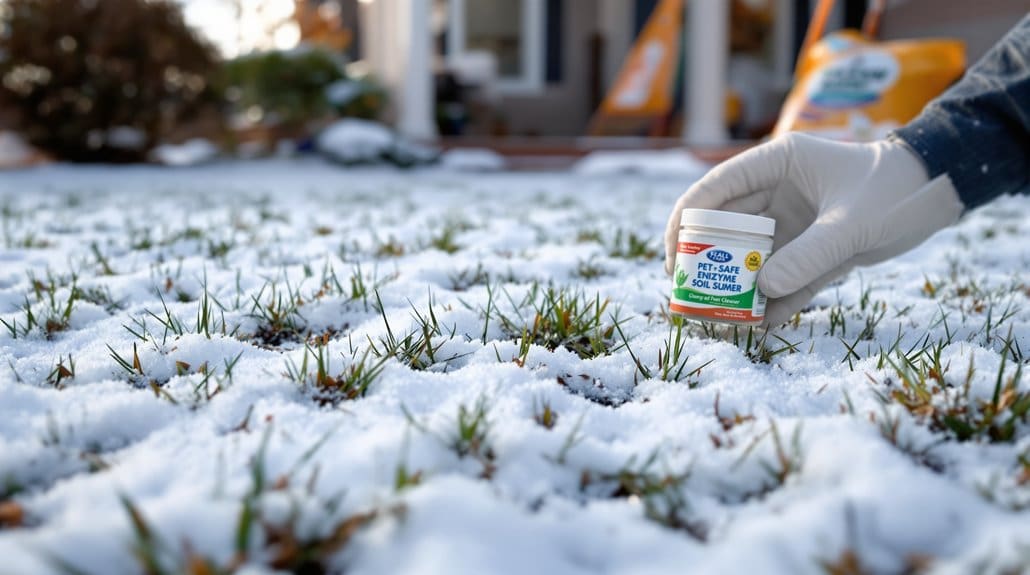
You’ve got the gravel pad set and the edge locked in, so it makes sense to outfit a dedicated potty strip that’ll hold up through thaw and freeze without turning into a smelly mess. Start by laying a 3–6 ft artificial turf strip of UV-stabilized, pet-grade turf with a short pile (10–20 mm) over 2–3 in compacted crushed stone, weed barrier, and a capped permeable layer so urine drains. Add 1–2 in washed silica sand or pet-rated rubber infill to keep fibers upright and cut odor, then slope the base 1–2% toward a planted area or drain. Train your dog to use it, hose daily, and disinfect weekly with an enzymatic cleaner. Something worth weighing: flush the base periodically to prevent buildup.
Short-Term Behavior and Routing Tips to Reduce Repeat Spots Through Winter
Winter's hard on grass, and you’ll usually see the same brown spots show up where your dog always goes, so take steps now to keep that damage from getting worse. Step 1 — pick a simple potty patch, like mulch or pea gravel, and train your dog to use it; you’ll feel smarter than me when it works. Step 2 — walk farther and use a consistent route, that spreads sites and avoids the “one sad circle” by the door. Step 3 — for multiple or big dogs, add and rotate extra spots so nitrogen doesn’t build up. Now, if your pup pees on frozen turf, pour warm (not hot) water right away to dilute salts. Something to weigh: supervise, leash-guided trips, reward use; skip unvetted supplements.
Early-Spring Assessment: How to Inspect, Map, and Prioritize Damaged Areas
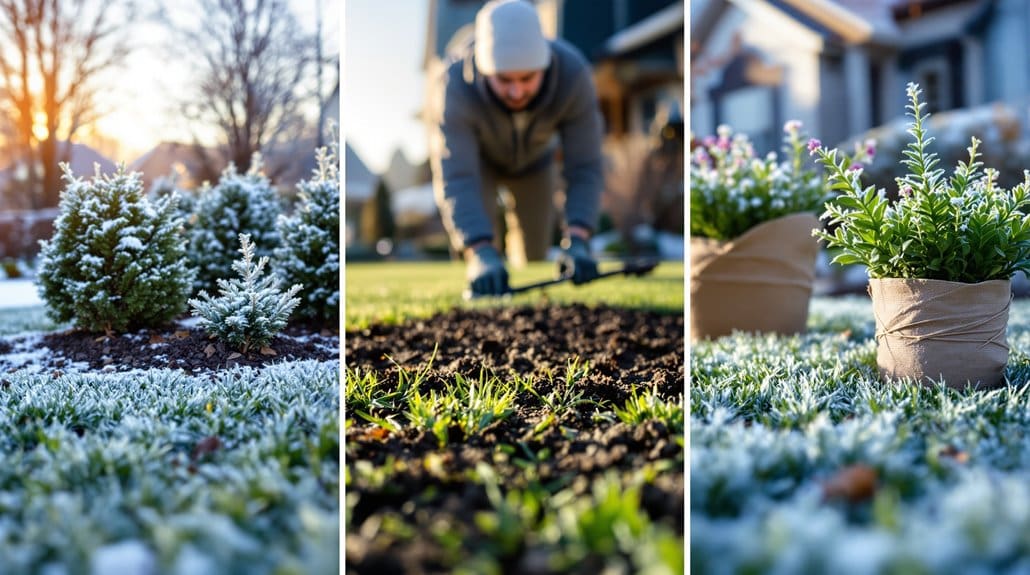
Starting your spring walkabout now will save you time and headaches later, so grab boots and a notebook and get out there as soon as frost and snow melt — you’ll thank me when the problem spots are small and obvious instead of a chaotic mess. Step 1: Inspect the Grass and Lawn closely, note yellow or brown patches, size each one (<1 sq ft vs. >1 sq ft), and photograph with dates. Step 2: Distinguish urine burns from winter mold by looking for concentrated, irregular brown spots and straw-like blades, not soft matted circles. Now map locations, mark repeat spots and high-traffic urination zones. Step 3: Prioritize bigger or recurring areas for immediate action, test soil salinity and pH, and log treatments so you’ll track progress and show results.
Spring Repair Plan: Dethatch, Amend Soil (Gypsum/Limestone), and Reseed/Patch
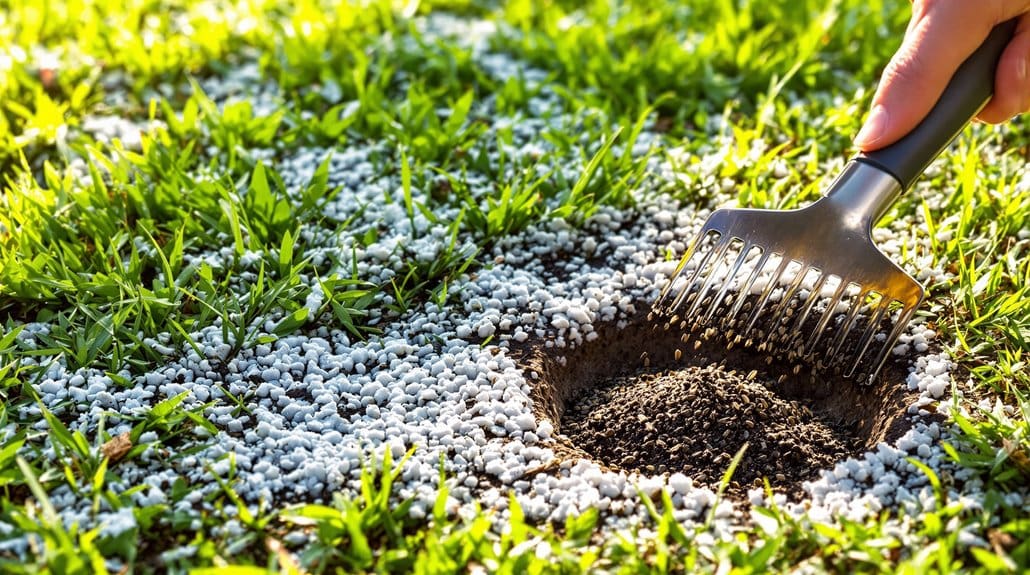
Spring’s the time to fix what you found in your walkabout, and the repair plan starts with getting rid of old, matted grass, correcting the soil, and putting seed back where it belongs. Step 1: dethatch when soil’s dry, rake out dead grass or use a vertical mower so soil so the grass gets air and water — zoysia and bermuda especially need this. Step 2: test pH, then apply limestone if acidic, or gypsum to displace urine salts, following label rates; for severe salt damage, remove turf and leach with deep water first. Step 3: add 1/4–1/2 inch topsoil or compost, reseed with region mix, keep moist 2–4× daily, avoid pets until strong.
Long-Term Prevention: Training, Diet Considerations, and Durable Landscape Solutions
If you want to stop fixing the same brown spots over and over, train your dog to use one durable potty area and flush urine away right after each visit — it’s the single most effective move you can make, and it beats shouting at the lawn. Step 1 — Train: Guide your dog to a 3–6 ft durable pad of pea gravel, mulch, or bare soil, praise, repeat; it concentrates damage and cuts Repair needs. Step 2 — Flush: Pour 1–2 gallons or set a nearby soaker to dilute salts immediately. Now, we may contemplate diet — talk to your vet before changing protein; sudden swaps or “neutralizers” can hurt. Something to contemplate: route fences, rotate zones, and use clover or reinforced turf for multi-dog yards.
Some Questions Answered
How to Fix Dead Spots From Dog Pee?
You fix dead spots by raking out dead turf, loosening soil, adding topsoil or compost, then overseeding with appropriate seed; this turf restoration works best when you also use soil amendments like lime if pH’s low. Now, we may contemplate this: water daily, keep pets off until grass roots, and don’t overdo fertilizer. Something to weigh, you’ll probably mess up once, we have—then it’ll grow back fine.
What Is the Best Lawn Treatment for Dog Urine Spots?
The best lawn treatment is to flush, amend, and reseed: flush spots with water, apply gypsum or a soil amendment to move salts, then rake and overseed with matching grass. Now, we may contemplate alternative diets if urine is unusually concentrated. Something to weigh: train your dog to a gravel or mulched spot to stop repeats. You’ve probably missed a step before — that’s okay, fix it with these steady, practical moves.
How to Fix a Lawn Ruined by Dog Urine?
A neighbor once fixed a scorched patch by raking out dead turf, adding compost, then seeding; you can do the same. Now, loosen the soil, spread 1–2 cm compost or topsoil, overseed with compatible grass, and keep it moist until it’s mowed. Something to bear in mind: use training pads or a gravel potty, talk to your vet about diet changes if urine seems strong, and protect new seedlings until they’re steady.
How Do You Fix Dog Pee Damaged Wood Floors?
You fix dog pee damaged wood floors by cleaning, treating, then refinishing. First, wipe up, use enzyme cleaners for deep odor, then sand lightly where finish soaked through, starting with coarse grit and smoothing, something to take into account. Now, we may restore color with wood refinishing and, if stains persist, use wood bleach before final sanding. Seal with quality polyurethane, trim nails, and train pets — yeah, we’ve all learned that the hard way.