You’ll want to overseed warm‑season turf with perennial ryegrass in early fall, when nights dip to the mid‑50s, so you get winter green without wrecking Bermuda. Do this: mow low and scalp a bit, core‑aerate if compacted, scarify bare spots, spread 8–10 lb/1,000 sq ft for active yards, apply a light starter fertilizer, and keep the top ¼–½ inch consistently moist until germination, then reduce frequency. Limit traffic for two weeks. Follow spring shift steps next.
Some Key Takeaways
- Overseed warm‑season lawns in late September–early October when nighttime temps are around mid‑50s°F for best ryegrass establishment.
- Core aerate and scalp to ½–¾" where needed, then seed perennial ryegrass at 8–10 lb/1,000 sq ft for full winter cover.
- Apply a starter fertilizer (higher P) at seeding and keep soil surface consistently moist until germination (7–10 days).
- Water lightly 2–4 times daily until established, then shift to deeper, weekly irrigation after two mows.
- Maintain ryegrass at 2–2.5" with frequent mowing, reduce nitrogen before spring, then use herbicide+scalping to transition back to Bermuda.
When to Overseed: Best Windows for Ryegrass in the South
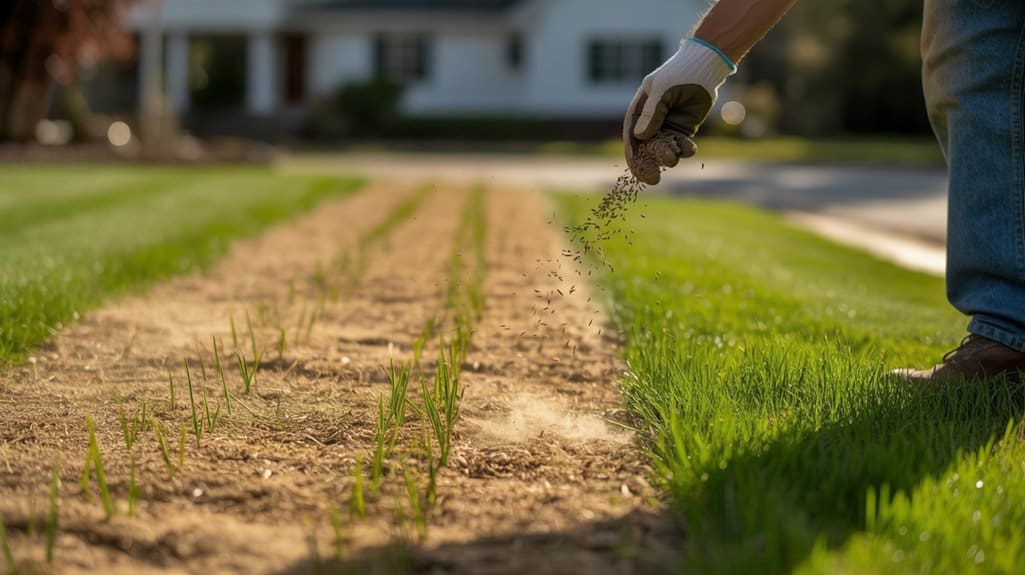
If you want a quick, green winter lawn without killing your Bermuda or Zoysia in spring, start planning to overseed in late September to early October, when nighttime temps regularly slip into the mid‑50s°F (around 13°C). When to Overseed: Best Windows for Ryegrass in the South — You’ll Overseed with Ryegrass during that window, aim for a run of dry days so you can control irrigation, and avoid seeding before heavy rain that washes seed away. Use about 8–10 lb of Perennial Ryegrass seed per 1,000 sq ft, start light, frequent watering until germination, and remember scalping the warm-season turf helps seed contact. Now, we may consider timing to let ryegrass own winter, yet yield to spring. For homeowners maintaining their property regularly, choosing the right seed and equipment matters for a healthy lawn, so select quality ryegrass seed and proper spreaders for best results (best ryegrass choices).
Prepare Your Lawn: Mow, Scalpe, Aerate and Repair Bare Spots
Start by telling your mower who’s boss: lower your warm‑season grass to a ½–¾ inch scalp so ryegrass seed can touch soil and actually grow, not choke behind a winter jungle. Step 1 — scalping warm-season turf: if you’ve let Bermuda grass get haughty, cut it back, don’t scalp to dust. Now, we may contemplate aeration: core aerate to relieve compaction, especially on clay, so overseeding with Ryegrass finds channels to root. Step 3 — repair bare spots: rake or lightly scarify to expose mineral soil where seed can settle, press seed in by walking or rolling, and use a light starter fertilizer. Something to ponder: water frequently and lightly until germination, then deepen. You’re doing this for a greener neighborhood, together. If you need precision cuts and reliable results, consider the impact of sharp mower blades on turf health and mowing quality.
Seeding Plan and Rates: How Much Perennial Ryegrass to Spread Where
Now you’ll map out how much perennial ryegrass to drop where, because tossing seed at the lawn and hoping for the best usually ends up patchy and sad. Seeding plan first: for full overseeding with Winter cover, aim for Perennial Ryegrass at 8–10 lb per 1,000 sq ft, use a spreader for even coverage, and don’t skimp because thinness shows. For thin or bare spots, hand-seed at 4–6 lb per 1,000 sq ft or a heavier local spot rate, lightly rake or scarify so seed contacts soil about 1/4–1/2 inch. Now, we may take into account edges and wear patches: hand-seed those tight corners. Something to weigh if your Bermuda or zoysia is dense, use the higher rate and spot-scarify to beat competition. For best results choose a lawn spreader that fits your yard size and gives even distribution.
Starter Fertilizer, Irrigation and First 2 Weeks of Care
Now that you’ve spread the ryegrass seed, apply a starter fertilizer labeled for turf with a higher phosphorus number (think 10-20-10 or similar) at the rate on the bag to help roots get going, and yes, I know you’ve skipped this before—don’t. Water lightly and often for the first 10–14 days, keeping the top 1/4–1/2 inch of soil moist with short cycles morning and evening, then shift to deeper, less frequent runs once seedlings hit about 1.5–2 inches to train roots downward. Mow only when ryegrass reaches roughly 2–2.5 inches, bag or return clippings carefully after the turf is actively growing, and plan follow-up balanced fertilizer every 4–6 weeks while cutting back nitrogen a few weeks before your spring warm-season recovery. For best results with homeowners maintaining their property, select starter products and equipment designed for home lawn use.
Starter Fertilizer Selection
Choose a starter fertilizer that gives the new ryegrass seedlings a quick, reliable boost, because getting roots established early saves you headaches later. Step 1 — pick a balanced, quick‑release N‑P‑K like 10‑20‑10, apply it at overseeding so your perennial ryegrass gets about 0.5–1 lb N/1,000 sq ft now, not later. Now, we may deem this: use a product labeled for starter use and follow directions, you’ll avoid burning tender seedlings. Step 2 — plan a light follow‑up feed 4–6 weeks after seeding, again roughly 0.5–1 lb N/1,000 sq ft, to keep winter growth steady. Something to ponder: don’t overfertilize the underlying warm‑season turf; you’ll thank yourself in spring. Consider also buying a quality spreader designed for granular fertilizers to ensure even application.
Irrigation Timing And Frequency
You’ve given the new ryegrass a good start with a starter fertilizer, so it’s time to get the watering right — this is where a lot of folks either overdo it and wash seed away, or underdo it and watch seedlings die on the vine. Step 1: for the first 10–14 days, water lightly and frequently, aim to keep soil surface consistently moist by watering 2–4 short cycles daily, depending on your system; yes, it feels fussy, but it works. Now, after germination around day 7–10, reduce frequency and increase run time to encourage roots, moving toward 1/4–1/2 inch per irrigation. Something to weigh: time deeper runs in evening, avoid long saturation, and follow an irrigation schedule that shifts to weekly after two mows. For best results on a typical homeowner system, choose spray nozzles designed for even coverage and matched precipitation rates to avoid dry spots and runoff.
Mowing And Early Maintenance
Mow the dormant warm-season turf very low before you overseed, scalp it down to about ½–¾ inch so the ryegrass seed can make good contact with the soil, and yes, it looks drastic — but that extra exposure really speeds germination and cuts down on rough competition. Now, apply a starter fertilizer at seeding, follow the label, don’t overdo it — you want quick roots, not a burn. Immediately after, keep the topsoil consistently moist with light, frequent irrigation until germination, about 7–10 days. Something to keep in mind: once seedlings reach 2–2.5 inches, begin mowing at a cutting height near 2 inches and remove clippings. Do this, not that: monitor moisture, repeat starter-rate feeding every 4–6 weeks. Also consider using a home core aerator to reduce soil compaction and improve seed-to-soil contact.
Winter Maintenance: Mowing, Fertilizing and Managing Wear
Now that your rye is up, keep the mower set at 2–2.5 inches so you encourage tillering and avoid scalping the warm‑season grass underneath, and expect to mow more often—about every 7–14 days depending on growth and nitrogen. For fertilizer, stick with a balanced starter at seeding then make light winter feedings every 4–6 weeks, aiming for roughly 0.5–1.0 lb actual N per 1,000 sq ft each time, but remember to ease off nitrogen as spring nears so the rye will thin out for changeover. Something to ponder: limit heavy traffic on those first two weeks and reduce wear all winter, because rye tolerates use once rooted, but it won’t forgive careless stomping while it’s still making strong roots.
Mowing Height And Frequency
Usually, you’ll want to drop your winter start height a bit once the perennial ryegrass is up and running, so set the deck to about 2–2.5 inches instead of the 2.5–3 inches you used at overseeding; this helps the rye thicken up and cuts down on disease in cool, wet months. Now, we may contemplate mowing height and frequency together: plan for frequent mowing, about every 7–10 days, because rye grows fast in cool weather. Do this, not that—remove no more than one-third of the blade at a time, or you’ll stress the grass and invite disease. Something to ponder: keep traffic light on new grass for two weeks. Yes, I’ve scalp-shamed my lawn before; don’t be me.
Winter Fertilizer Schedule
If you want your overseeded rye to look good all winter, stick to a simple fertilizer rhythm that feeds without forcing, because too much or too little at the wrong time will either burn new seedlings or leave you with thin, weedy patches come spring. Step 1 — at overseed: apply a balanced winter maintenance fertilizer, it gives perennial ryegrass the start it needs without overwhelming your warm‑season turf. Now, we may weigh this: feed light nitrogen every 4–6 weeks, that keeps color and density while you water to about 1 inch per week. Something to weigh — don’t overdo late winter nitrogen; begin dialing back as spring nears to favor Bermuda recovery. Do this, not that: steady, measured feeds, not heavy dumps.
Managing Foot Traffic Wear
When you’re counting on overseeded rye to hold up through winter play, treat wear management like routine maintenance—steady attention beats heroic last‑minute fixes every time, and yes, I’ve learned that the hard way. Step 1 — mow and monitor: keep perennial ryegrass at 2–2.5 inches, mow more often in winter to keep density, don’t scalp. Step 2 — seed smart: overseed heavy, about 8–10 lb/1,000 sq ft for active yards so the dense stand resists foot traffic and crowds out weeds. Now, water lightly and often for two weeks to set the sod, and feed with starter fertilizer then every 4–6 weeks. Something to ponder: aerate before overseeding and kindly limit play until grass firms up.
Spring Transition: Using Herbicides, Scalping and Timing for Bermuda Recovery
As spring warms up and you’re watching that overseeded ryegrass start to loosen its hold, now’s the time to act so Bermuda can come back strong; you’ll want to use a selective ryegrass-removal herbicide like Celsius WG around March–April once daytime temps are reliably in the mid‑60s to low‑70s, then scalp and manage moisture and fertility to give Bermuda the edge. Step 1 — treat: apply the herbicide on warm days, don’t rush, you’ll thank yourself later. Step 2 — scalp: one week after treatment cut ryegrass to ½ inch to expose Bermuda crowns, sunlight and heat speed recovery. Now, we may consider this: reduce nitrogen inputs to the ryegrass late season, switch to Bermuda fertility, and avoid overwatering during shift.
Common Problems and Fixes: Seed Washout, Patchy Germination, and Rye/Bermuda Competition
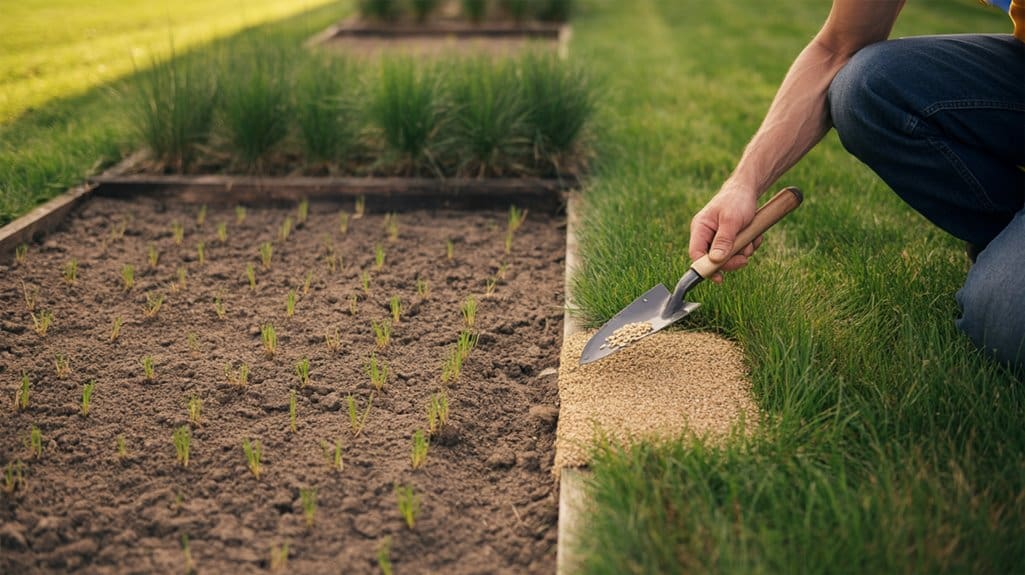
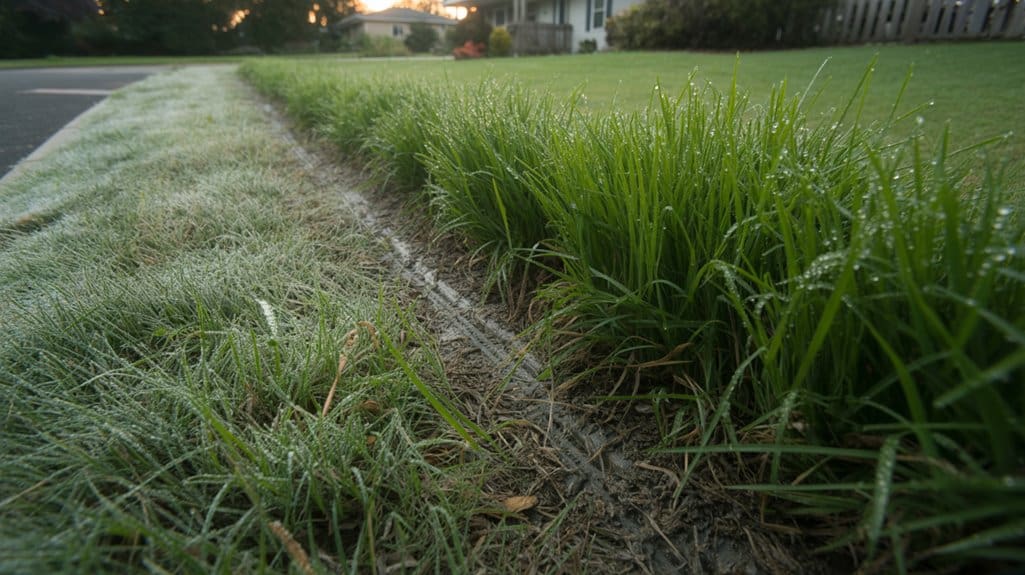
Now that you've put the seed down, don't panic if parts of the lawn look thin or you spot channels where everything washed away—this is common and fixable, and yeah, we've all overseeded before a storm and cursed ourselves later. Step 1: prevent seed washout by avoiding seeding before thunderstorms, grade low spots, and aim for 48–72 hours of controllable light irrigation instead of a heavy soak. Step 2: fix patchy germination by scalping to ½–¾ inch, scarifying ¼–½ inch for good seed-to-soil contact, and using about 8–10 lb/1,000 sq ft for perennial winter ryegrass, keeping the surface moist for 10–14 days. Step 3: manage rye/bermuda competition in spring with a selective herbicide, scalp, and cut rye fertility so Bermuda can recover.
Some Questions Answered
Does Ryegrass Stay Green All Year Round?
Think of ryegrass like a guest who loves your couch in winter but packs up when summer heats arrive; no, it usually won’t stay green all year. You’ll value its quick germination and cool season vigor, but its shallow root depth and limited seed longevity mean it fades or gets removed as warm grasses return. Now, we may consider this: water and mow through winter, but don’t expect summer permanence.
How to Overseed With Ryegrass in the Fall?
You overseed in fall by prepping soil, aerating and scalping the turf so seed reaches bare soil, then broadcast at the proper seeding rate, about 8–10 lb per 1,000 sq ft. Now, we may contemplate this: lightly scarify to cover seed ¼–½ inch. Keep a strict watering schedule, nightly or several short cycles until germination timing of 7–10 days, then cut back to ~1 inch/week. Something to ponder: don’t skip starter fertilizer.
When Should I Overseed Winter Rye That I Put Down as a Base?
Now: seed in late Sept–early Oct, when nights hit mid‑50s°F; that’s your timing window. Do the soil prep first, scalp and aerate, get seed depth ~¼–½ inch, then cover. Water with a light, frequent watering schedule until you see robust germination in about 7–10 days. Now, we may contemplate this: keep rye at 2–2.5 inches and prep for a spring changeover. Something to ponder: don’t overwater.
What Are the Downsides of Winter Rye?
Downsides include disease susceptibility, allelopathic effects that suppress warm‑season grass, mowing challenges from frequent cuts, and nutrient leaching with extra fertilizing. Now, we might weigh this: you’ll spend more time and inputs, and residual rye can delay Bermuda or zoysia recovery. Something to weigh: scalping or herbicide helps, but it’s a pain — been there. Do this, not that: plan removal early, don’t overfertilize late.