New Year, New Lawn: Set three clear, measurable goals now—cut weeds to under 5% cover, raise peak greenness one category by July, and boost root depth 25% by November—and audit irrigation, soil, and turf type so every move counts. Now, test soil and map sprinklers, time pre-emergent to soil ~55°F, aerate and overseed at the right temps, and follow the 1/3 mowing rule. One thing worth considering: spot-treat escapes, not whole lawns. Keep going to get month-by-month steps.
Some Key Points
- Run a soil test late winter to set pH and nutrient targets and build a soil-test-driven fertilizer plan.
- Apply spring pre-emergent when soil temperatures reach about 55°F to prevent annual grassy weeds like poa annua.
- Aim for 1 inch of water per week, water deeply to 6–8 inches, and irrigate early morning to reduce disease.
- Schedule core aeration and overseeding for cool-season turf in early fall; for warm-season, aerate in late spring.
- Track weed and ground cover regularly, spot-treat escapes with labeled post-emergents, and measure progress every 4–6 weeks.
Set Three Measurable Lawn Goals for 2026 (Weeds, Roots, Color)

Start by choosing three clear, measurable targets you can actually track all year—one for weeds, one for roots, and one for color—because vague goals like “make it look better” never survive a hot July. Now, set a weeds goal: cut broadleaf and grassy cover to under 5% in 2026 by applying a spring pre-emergent herbicide before soils reach about 55°F, and spot-treat escapes with labeled post-emergents. One thing to bear in mind: measure root growth, aim for a 25% increase by November with fall fertilization, late deep watering, and aeration, and verify with 2–3 soil cores. Here’s the thing: for color, raise your peak greenness one category by July using a soil-test fertilization plan and three seasonal feeds. For equipment and supplies that make these tasks easier, consider improving your routine with lawn care equipment from reputable suppliers.
Audit Your Lawn Now : Irrigation, Soil, and Turf Type Checklist
You set your three measurable goals for weeds, roots, and color, and now it’s time to check what you’ve actually got to work with—because plans are great, but they’re useless if your system can’t deliver. Step 1, irrigation audit: put straight-sided cups in several spots, run each zone until one cup gets 1 inch, note runtime and uneven cups—fix poor heads, not just crank up the timer. Now, send a soil test for pH, N-P-K and micronutrients so you can plan amendments; I once waited too long and paid for it. One thing to keep in mind, identify your turf type—mowing height and water needs differ. Here’s the thing: map shade, compaction, thatch, and past hotspots so you can treat smart, not random. Also consider upgrading to a reliable hose timer to make consistent irrigation easier and avoid over- or under-watering.
Make a Simple Monthly Maintenance Calendar for Your Climate
Let’s lay out a simple month-by-month calendar you can actually follow, not some idealized schedule that vanishes by April—here’s what to do now, broken down by season and adjusted to your climate so you don’t end up fertilizing in the heat or aerating when the soil’s too cold. Start January–March by testing soil health, apply pre‑emergent by late February, and plan core aeration/overseeding when soil temps hit 50–65°F. Now, April–June, focus on consistent care: sharpen blades, mow responsibly, and apply a slow‑release granular fertilizer as growth resumes. One thing to keep in mind: July–September needs more water, slight height increases, and disease checks. Here’s the thing, October–November is fall fertilizer and possible aeration, and December is inspection and prep. Consider keeping essential lawn care tools like a quality aerator and a soil test kit on hand for regular maintenance and accurate soil testing.
Mowing Plan: Heights, Frequency, and the 1/3 Rule
Usually, you'll want to treat mowing like a routine checkup—steady, predictable, and done before things get out of hand—because a few bad cuts last all season and I’ve made that mistake more than once. Step 1 — Set your mowing heights by grass type: cool-season lawns like tall fescue and bluegrass at 2.5–3.5 inches, warm-season types lower, about 0.5–2.5 inches depending on species. Now, sharpen blades before the first spring mow; dull blades tear, not cut. One thing to bear in mind: follow the 1/3 rule, never remove more than one-third of the leaf, it cuts stress and disease. During peak growth mow more often, in heat or fall raise height slightly. Here’s the thing: bag that first buzz-cut on warm-season lawns to avoid clumps. Replace or sharpen mower blades regularly to ensure a clean cut and maintain lawn health, since sharp blades make a measurable difference.
Watering Plan: How Much, When, and How to Measure 1 Per Week

Often you’ll want to think of watering as the steady heartbeat of your lawn care routine, because getting it wrong — either skimping or overdoing — can haunt you all season and I’ve learned that the hard way. Step 1: Aim for about 1 inch weekly, counting rain, and measure by placing a straight-sided container like a tuna can where sprinklers reach, time how long to fill. Now, water deeply once to moisten 6–8 inches of soil, don’t do shallow daily sprays that make weak roots. One thing to reckon with: run sprinklers early morning, 4–9 AM, to reduce evaporation and disease risk. Here’s the thing: perform an audit with several cups, adjust heads so coverage’s even, then reduce water gradually in fall. Consider using a rain gauge to track natural rainfall and avoid overwatering.
Fertilizer Strategy: Timing, Soil Tests, and Product Choices
Now, get a soil test before you buy anything — the lab report tells you pH, exact N-P-K needs, and any micronutrient gaps so you can pick the right product instead of guessing and over-applying. One thing to weigh: follow a seasonal timing plan—more nitrogen for cool-season grasses in early fall and light spring feeding, but for warm-season lawns save most fertilizing for late spring into summer—and use slow-release sources split into multiple applications to cut scorch and leaching. Here’s the thing, calibrate your spreader, coordinate pre-emergent timing with seeding plans, and aim for roughly 2–4 lb actual N per 1,000 sq ft per year as a starting point, adjusting from the soil test. Consider keeping essential tools like a reliable pH test kit on hand to monitor soil acidity and guide adjustments.
Soil Test First
If you want a fertilizer plan that actually works, start with a soil test so you’re not guessing and throwing money at the lawn like I did my first year (lesson learned). Step 1 — get a soil test: it measures pH, N-P-K and micronutrients, so you can avoid guesswork and target what your turf truly needs. Now, send samples in late winter or early spring, so results guide your spring choices. One thing to keep in mind: the test tells you if lime or sulfur is needed to correct pH, do that well before heavy growth. Here’s the thing, follow recommendations, pick slow‑release fertilizer and don’t wing the amounts — your lawn, and wallet, will thank you. For best results, pair your soil test with advice on starter fertilizer selection from a trusted lawn care supplier.
Seasonal Timing Plan
You got your soil test back, so here’s what to do now: plan your year around timing, not guesswork. New Year feels hopeful, and your seasonal timing plan starts with that test—late winter before spring green‑up—so you avoid throwing nitrogen at problems that aren’t there. Now, one thing to ponder: in early spring, when soil hits about 55°F for several days, apply a pre‑emergent plus a light, slow‑release starter to block crabgrass and feed roots. Here’s the thing, cool‑season lawns need 3–4 feeds, heavier in fall; warm‑season lawns get most N late spring through mid‑summer, then a low‑N, higher‑K touch in early fall. Don’t mix quick‑release in heat, time herbicide moves around fertilizer, and follow labels—learn from last year’s oops.
Choose Right Products
Choose the right fertilizer by starting with your soil test and planning around timing, not hope—you’ll dodge the “throw it all at once” trap I fell into last year and actually give the grass what it needs. Step 1 — start with a soil test in late winter, check pH and nutrients, then pick a formula that supplies the N‑P‑K and micronutrients your turf is missing. Now, one thing to keep in mind: cool‑season lawns want a high‑nitrogen, slow‑release program split through spring and a heavier fall dose for roots; warm‑season varieties start after green‑up with balanced to higher N, tapering before dormancy. Here’s the thing, buy product sizes that match your area, follow label rates, don’t overapply.
Winter and Early‑Spring Weed Control You Should Schedule Now
Now’s the time to get ahead of the weeds that love late winter and early spring, and trust me, I’ve learned the hard way that procrastinating just makes the job tougher and more expensive. Now, plan a late-fall or winter broadleaf herbicide when chickweed and henbit are active but your turf’s mostly dormant, it’ll ease spring clean-up. One thing to keep in mind: time a pre-emergent for grassy annuals like poa annua when soil hits about 55°F several days in a row, that prevents germination. Here’s the thing, come early spring, spot-treat surviving cool-season weeds with labeled post-emergents only when temps meet label minimums to protect your grass. If pressure’s heavy, rake surface thatch before green-up so herbicides work better.
Preventative Insect and Grub Protection for the Year Ahead
We wrapped up the weed work, but don’t stop there—pest season is right behind it, and getting grub protection on the calendar now will save you headaches later. Now, start with a preventative grub treatment in spring when soil hits about 55–65°F or forsythia blooms; that timing targets young white grubs before they chew roots. One thing worth noting, for many lawns a single soil‑applied product like imidacloprid or chlorantraniliprole gives season‑long grub protection, but pick an active ingredient that suits your turf and local rules. Here’s the thing: monitor beetle activity and signs like spongy turf, so you can switch to curative steps if needed. Combine treatment with fertilizer and aeration, or use nematodes if you avoid chemicals.
Disease Prevention Plan : Cultural Steps and When to Treat
Now, start with proper cultural practices: cut to the right height for your grass, never take more than a third off at once, water deeply in the early morning to get about an inch a week, and aerate after a soil test so roots stay strong — yes, you probably overmowed last summer, we’ve all been there. One thing to bear in mind is spotting trouble early, learning the common signs of fungal patches or thinning so you can act before it spreads. Here’s the thing: time preventative fungicide to your turf’s high-risk season and, at the first real sign of disease, use a labeled curative product while fixing the watering, mowing, or nutrient issues that let it start.
Proper Cultural Practices
Proper cultural practices are the foundation of a disease prevention plan, so start by treating basic care as nonnegotiable: mow at the right height for your grass, water deeply but only when needed, aerate compacted spots, and feed based on a soil test—these moves cut disease pressure before you ever reach for chemicals. Now, focus on grass care and soil conditions, because getting those right prevents trouble. One thing worth noting: never scalp your lawn or cut more than a third of the blade, you’ve probably done that once — I have too. Water about an inch weekly, early morning. Aerate in spring or fall to relieve compaction. Here’s the thing: follow balanced, tested fertilization, monitor turf, and if disease appears, treat promptly while fixing cultural issues.
Early Disease Identification
Often you’ll catch trouble if you look for it—inspect your lawn once a week during peak disease windows and get to know what “normal” looks like so odd tan patches, water‑soaked lesions, or thinning turf jump out at you; trust me, I’ve ignored a small brown spot until it ballooned into drama, and you don’t want that. Step 1 — early disease identification: inspect lawns weekly, walk slowly, note irregular tan/brown patches, soggy lesions, or thinning areas, and mark them. One thing to bear in mind: fix culture first, don’t water every day; aim for about an inch total per week, mow at proper height, and aerate or dethatch when needed. Now, if symptoms persist, act fast with targeted corrections and follow label directions; don’t wait.
Timely Fungicide Application
Regularly timing fungicide use can save you a lot of headache, and you’ll thank yourself when a small blur of spots doesn’t turn into a week of scrambling; trust me, I’ve waited too long more than once and learned the hard way. Step 1 — cultural basics: do this, not that — mow to the right height for your grass varieties, sharpen blades, remove no more than a third, and avoid overwatering, watering deeply in the morning only. One thing to bear in mind: audit irrigation with cups to hit about 1 inch weekly. Now, preventative fungicide timing depends on turf type, spring and fall for warm‑season, summer for cool‑season. Here’s the thing: if disease appears, treat immediately with a labeled curative fungicide and follow label rates.
Soil Health Projects: Aeration, Overseeding, and Amendment Timing
Getting the soil right is the smart first step before you sink hours into mowing or chasing weeds, so start by thinking of aeration, overseeding, and timing as a small, seasonal project you actually can finish. Step 1 — Do this: core aeration relieves compaction, so aeration in early fall for cool-season lawns, late spring for warm-season, really helps roots breathe. One thing to keep in mind: overseed thin cool-season turf in early fall at 4–8 lbs/1,000 sq ft when soil’s 50–65°F, and don’t skimp on starter fertilizer if your soil test recommends phosphorus. Here’s the thing, topdress aerated spots with screened compost or sandy loam, test and correct pH, and follow with a slow-release feed after germination.
Quick DIY Repairs and Upgrades (Patching, Plugs, Dethatch)
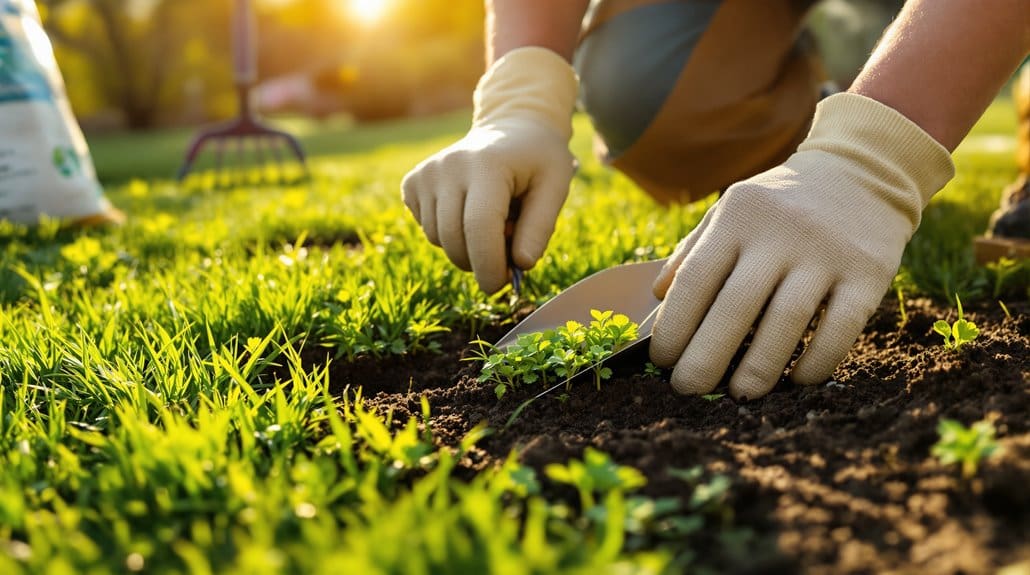
Patch it up and move on — small repairs are faster than you think, and they save you hours later when thin spots turn into weeds. Quick DIY Repairs and Upgrades: Start by evaluating bare spots, then grab grass plugs for warm-season lawns, planting plugs 6–12 inches apart in spring or early summer when soil warms. One thing to ponder: for cool-season patches, overseed in early fall, and for warm-season, wait until late spring. Here’s the thing, dethatch when thatch tops 0.5 inches, using a thatching rake or power dethatcher to let water and nutrients in. Do core aeration before overseeding to break compaction. After patching or plugging, water lightly daily for 2–3 weeks, then shift to deeper, less frequent watering.
Track Progress: Metrics, When to Adjust Goals, and When to Call a Pro
Now that you’ve made repairs and set basic care routines, it’s time to track what’s actually working so you don’t chase problems that won’t go away; start by measuring turf density, soil moisture, greenness, and your mowing habits on a regular schedule so you can compare real numbers instead of guessing. Now, measure percent ground cover to track turf density, aim for ≥90% in high-use zones and check every 4–6 weeks, and use a probe or meter at 2–4" to monitor soil moisture, irrigating when levels fall below 12–18% (cool) or 8–12% (warm). One thing to keep in mind: note mowing height and frequency, track greenness changes, and if problems persist ≥2 months, call a pro for tests and targeted fixes.
Some Questions Answered
What Is the 150 Rule for Lawns?
The 150 Rule is a ceiling, like a speed limit for fertilizer: you’ll aim for about 150 pounds of nitrogen per acre per year (roughly 3–4 lbs per 1,000 sq ft). Now, do soil testing first, it’ll save you money and mistakes. One thing to take into account, space applications into 3–6 slow‑release feedings, watch your watering schedules, don’t overdo it. Here’s the thing, less runoff, healthier turf.
What to Put on a Lawn in January?
Put down a winter fertilizer if your soil test shows low nutrients, but don’t guess—test first. Now, run your irrigation, measure application times, and sharpen mower blades; you’ll thank yourself in spring. One thing to keep in mind: schedule core aeration and overseeding for late winter if you have cool‑season grass. Here’s the thing, treating small broadleaf weeds now works better than chasing them later—been there, learned the hard way.
What Is the 1/3 Rule in Lawn Care?
Think of your mower as a chef trimming a cake—cut too much and it collapses. The 1/3 rule says you should never cut more than one-third of grass blade height at once, so adjust mower height accordingly and avoid heavy clipping removal that strips energy. Now, mow more often during fast growth, keep blades sharp, and don’t scalp. One thing to assess: frequent small trims beat rare drastic cuts every time.
What Is the First Thing I Should Put on My Lawn in the Spring?
Start with a soil test, then treat based on results. Now, get a kit or send a sample, because knowing pH and nutrients beats guessing, trust me—I’ve learned that the hard way. One thing to keep in mind: pair soil testing with weed identification so you don’t spray the wrong product. Here’s the thing, do testing first, not fertilizer or herbicide, and you’ll join the crowd of folks who finally get consistent, healthier turf.