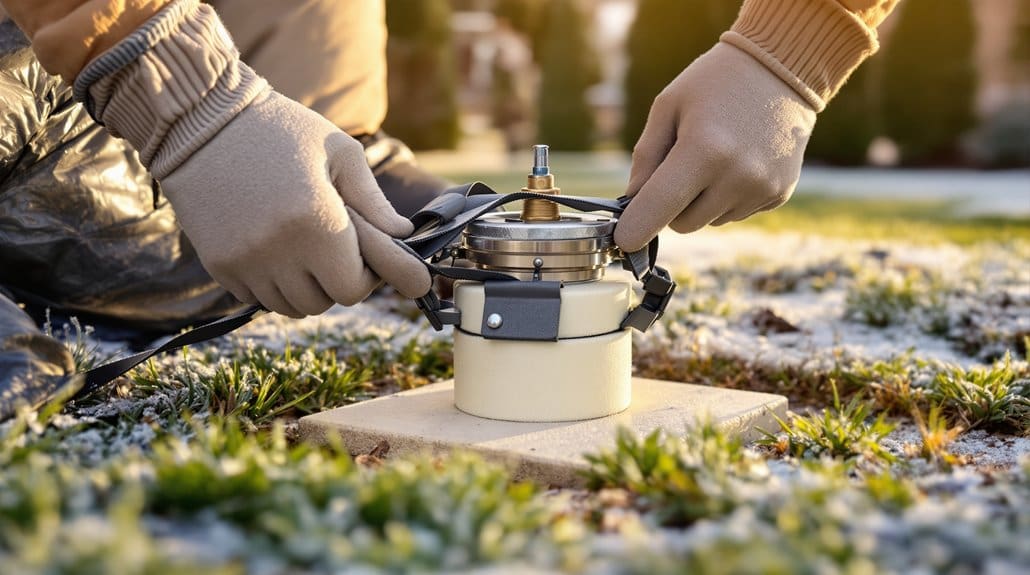
You’ll get a sturdy manual push core aerator that pulls consistent hollow-steel plugs to relieve compaction, speed water absorption, and boost root depth and turf density. It’s simple: pre-water dry spots, push and pull vertically with 3–4 inches between passes, then pick up cores. Tempered tines resist wear and are user-replaceable, and the comfort-grip handle reduces fatigue. It’s ideal for small to medium yards; keep using regular maintenance and you’ll learn more tips and alternatives.
Some Key Takeaways
- Removes compacted soil plugs to improve air, water, and nutrient access for healthier grassroots.
- Hollow tempered-steel tines deliver consistent plugs and are user-replaceable for long-term use.
- Ergonomic handle and long shaft reduce back strain during steady push-and-pull operation.
- Best for small-to-medium lawns with compaction or thatch; not ideal for very rocky or heavy-clay sites.
- Pre-water 24 hours, space passes 3–4 inches apart, then fertilize and water to speed recovery.
Performance and Results: How the Manual Push Core Aerator Improves Turf Health
When you push the manual core aerator into your lawn, it actively pulls out compacted soil plugs so air, water, and nutrients can reach grassroots more easily. You’ll notice improved drainage and quicker water absorption after aerating, which helps soil microbes thrive and mobilize nutrients. Regular use encourages greater root depth, so turf becomes denser and more resilient to stress. Follow simple technique—water dry areas first, push and pull vertically—to get consistent plugs without damaging turf. You’ll join others who take pride in healthy lawns, and you’ll see measurable turf recovery, deeper roots, and long-term vigor. Choose the right tool based on your yard size and needs to make aeration efficient and effective for homeowners home core aerators.
Tine Design and Build: Hollow-Steel Tines, Three-Drill Pattern, and Replaceability
Because the aerator uses hollow-steel tines arranged in a three-drill pattern, you'll get consistent, deep plug removal without excessive soil disturbance. You’ll notice hollow tine metallurgy focuses strength where it’s needed: tempered steel walls resist wear while keeping cores intact for easy pickup. The three-drill layout spaces extraction evenly so each pass covers more turf with predictable depth. Tines are user-replaceable, so replaceable tip maintenance keeps the tool performing season after season and reduces long-term cost. You’ll find swapping worn tips straightforward with basic tools, letting your crew or neighbors share upkeep knowledge and keep lawns looking their best. Regular sharpening with sharpening stones helps maintain tine edge and prolongs tool life.
Durability & Ergonomics: Materials, Handle Comfort, and Long-Term Use
Although the aerator's industrial‑strength steel frame and tempered hollow tines handle repeated use, you’ll notice the reinforced tine geometry and solid welds are what keep it from bending or loosening under heavy loads. You’ll appreciate the comfort‑grip handle that reduces hand fatigue and the long shaft that eases back strain, though you should watch for handle wear over seasons. Plan a simple Maintenance schedule: rinse tines, dry parts, lubricate moving joints, and tighten fasteners after each big job. With routine care and modest storage, the tool stays reliable, feels familiar, and serves your lawn for years. Choose the model with suitable tines for your soil type to maximize performance and longevity.
Real-World Use: Setup, How to Aerate (Push/Pull Technique), and Troubleshooting
Now that you’ve got the aerator assembled and maintained, set up for actual use by watering any dry, compacted areas about 24 hours beforehand so the tines penetrate easily. You’ll position the tool upright, check tine tightness, and choose a grid pattern—typically 3–4 inches between passes. Use a steady push and pull motion vertically; don’t twist or pry. Work methodically across the lawn, overlapping slightly for uniform plugs. Troubleshoot binding by clearing debris, tightening loose fittings, or replacing worn tines. Note watering timing and seasonal maintenance: aerate during active growth windows and follow with light fertilizing and watering to aid recovery. For best results, consider pairing aeration with other lawn-care equipment like lawn aerators to maintain healthy, lush grass.
Who Should Buy It and Alternatives: Ideal Lawns, Limitations, and Comparable Options
If your lawn has compacted soil, heavy foot traffic, or a thatch layer and you're looking for a simple, low-cost way to improve root growth and water penetration, this manual push core aerator is a strong choice. You should buy it if you want targeted aeration, care about pet safety, and prefer hands-on maintenance for small to medium yards. Do soil testing first and consider seasonal timing—spring or fall works best for cool-season grasses. It’s limited on very rocky or clay-heavy sites; alternatives include motorized aerators, spike aerators, or professional services for large lawns or severe compaction. Many homeowners also keep a small set of essential lawn care tools like rakes and edgers to complement aeration and routine maintenance.
Some Questions Answered
Is This Aerator Safe for Use Around Sprinkler Heads and Shallow Irrigation Lines?
Yes — you can use it near sprinkler heads and shallow lines if you take precautions. Maintain safe sprinkler proximity by marking heads and lines, water the area 24 hours beforehand to soften soil, and push vertically without twisting to avoid striking pipes. Your irrigation safety improves when you expose and avoid shallow components, use cautious passes around marked areas, and repair any accidental damage promptly so your lawn and community stay protected.
Can the Tool Be Used on Rocky or Clay-Heavy Soils Without Damage?
Yes — you can use it on rocky challenges and clay compaction, but you’ll need care and patience. You’ll push vertically, water clay-heavy areas 24 hours beforehand to soften soil, and avoid prying against rocks. The hollow, tempered tines resist bending, yet repeated hits on stones can dull or damage them. Work slowly, swap replaceable tines as needed, and you’ll protect the tool while improving soil and root health.
How Heavy Is the Unit for Storage and Transporting in a Truck?
About 25–30 pounds, so you’ll find lightweight portability when moving it for jobs or storing it in a shed. You’ll easily lift it into truck storage by one person using the long handle and balance, and the semi-assembled design keeps bulk down. The reinforced steel feels solid but won’t overwhelm you loading gear. You’ll appreciate how compact it is for transport, whether you’re headed to a neighbor’s lawn or a larger site.
Are Replacement Tines Sold Individually or Only in Sets?
You can buy replacement tines both individually and in sets, so replacement availability fits your needs. Check tine sizes before ordering to match your model and soil type. If you want a spare or to swap sizes seasonally, grab singles; if you expect heavy use, choose a set for value and consistency. You’ll find parts listed with fit details; contact support or your dealer to confirm compatibility and delivery options.
Does Using the Aerator Require Any Lawn Seeding or Fertilizing Afterward?
Yes — you’ll often overseed and sometimes fertilize after aerating to maximize recovery. Overseeding timing is best immediately after aeration so seed contacts soil and germinates. Do a soil test first to check nutrient and pH needs; that guides whether you should apply starter fertilizer or lime. You’ll want to water consistently after seeding, avoid heavy traffic, and include community tips if you’re coordinating neighborhood lawn care.