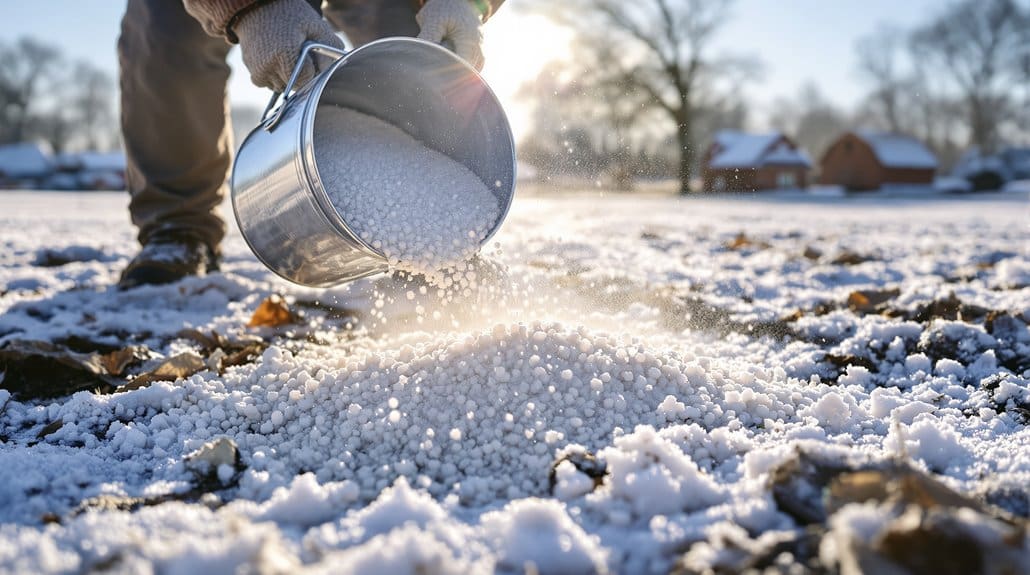
You can spread pelletized or pulverized lime in late fall or winter, after aeration if possible, and let freeze–thaw cycles, snowmelt or a good rain move it into the root zone; don’t expect instant pH change — pellets usually take months, fine lime acts faster but is dusty and needs incorporation. Do this, not piling products together; cut rates if you mix types, water if you can, then retest in spring to see real results and learn the next steps.
Some Key Points
- Apply pelletized dolomitic lime in late fall or winter so freeze–thaw and spring rain move it into the root zone over months.
- Lime dissolution and pH change require moisture and warmth, so expect measurable shifts mainly during thawing and spring warming.
- Aerate before or after liming when possible to help dissolved carbonate move into the top 3–5 inches of root zone.
- Use soil test rates; split large corrections (e.g., 100 lb/1,000 sq ft) between fall and spring rather than applying all at once.
- Avoid combining fast‑acting and pelletized lime on the surface without incorporation to prevent a localized alkaline crust.
Why Apply Lime in Winter to Speed Spring pH Change?
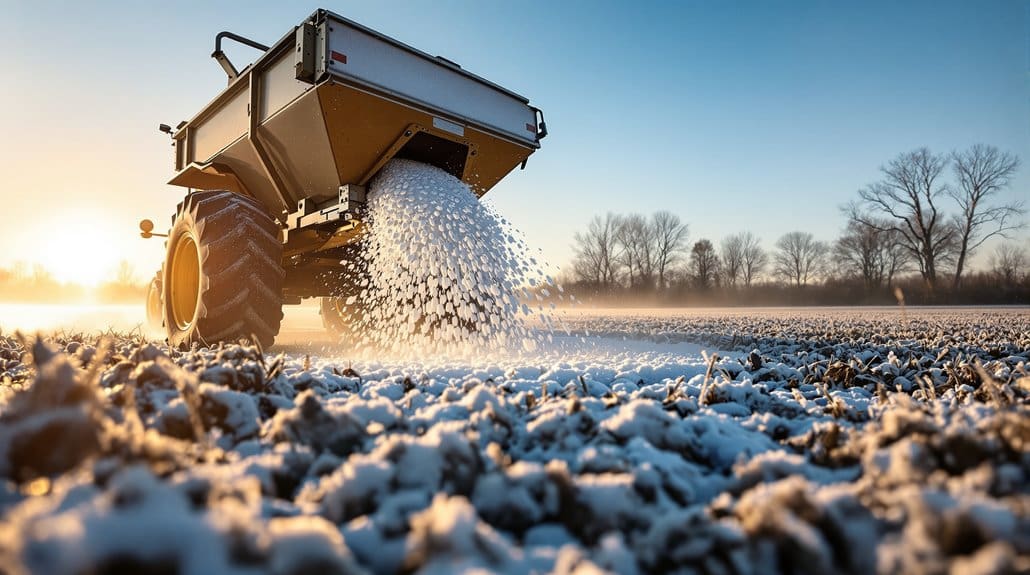
If you want your soil pH to be ready for spring growth, apply lime in late fall or winter so freeze–thaw cycles and winter rains can do the heavy lifting while you’re enjoying a quiet greenhouse or grumbling at frozen hoses. You’ll spread pelletized lime in the fall and winter months, after aerating if you can, and let nature help break down and change those particles into the root zone. Now, we may contemplate this: dolomitic pellets take months to shift soil pH, so patience matters — I’ve learned that the hard way. Something to contemplate, don’t overapply; follow your soil test rates, water or rely on rain, then retest in spring before adding more. Homeowners often find lime products are an easy, long-term way to maintain healthy lawns.
When Does Winter Lime Actually Start to Neutralize Acidic Soil?
You’ve already done the work of spreading pelletized lime in the fall or winter, so now you’ll want to know when it actually starts to neutralize acid in the soil. Now, we may take into account this: winter-applied lime won’t do much until moisture and temperature let it dissolve and move, so measurable soil pH shifts usually begin during thawing and spring warming. Something to weigh, pelletized limestone often has fine and coarse bits, the fine fraction can react in weeks if it’s warm and wet, while most takes months, commonly 3–6 months, sometimes longer. Do this: be patient, test pH in spring. Not that: expect instant results. You’re not alone in underestimating the wait. Many homeowners find that choosing the right amendment and equipment makes application easier, especially when buying from a retailer focused on peat moss and lawn care gear.
Which Types of Lime Work Best for Winter Surface Applications?
Now, we may reflect upon which form will actually move into the soil when winter thaws; for surface work, pelletized lime is easiest to spread on frozen ground and its mix of fines and coarse pieces means some material starts reacting once moisture and freeze–thaw cycles set in. If you want faster action in-season, pulverized, high-CCE ag lime works quickest because the fine particles get washed or frozen into the root zone, but it’s dusty and harder to handle—so do this, not that, unless you’re prepared for the mess. Something to weigh: you can add a small fast-acting product for a quicker surface pH bump, but don’t stack full rates of both or you’ll risk an alkaline surface layer, so split or reduce rates and re-test before doing more. For homeowners maintaining their lawns, choosing the right lime form and handling it safely can make seasonal lawn care easier and more effective; consider topsoil tips when selecting products.
Pelletized Versus Pulverized
While pelletized lime makes winter spreading easy and dust-free, it only gives you about a third of its material in a fine form that reacts quickly, so don’t expect instant pH fixes; pelletized (often dolomitic) bags mostly sit around as coarse nuggets that need freeze–thaw cycles and rain to break down and move into the root zone, which means changes happen slowly over months to a year. You want results, right? Do a soil pH test first, then choose. Pelletized dolomitic lime is tidy and friendly to your back, but pulverized limestone reacts faster if it gets into the soil. Now, we may contemplate this: combine a small pulverized dose with pelletized, don’t overapply, retest later. Something to contemplate: expect patience. For regular homeowners maintaining their yards, having basic lawn care tools on hand makes applying and testing lime easier and safer.
Surface Versus Incorporated
You liked the idea of pelletized bags being tidy, but here’s what to do now when you’re deciding whether to leave lime on the surface or work it in: pick the product to match how you’ll apply it and how fast you need results. You’ll usually choose pelletized for easy spread, knowing winter surface application relies on freeze–thaw and spring moisture to break down the lime and move it into the root zone, which takes months. Now, we may contemplate this: fine-screen or pulverized lime reacts faster on top because tiny particles increase contact, so apply to the soil if you want quicker change. Something to ponder, don’t dump big doses at once, split rates or aerate, then retest. Consider also matching your choice to the typical homeowner maintenance schedule so application fits your seasonal routine.
How Do Pelletized (Slow‑Acting) and Fast‑Acting Lime Differ in Winter Use?
Now, we may contemplate how reaction speed differs: pelletized dolomitic lime is slow, often taking months to move into the root zone, while fast‑acting products can lift surface pH in weeks but usually won’t penetrate deeply or last as long. Something to ponder: in cold, dry winter soils both types slow down, and if you just broadcast them on the surface you’ll likely end up with a temporarily alkaline top layer rather than real root‑zone correction. My best advice, learned the hard way, is follow your soil test, avoid dumping fast lime as a quick fix, and either use a small fast‑acting dose with reduced rates for immediate change or wait for the pelletized material to work and retest before adding more. Lawn care equipment sellers often recommend pairing lime application with soil pH testing to ensure accurate, targeted treatment.
Reaction Speed Differences
If you want quicker pH changes at the soil surface, think of fast‑acting lime as the short sprint and pelletized dolomitic lime as the long, slow marathon: fast products use very fine particles or special processing to start neutralizing acidity in a few weeks, whereas pelletized mixes—roughly a third fine and two‑thirds coarse in many brands—begin working on the fines quickly but can take months for the coarser bits to fully react. You want results, so use fast‑acting products when surface response matters, but remember reaction needs soil contact and water. Frozen soils slow everything, so don’t expect root‑zone changes until thaw and moisture. Now, we may contemplate timing: apply with thaw in mind, not impatience. Something to ponder: mixing both can make a too‑alkaline surface; avoid that. For typical homeowners, proper lime application timing also pairs with routine maintenance like aeration and overseeding to improve overall soil health.
Surface Versus Rootzone
When winter's chill sets in, think of pelletized dolomitic lime as the slow, steady helper and fast‑acting products as the quick fix that wears off—so plan accordingly. Surface Versus Rootzone: You want root zone change, not just a green bluff, so apply pelletized dolomitic lime ahead of deep cold, knowing many particles need moisture and freeze‑thaw to move down, taking months. Now, we may regard this: fast‑acting products lift surface pH in weeks, they’re tempting, but they mostly affect only the top few millimeters, so don’t assume roots benefit. Something to weigh: combine them sparingly, reduced fast‑acting rates, and accept that without incorporation or time, deeper correction won’t happen. Do this, not that: prioritize pelletized for lasting root zone health.
Timing And Weather
You’ve already decided pelletized dolomitic lime is the long game, and that fast‑acting products are the tempting quick fix; now we’ll focus on timing and weather so you don’t undo your own work. Step 1 — apply lime in fall, scatter pelletized dolomitic lime broadly, and be patient, because its mix of fines and coarser particles needs months and freeze‑thaw cycles to move into the rootzone and change soil pH. Now, we may contemplate this: fast‑acting solu‑cal or liquid fixes can lift surface pH in weeks, but they don’t last as deep. Something to contemplate — don’t layer both without incorporation, you’ll get an alkaline crust. Do this: use reduced rates if you mix, retest in spring, then adjust.
How to Decide Rates and Timing for Fall/Winter Lime Based on Your Soil Test?
Starting with your soil test numbers will save you time and guesswork, so treat that report like a roadmap and follow it—don’t just throw lime down because a neighbor did. Step 1: Read the soil test results and use the pounds CaCO3 per 1,000 sq ft recommendation, that gives your target, don’t guess. Step 2: If correction is light, Apply Lime at about 50 lb/1,000 sq ft in fall; larger corrections call for 100 lb split between fall and lime in the spring. Now, we may contemplate soil texture: sandy needs roughly half the loam rate, clay nearly double. Something to ponder: pelletized dolomitic lime is slow-acting, expect months, so plan ahead and retest before re-liming.
How to Apply Lime in Winter for Best Movement Into the Root Zone?
Now that you’ve figured out how much lime you need and when to split applications, let’s focus on getting that material down where roots actually can use it. Step 1, core-aerate when you can, because punching holes helps you Apply Lime so water and dissolved carbonate move into the root zone, where most activity happens in the top 3–5 inches. Step 2, broadcast only recommended rates in fall or winter, or split larger amounts between seasons; piling it on won’t help. If conditions allow, water right after spreading to start dissolution, otherwise trust freeze–thaw and snowmelt to do the work. Something to keep in mind: if you need faster change, use fine grind or incorporate lime after aeration, not more surface lime.
What Are the Risks of Adding Multiple Lime Products at Once and How to Avoid Them?
If you mix a fast‑acting lime product on top of recently spread pelletized lime, you can create a concentrated alkaline strip at the soil surface that does little good down where roots live, and that can burn seedlings or scorch grass blades — so don’t assume “more is better.” Think of the quick stuff as a sprint and the pellets as a marathon: the liquid or finely ground material dissolves fast but needs water and time to move down, while coarser dolomitic pellets sit there until freeze–thaw or rain carries them; using both together increases total carbonate, raises the risk of localized high pH, and often wastes the short‑term benefit of the fast product.
Now, do this, not that: if you must combine, cut each rate roughly in half, favor soil testing, wait 3–6 months to retest, and remember that pure calcium carbonate or calcitic lime works slowly; for turf, usually wait on pelletized dolomitic lime before topping with fast‑acting lime.
Practical Checklist: Tools, Weather, and Site Conditions Before Winter Liming

Before you wheel out the spreader, take a breath and run a quick reality check on tools, weather, and the ground itself — you’ll save yourself a mess and a week of repair. Step 1 — check soil pH and test results, note recommended pounds per 1,000 sq ft, be honest if you waited too long last season. Step 2 — choose your product: Agricultural Limestone for long‑term correction, pelletized if you need easier handling, but don’t Add Lime on frozen or waterlogged turf. Step 3 — pick a dry window in late fall or fall, or use lightweight gear on soft ground. Now, consider watering in if possible, and resist reapplying too soon.
How and When to Retest Soil pH in Spring to Evaluate Winter Liming Results?
You’ve prepped the tools, picked a dry window, and applied lime over the winter — good work — but the job isn’t over; spring testing tells you whether that effort actually moved the needle. Step 1: wait until spring after the soil thaws, usually 4–8 weeks into the season, so moisture and cold allowed the lime to react. Step 2: test your soil by collecting composite samples from the root zone—top 3–4 inches for lawns, 0–6 inches for gardens—from 10–15 spots, mix, note depth and date. Send to your extension lab or use a calibrated kit, then retest soil pH against your baseline and recommended target. Something to take into account: pelletized lime may need 6–12 more months; don’t overapply pounds of pure calcium yet.
Some Questions Answered
Can You Put Down Lime in Winter?
Yes — you can put down lime in winter, even if it’s not instant magic like a steam-powered time machine. Now, we may contemplate this: spread pelletized lime before heavy snow, mind application safety and avoid frozen, waterlogged spots, protect equipment storage and wildlife impact by using moderate rates, and retest soil later. Something to reflect on: don’t double-apply too soon; wait, be patient, and you’ll see slow, steady pH gains.
How Long Does It Take for Lime to Adjust Soil pH?
You’ll usually see lime change pH in weeks to months, but full effect often takes 3–6 months or more, depending on lime types, application rates, particle size, and soil testing results. Now, we may take into account this: apply fine or enhanced lime if you want faster surface change, but don’t skip correct rates. Something to bear in mind, we’ve all waited impatiently—measure again after 6–12 months to be sure.
When's the Best Time to Apply Lime?
Best time is fall, or early spring if you missed fall. Picture your lawn like a patient—treat it before it wakes. Do soil testing first, then plan granular application based on particle sizing and the lab’s application rate, don’t dump too much at once. Now, we may contemplate this: split big doses, apply to moist soil. Something to keep in mind, we’ve all rushed once; don’t repeat that mistake.
When to Apply Lime to Acidic Soil?
Apply lime after you test your soil, ideally in fall or early spring, once you get lab results and local regulations guidance. Now, we may ponder this: choose lime types (pelletized, ground, or fast-acting liquid) and match application methods to your lawn, don't overload at once. Something to ponder: split large rates, retest in 3–6 months. We’ve messed up timing before, so trust the test.