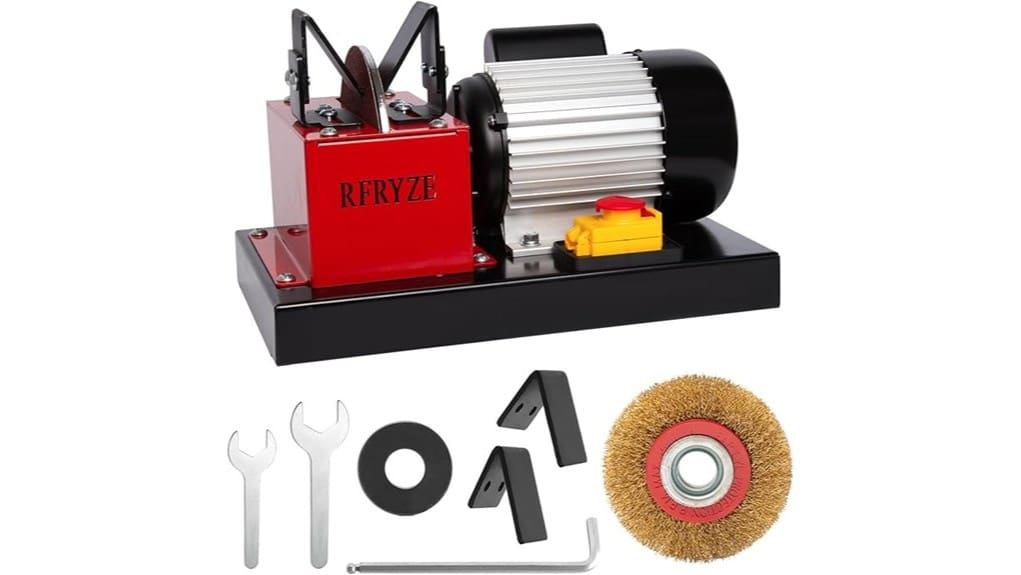
You’ll get a reliable, workshop-ready sharpener with a 550W motor and 1,700 RPM wheel that delivers steady torque and predictable feed rates for common mower blades. Its aluminum body helps dissipate heat and reduce vibration, while the emergency brake and simple controls make operation safe and repeatable. It machines consistent 30° and 40° bevels—30° for keener cuts, 40° for tougher edges—and comes with discs, a wire brush, and wrenches; keep going to see detailed results and tips.
Some Key Takeaways
- 550W motor and 1700 RPM provide steady torque and predictable feed rates for consistent blade sharpening without bogging.
- Aluminum housing reduces vibration and dissipates heat, preserving grinding discs and motor longevity.
- Adjustable 30° and 40° bevels produce a keener 30° edge for turf and a tougher 40° edge for impact resistance.
- Compatible with high-lift, low-lift, gator, and flat blades, with 40° favoring high-lift/gator and 30° favoring low-lift/flat.
- Includes six 80-grit 178mm discs, a 102mm wire brush, wrench set, emergency brake, and homeowner-friendly maintenance features.
Real-World Performance Test: How the 550W, 1700 RPM Motor Handles Common Blade Types
When you run common mower blades against the 550W, 1700 RPM motor, you’ll immediately notice it delivers steady torque for consistent material removal without bogging down; high-lift, low-lift, gator, and flat blades all sharpen evenly at the 30° and 40° settings, with the aluminum body helping dissipate heat so you don’t lose cutting grit from overheated edges. You’ll appreciate predictable feed rates, modest noise levels that won’t alienate neighbors, and a build that favors motor longevity through cooling and stability. Routine cleaning and proper grit use keep performance uniform, fostering confidence among users who share tools and tips. Homeowners will find it especially useful for basic maintenance and seasonal care, since many blade sharpeners are designed with them in mind.
Exact Sharpening Results: 30° Vs 40° Settings on High-Lift, Low-Lift, Gator, and Flat Blades
Although the difference seems small on paper, choosing 30° vs 40° produces measurable changes in cutting behavior: 30° yields a finer, keener edge that slices grass cleanly and reduces tearing on low-lift and flat blades, while 40° creates a tougher, more durable bevel better suited to high-lift and gator blades that face heavier impact and debris. You’ll prefer 30° when material hardness is lower and you want immediate sharpness and better turf finish; choose 40° for harder steels where edge retention under strike and abrasion matters. Test cuts confirm consistent performance differences across blade profiles. Replacement blades for homeowners often vary by blade type and steel hardness, so choose blades and angles that match your mower and lawn replacement blades.
Safety, Controls, and Build Quality: Emergency Brake, Aluminum Body, and Cord Convenience
Because safety and durability are non-negotiable in a sharpening tool, you’ll notice this unit’s emergency brake, aluminum housing, and long cord are engineered to minimize downtime and risk while maximizing stability. You get an accessible emergency stop that locks the wheel after power loss, preventing accidental restart and protecting you and neighbors. The aluminum body provides heat dissipation and aluminum durability, reducing vibration and chassis flex during heavy use. A 1.5 m cord gives working reach without adapters, keeping setups tidy. Controls are straightforward so you’ll integrate the sharpener into routines quickly and confidently, with professional-grade reliability. The unit is particularly well-suited for homeowners maintaining their property thanks to its focus on homeowner-friendly durability and ease of use.
What’s in the Box and Maintenance: Included Discs, Wire Brush, Wrench Set, and Care Tips
If you want reliable performance out of day one, the package gives you the essentials: six 80-grit 178 mm (7") ceramic sanding discs for re-profiling edges, a 102 mm (4") wire brush for rust and debris removal, and a wrench set for wheel and guard adjustments. You’ll find the discs suited for initial shaping; keep spares for accessory upgrades or specialized grits. Establish a simple cleaning schedule: brush debris after each use, wipe with an alcohol-based cleaner when needed, and inspect discs for wear. Tighten fasteners with the supplied wrenches and replace the wire brush when bristles deform. For best long-term results, perform routine blade and edger maintenance following basic lawn care practices to protect your equipment and lawn.
Value and Use Cases: Who Should Buy This Sharpener and How It Compares to Alternatives
When you're weighing this sharpener against other options, its 550W (3/4 HP) motor, aluminum housing, and adjustable 30°/40° angle settings make it a solid mid‑range choice for both serious DIYers and small landscaping pros who need consistent, durable results without a commercial price tag. You’ll appreciate the balance of power and portability: faster than hobby models, quieter and cheaper than industrial grinders. In a clear cost comparison, it hits a sweet spot for target users who sharpen occasionally to frequently. Buy it if you value reliability, simple maintenance, and a community of users with similar needs. Many homeowners who maintain their property regularly also find that keeping sharp blades improves lawn health and reduces strain on the engine, making regular sharpening an effective part of lawn care maintenance.
Some Questions Answered
Can It Sharpen Non-Lawnmower Blades Like Chainsaw or Kitchen Knives?
No — it’s not ideal for kitchen knives or chainsaw teeth. You’ll damage fine edges on kitchen knives because the 80-grit ceramic discs are too coarse and the fixed angles (30°/40°) don’t suit delicate bevels. Chainsaw teeth need precise filing and individual tooth angles; this grinder can’t access or set those reliably. You can use it for heavy metal blades, but for kitchen knives and chainsaws you should choose dedicated sharpeners.
How Loud Is the Sharpener During Operation (dB Level)?
You can expect a noise level around 85–95 dB during operation. You’ll hear a high-pitched grinding tone plus motor hum; sound comparison: it’s similar to a busy workshop grinder or a loud vacuum, so you’ll need hearing protection. You’ll appreciate the aluminum body damping some vibration, but still use earplugs or earmuffs. This practical guidance helps you fit safely into a shared workspace while keeping performance predictable and consistent.
Is There a Warranty or Customer Support Available?
Yes — you get warranty details and support contacts with the unit. You’ll find a limited manufacturer warranty covering defects; check the included paperwork for the warranty period and claim steps. For technical help or parts, contact customer support via the phone/email listed in the manual or vendor website. Keep your receipt and serial number; doing so speeds service. You’ll feel supported and included when you reach out.
Can It Be Hardwired or Used With a Generator Safely?
Yes — you can hardwire it if you follow hardwiring considerations: have a licensed electrician fit a proper fused disconnect, match the 110–120V, 5.2A rating, and maintain grounding and strain relief. For generator compatibility, use a clean, rated inverter or a generator with stable output and sufficient surge capacity; connect through a transfer switch or GFCI-protected outlet. You’ll stay safe and part of a like-minded, responsible user community.
Are Replacement 178MM Ceramic Discs Readily Available?
Yes — ceramic availability is good; you’ll find 178mm (7") abrasive discs from multiple suppliers. Check specs for compatible sizes and grit (80-grit is common) and confirm hole pattern and backing type match your platen. Buying from industrial abrasive or mower-tool vendors guarantees fit and performance. Keep spare discs on hand, and share sourcing tips with others so your crew or community can stay stocked and maintain consistent sharpening results.