You’re not imagining it — under long January snow you can get gray and pink snow mold that mats grass and can rot crowns, plus sporadic summer fungi waiting to bounce back; now, gently brush mats apart once turf dries, don’t yank crowns, and plan light slow‑release nitrogen and overseeding where roots look chewed. Something worth weighing: fix thatch and poor drainage this fall to stop repeat outbreaks. Keep going for timing, ID tips, and DIY vs. pro guidance.
Some Key Points
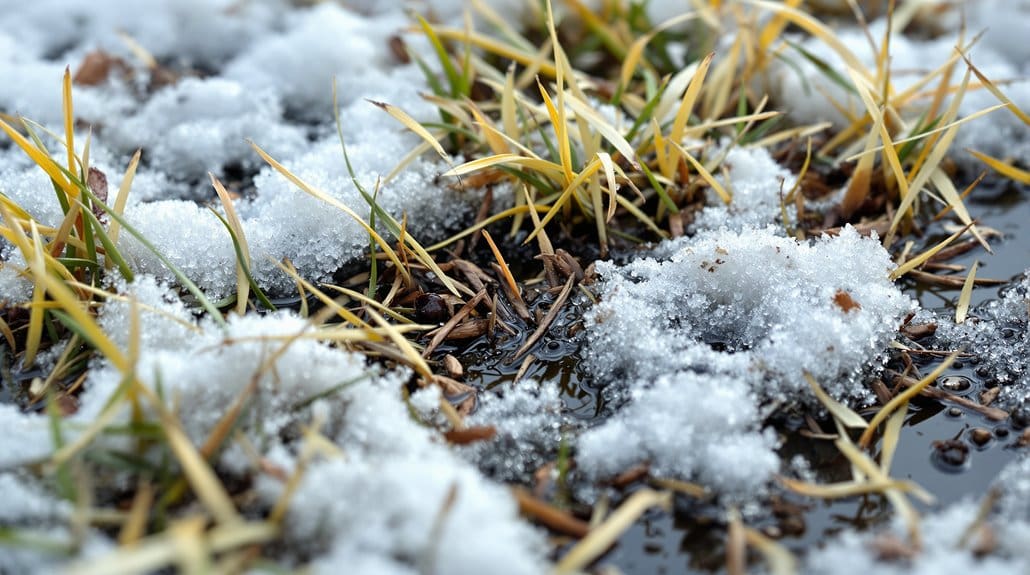
- Snow mold (Typhula and Microdochium) commonly grows under prolonged snow, forming matted, straw-colored or pink-gray patches at snowmelt.
- Gray snow mold creates surface mats that usually recover after raking; pink snow mold can damage roots and persist after thaw.
- Thatched lawns, long fall grass, and leaf buildup trap moisture and greatly increase snow mold risk.
- Differentiate diseases by season and appearance: red thread/dollar spot appear without snow; Pythium shows greasy, collapsing turf in warm, wet conditions.
- Prevent with fall dethatching, lower final mow, core aeration, debris removal, and targeted fungicides for high-risk, repeatedly affected areas.
Which Winter Lawn Fungi Are Active Under Snow?
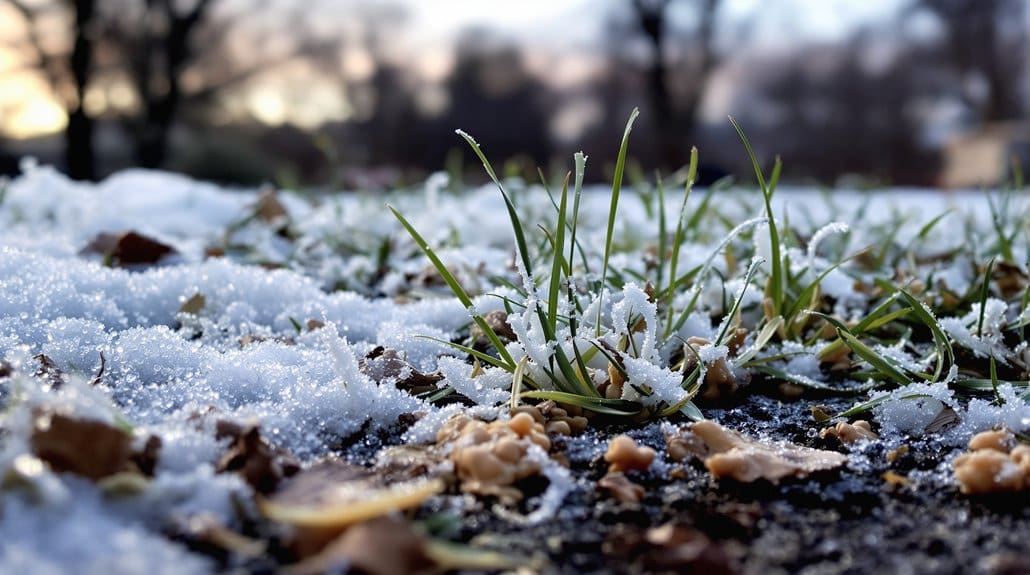
Usually you’ll find snow mold hiding under a blanket of snow, and it’s worth knowing which fungi you’re up against before you start panicking and raking willy-nilly. You’ll see gray snow mold, from Typhula, after prolonged snow cover—think 60 days plus—creating circular, matted grass patches as snow melts. Now, pink snow mold (Microdochium nivale) can keep going after thaw, attacking roots, so don’t shrug it off. Something to ponder: a thatched lawn, long fall grass, or leaf buildup traps moisture and invites repeat outbreaks. Do this: plan dethatching, fall mowing, and aeration to break the cycle. Don’t just blame the weather. You’ll avoid surprise damage next spring, and your neighbors will nod in approval. For homeowners, choosing the right products and tools for prevention and treatment is essential—consider researching lawn fungicides and equipment options before next winter.
How to Tell Snow Mold From Red Thread, Dollar Spot, and Pythium?
Now, start by eyeballing the patches: snow mold shows large, matted, straw-colored circles that peel back as snow melts, while red thread leaves thin red strands across otherwise green turf, dollar spot makes dime-to-silver-dollar sized sunken straw discs, and Pythium brings greasy, dark, rapidly collapsing patches with white cottony mycelium. Something worth noting — timing and weather tell you a lot, because snow mold appears slowly under long snow cover in late winter or early spring, red thread and dollar spot turn up in cool, moist stretches without snow, and Pythium shows up fast during warm, saturated periods. For now, use appearance, season, and how deep the damage goes to guide your next move: treat suspected snow mold differently than surface-thinning red thread or dollar spot, and act fast if it looks like crown-killing Pythium. Consider adjusting mowing, drainage, and fertilizer practices to reduce moss and disease pressure in your lawn and improve overall turf health by using proper lawn care.
Visual Clues For Identification
Identification starts with careful looking: when you lift that last patch of melting snow, check whether the grass is smothered in a dense, matted crust or instead shows isolated blades threaded with color, because snow mold often forms round, straw‑colored to gray or pink mats at the edge of snowmelt while red thread leaves thin, reddish or pink strandlike growth on individual leaves. Now, examine closely: circular patches of dead grass that are gray and pink point to snow mold, especially late in the season. Don’t confuse small, sunken, straw discs—those are dollar spot—or irregular, water‑soaked lesions with cottony growth that hint at Pythium. Something to ponder: touch the turf, note moisture and matting, then act accordingly; you’ll learn from mistakes. Consider preventive measures like regular inspection and targeted treatments for chinch bugs to protect your lawn and equipment needs.
Timing And Weather Differences
When the snow finally lifts and you see damage, look at when and under what weather it showed up, because timing often gives away the culprit: snow mold will be obvious right at snowmelt, forming large, circular, straw‑colored or matted patches after long snow cover, whereas red thread and dollar spot pop up later in cool, wet stretches without snow and make many smaller lesions, and Pythium turns lawns into greasy, fast‑collapsing patches only in warm, saturated conditions. Now, check for gray or pink mats—gray snow mold follows prolonged cover, pink shows reddish hues and a white ring—this fungal lawn disease timing tells you whether to wait, rake, or treat. Something to keep in mind: don’t assume any winter lawn browning is the same. Consider also routine maintenance like lawn sprinkler checks to help prevent and manage these problems.
Quick Visual Checklist: Symptoms, Patch Shape, and Timeline
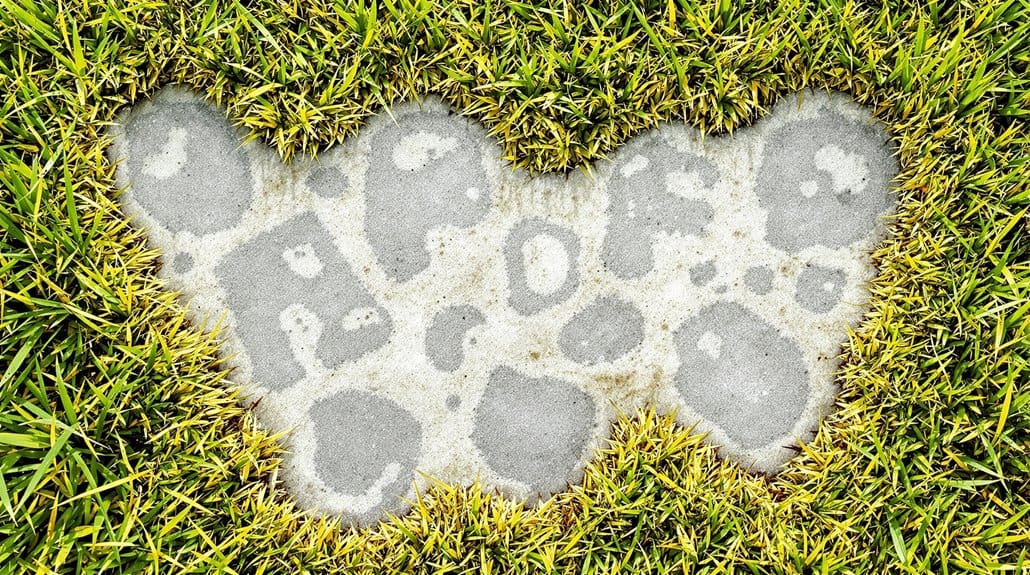
If you’ve ever shrugged off a few odd straw-colored spots all winter and then winced as the snow melted, you’re not alone—start by scanning the lawn as soon as the snow recedes, because that’s when these problems show up best and you can still save a lot of turf; look for circular to irregular patches from a few inches to several feet that look matted, crusty, or straw-colored, and pay attention to color cues—grayish-white mycelial mats point toward gray snow mold (Typhula spp.), while pink to reddish patches with a pale outer ring usually mean pink snow mold (Microdochium nivale), which can be nastier to roots. Now, walk shaded areas and north-facing spots first, check heavy thatch and drifted snow sites, note timing after prolonged snow cover, and prioritize light raking for soft infections but recognize severe pink snow mold may need reseeding. Consider improving drainage and reducing thatch to lower the chance of recurring infections and protect overall lawn health with proper maintenance.
Immediate Spring Actions When the Snow Melts
Now, when the snow's off and those straw-colored or pinkish patches show up, gently rake and fluff matted grass as soon as it's dry enough, breaking up fungal mats without ripping crowns or roots. Something worth noting: assess how much turf is thinned—if it's thin, apply a light, slow‑release fertilizer and plan to seed once soil temps stay above 50°F, but don't use pre‑emergent herbicides on damaged spots because that will block overseeding. Trust me, I've learned the hard way that a careful hand now beats frantic repairs later, so do the repair work first, not the quick chemical fix. For long-term blade performance and cleaner cuts, consider regular blade maintenance like blade sharpening to keep your mower working efficiently and reduce stress on recovering turf.
Rake And Fluff Matted Grass
You’ll want to get out a leaf rake as soon as the last snow melts and the turf feels pliable, because gently breaking up matted patches right away cuts fungal strands, improves air flow, and lets sunlight and evaporation start drying the grass. Step 1 — rake gently: use a leaf or light spring‑tine rake, don’t gouge crowns or roots, and target matted grass showing snow mold and visible microbial mycelium. Now fluff flattened blades by lifting and separating them so water and sun can do their work; do this within days while turf is soft. Something worth noting — remove debris and straw‑like dead material, discard it (not compost), and save heavy dethatching until the lawn’s actively growing. Consider pairing these early spring actions with the right equipment for spray and watering efficiency, such as choosing the correct spray nozzle to protect delicate turf during treatments.
Assess Damage And Seed
When the snow finally pulls back and you spot straw‑colored circles or thin, matted patches, take a slow, clear look and decide what needs seeding right away, because acting on damage early gives your lawn the best chance to recover without chemical fixes. Step 1 — assess damage: note snow mold spots, size, shade, and whether over 25% of turf in a patch is dead; record locations so you’ll change fall habits. Step 2 — revive, not rush: gently rake matted areas once dry to break fungal mats, avoid crown damage, then overseed where thinning shows. Now feed lightly; a light nitrogen fertilizer helps seedlings. Something to ponder — core aeration for compaction. Do this, not blanket fungicide panic.
Fall and Pre-Winter Steps That Cut Disease Risk
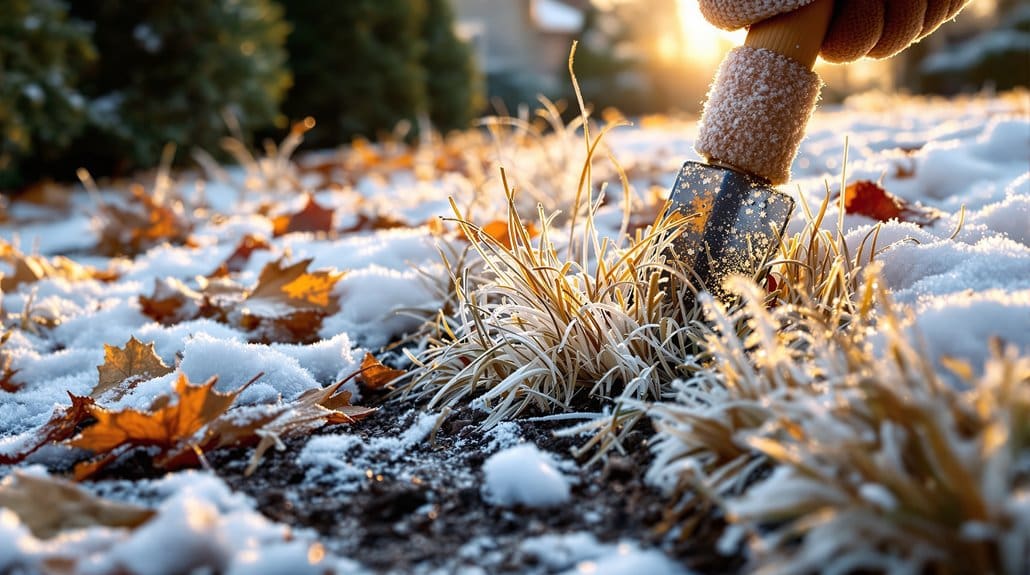
As the days shorten and frost becomes regular, take a few deliberate steps to keep winter diseases at bay—trust me, skipping them is how I learned the hard way. Step 1: mow lower for the final cut, about 2–2.5 inches, so grass doesn't mat and give mold a place to start; don't leave leaf litter. Now, dethatch if thatch tops roughly ¾ inch and core-aerate to improve air circulation and drainage, which helps prevent snow mold. Step 2: rake or mulch leaves, fix low spots that hold water, and reduce areas of deep snow from drifting or plowed piles. Something to ponder: use a balanced, slow-release fall fertilizer or winterizer, not a high-rate soluble nitrogen, to strengthen turf without spurring disease.
When to DIY vs. Call a Pro (Treatments, Costs, and Recovery Expectations)
If your lawn shows just a few small, flattened patches after snowmelt, you can usually handle the cleanup yourself, but if damage is widespread or the grass looks like it’s died back to the roots, call in a pro. Step 1 — assess: gray snow mold usually needs gentle raking, overseeding small bare spots, and a light nitrogen feed, DIY spring recovery often costs under $50 and feels doable. Now, something worth noting: pink snow mold that’s killed roots or covers large connected patches often needs professional assessment, sod replacement, or targeted treatments. Step 2 — act: if over 20% is affected, patches return yearly, or you’re unsure, hire a turf specialist for diagnosis, aeration, dethatching, and a tailored fertilization plan.
Some Questions Answered
What Is the Mold That Grows Under Snow?
The mold is snow mold, fungi like Typhula and Microdochium, winter fungi that form cold molds beneath snow, with fungal mycelium and thaw spores waiting to act. Now, you’ll check for matted, straw-colored patches in microclimate pockets where dormant pathogens hide. Here’s what to do: dethatch and aerate in fall, cut short, avoid late nitrogen; don’t panic and spray after thaw, that won’t speed recovery.
How to Get Rid of Snow Mold in Your Lawn?
Think of your lawn as a tired blanket; lift it gently. Now, rake matted areas, do proper mowing shorter before winter, and focus on soil aeration and thatch removal to improve drainage. Don’t reach for fungicide timing once patches show up, it’s late; instead overseed with matching seed, and fertilize lightly only if you skipped fall. Something to keep in mind: avoid piling snow or debris, you’ll thank yourself next spring.
What Is Snow Mold Disease?
Snow mold disease is a cold fungi lawn infection, winter pathogens that attack turf mycology under snow, caused by spores that enter dormancy then erupt when moisture pockets and cool temps persist. Now, here's what to do: don’t panic, rake and overseed in spring, remove thatch, mow shorter in fall. Something to bear in mind: you’ve likely missed a late mow before—been there—so focus on prevention, not quick fixes.
Will Grass Recover From Snow Mold?
Yes — often your grass will recover, but it depends. Now, scan for crown survival and root recovery, lightly rake dead blades, and improve soil respiration by loosening compacted spots; don’t scalp or overwater. Something to ponder: if no green appears in weeks, plan spring overseeding and patching once soil’s 50–55°F. Prioritize thatch removal, fungal resistance via culture changes, and moisture mapping to avoid repeating mistakes. You’ve got this.