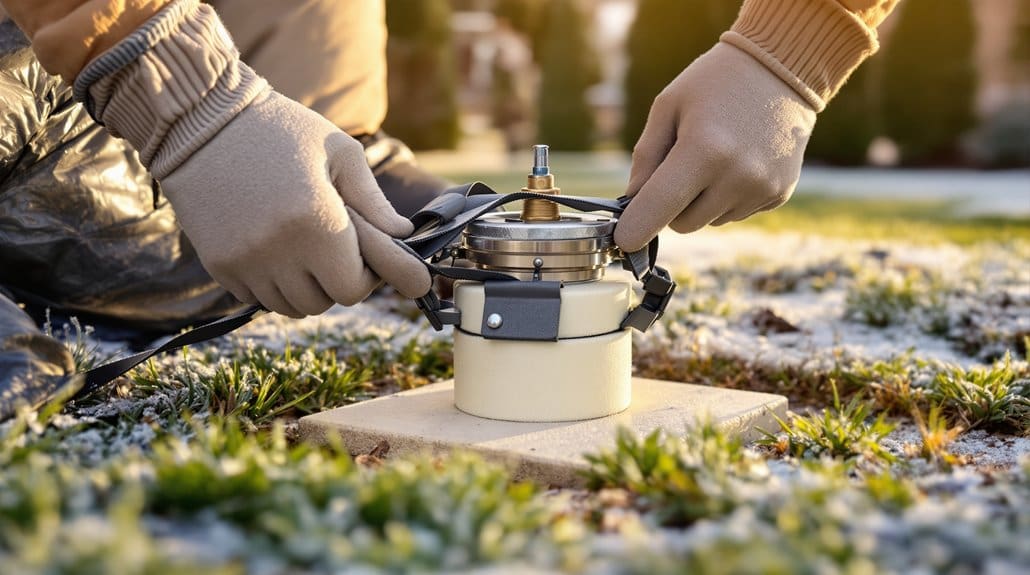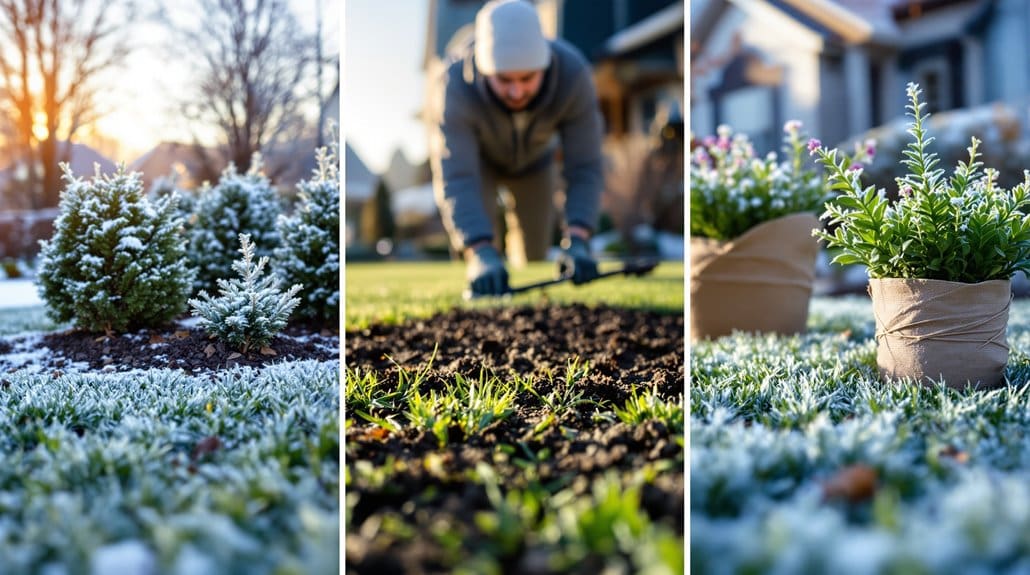
Now’s the time: check your soil two inches down—if it’s been around 50–55°F for several days, apply a labeled pre-emergent to stop winter annual seeds (chickweed, henbit, annual bluegrass) before they sprout; don’t bother if you’re overseeding or those weeds are already up, you’ll need hand-pull or a post-emergent instead. Mow, clear debris, water lightly to activate, and avoid aerating for a few weeks. Something to keep in mind: product choice and safety matter, and you can learn the regional timing nuances next.
Some Key Points
- January pre-emergents prevent seeds from rooting; they won’t kill visible, established winter weeds.
- Measure soil at 2 inches; apply when it reaches about 50–55°F for five consecutive days.
- Coastal South often hits timing mid-Jan–Feb; inland/mountains typically later—use soil temp, not calendar.
- Water 0.25–0.5 inch within 3–5 days to activate; avoid aeration or deep irrigation for 4–6 weeks.
- Do not apply if you plan to overseed or seed within 2–4 months, since pre-emergents block grass germination.
What Is a Pre-Emergent and Why January Matters in the South?

If you want to stop crabgrass and other spring annuals before they even get started, a pre-emergent is your best first move, and January often ends up being the make-or-break month in the South. What is it? A pre-emergent herbicide is a soil-applied barrier that stops tiny weed roots from forming, so seeds never take hold. Now, watch soil temperatures closely: when the top two inches hit about 50–55°F for several days, crabgrass will start waking up, so you need that barrier down first. Do this, not that: apply before the warm-up, water lightly to activate, and don’t aerate or dig where the barrier sits. Something to keep in mind: natural options work slower and can block grass seed, so read labels. Many homeowners prefer to buy quality equipment and products from local retailers to make applying pre-emergents easier and more effective; consider lawn care equipment to help with application.
When to Apply: Soil Temperature Cues vs. Calendar Dates
Now, watch soil temps first: aim to apply when the top 2 inches hit 50–55°F for five straight days, because that cue tells you when summer annual seeds are about to wake up. If you don’t have a thermometer, don’t guess—use local soil reports or the regional calendar (for example, coastal SC Jan 15–Feb 20, midlands Feb 1–20, mountains Feb 10–20) or even the forsythia bloom as a plant signal; been there, applied too early, and it broke down before anything germinated. Something to keep in mind: timing is everything—apply, water about 0.5 inch within three to five days to activate the product, and don’t aerate afterward—do this, not that. Choose selective herbicides appropriate for home lawns and follow label instructions carefully.
Soil Temperature Triggers
Because soil temps tell the real story, you’ll want to watch the ground, not just the calendar, when timing pre-emergent herbicide applications; those top two inches hitting 50–55°F for five straight days is your cue for spring treatments to stop summer annuals like crabgrass, while fall applications aimed at winter annuals make sense when soil’s around 70°F or nighttime lows sit in the 55–60°F range. Now, get a soil thermometer or check local extension data, and mark the days, not dates. Step one: do this—measure daily, apply when cues match, water lightly to activate per label. Step two: not that—don’t spray too early or after sprouts appear. Something to ponder: I’ve erred on timing before; you’ll learn fast. For best results, pair timing with regular maintenance and the right tools, including a reliable soil pH test kit.
Calendar Date Guidance
When you can’t or won’t check soil temps every day, use calendar windows as a practical fallback, but treat them as flexible guides rather than hard rules—I've learned the hard way that dates alone can cost you a season. Now, Apply Pre-Emergent in the South using windows tied to your zone: coastal Jan 15–Feb 20, midlands Feb 1–20, mountains Feb 10–20, but don’t be rigid. You’re aiming for top 2 inches at 50–55°F for five straight days; soil temperatures beat calendars when in doubt. Something to ponder: if you apply too early the chemical may break down, too late and weeds win. Here’s what to do now—check temps or local reports, then water lightly to activate the barrier. For best results on homeowner lawns, consider pairing with a liquid fertilizer program to maintain turf health during the season.
Regional Timing: Mountains, Midlands, and Coastal South Carolina Windows
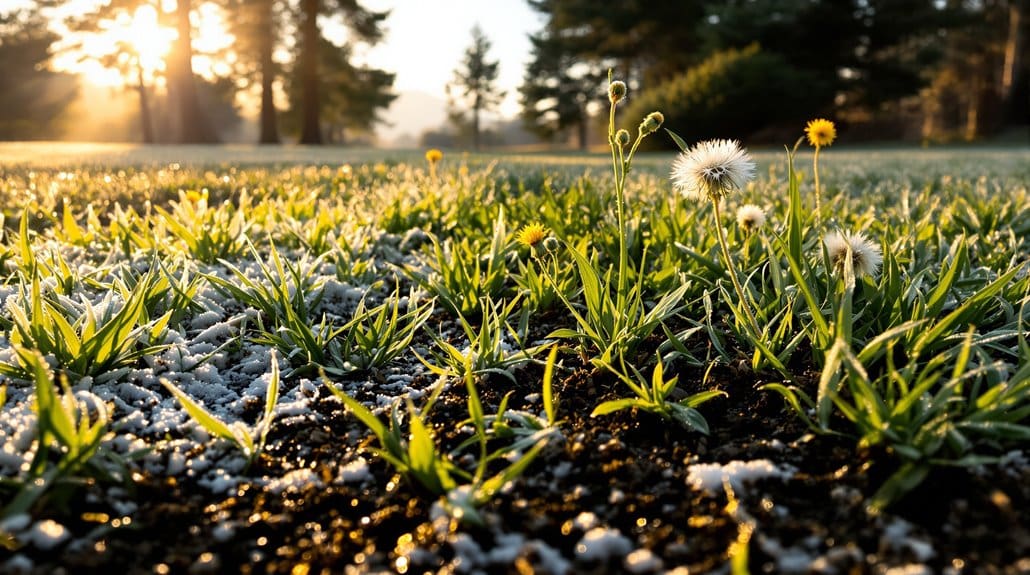
If you want dependable timing across South Carolina’s different zones, don’t guess by the calendar alone—use soil temperature and a clear regional window to guide you, because that’s what separates half-hearted attempts from actually stopping weeds before they start. Now, here’s what to do: in the Mountains (Walhalla, Pickens, Spartanburg) aim for spring pre-emergent when the top two inches of soil temperatures hold around 50–55°F for five days, roughly February 10–20. In the Midlands (Columbia, Aiken) the window is February 1–20, same soil cue. On the Coastal plain (Charleston, Hilton Head) plan between January 15 and February 20, again at about 50–55°F. Something worth weighing: fall timing shifts earlier, so don’t wait. Trust the thermometer, not hopes. For reliable results, pair timing with the right products and basic tools like a spreader and soil thermometer for regular home lawn and irrigation care essential gear.
Using Bloom Indicators and Simple Checks When You Don’t Have a Soil Thermometer
Now, start by watching your forsythia—when it’s in full bloom, that usually lines up with soils warming to about 50–55°F, so that’s your cue to think about spring pre-emergents. If you don’t have a soil thermometer, check nearby extension or NOAA soil maps and also look for daffodils and crocuses blooming alongside forsythia; if you want a quick DIY check, push a metal rod or screwdriver into the top 2 inches in the morning, hold it a few minutes, and if it feels consistently warm over several days, you’re probably in the right range. Something to bear in mind: regional date windows (like the South Carolina ranges) can be a fallback, but prefer actual plant cues and simple soil checks when you can—trust me, I’ve applied too early more than once. Many homeowners find that choosing smart fertilizer products and timing applications carefully helps protect their lawn and nearby waterways.
Forsythia Bloom Timing
Because forsythia tends to bloom just as the soil at 1–2 inches hits the 50–55°F range, you can use its bright yellow flowers as a simple, backyard cue to time spring pre-emergent applications—just don’t trust it alone. Step 1 — Look and confirm: if forsythia is blooming, that’s your Pre-Emergent Weed heads-up, but check soil temperatures too, you’ll thank me later. Now do a simple soil check, or note local bloom timing, because coastal and mountain dates differ. Step 2 — Best Time To Apply: aim for peak bloom or just before, especially in the Southeast where bloom precedes crabgrass by days to weeks. Something to contemplate: don’t rely solely on blooms if you plan to seed, or you’ll block desired grass. Consider pairing bloom timing with a soil pH test to better plan lime or other soil amendments.
Watch Local Plant Cues
When forsythia starts to light up your yard, take that as your friendly nudge to get serious about pre-emergent timing—it's a reliable cue, but don't treat it like gospel; check soil temps or local reports too, because I've burned a spring or two by trusting blooms alone. Now, watch local plant cues: when for-sythia blooming lines up with consistent morning lows above freezing and daytime highs in the 50s, it's time to apply, not later. Something to keep in mind, if you lack a soil thermometer, use extension service or weather station soil temps at 2 inches, aim for that 50–55°F run. Do this, not that: don’t wait for weed seedlings; pre-emergent must go down first.
Simple Soil Checks
If you don’t have a soil thermometer, you can still get the timing right by trusting a few simple, repeatable cues and a little common sense—I've learned the hard way that flowers can fool you if you rely on them alone. Step 1: Watch for forsythia blooms as a regional hint that soil is nearing the 50–55°F sweet spot, but don’t stop there. Step 2: Now dig two inches with a trowel and feel the soil each morning for several days; consistently warm to the touch means it’s close enough to apply pre-emergents. Something to bear in mind: coastal areas wake earlier than mountains, and if you plan to seed soon, don’t apply pre-emergents, they’ll stop grass germination.
Which Weeds You’ll Prevent in January: Winter Annuals vs. Summer Annuals (Crabgrass)
Start by knowing what you can realistically stop in January, because that tells you what to do next: in the South, January is mainly about winter annuals — chickweed, henbit, annual bluegrass and Carolina geranium — which germinated back in the fall and are already growing and setting seed, so a pre-emergent you put down now won’t kill the visible plants you see; it only stops seeds that haven’t sprouted yet. Now, you’re preventing winter annual weeds with a pre-emergent aimed at soil seed, not pulling up established plants, so if you already see growth, hand-pull or use a labeled post-emergent instead. Something to keep in mind: crabgrass is a summer annual, it needs spring timing when soil warms to about 50–55°F, so don’t expect January to stop crabgrass.
Choosing the Right Product for January Use (Corn Gluten, Prodiamine, Dithiopyr, Atrazine)
Now you’ll pick the right active ingredient for January use, and here’s what to do: choose corn gluten meal only if you’re okay with a slow, repeated build-up and modest control, opt for prodiamine when you want long residual protection for spring annuals, and pick dithiopyr if you need a bit of early post-emergent help on tiny crabgrass. Something to contemplate: atrazine works well on certain warm-season grasses but can spell disaster on many cool-season lawns, so check the label and your turf type before you apply. Trust me, I’ve learned the hard way—read the label, follow timing and watering directions, and don’t substitute one product for another unless it’s clearly labeled for your grass.
Product Active Ingredients
Because choosing the right pre-emergent in January can make or break your season, you’ll want to pick an active ingredient that matches your turf type, timing needs, and tolerance for reapplication, not just whatever’s on the store shelf. Step 1 — assess: prodiamine gives long residual control, great for crabgrass, and usually lasts months, so use it when you want fewer reapplications. Step 2 — tweak: dithiopyr works if you need some early post-emergent help on tiny crabgrass, with a shorter window, so it’s forgiving if you miss strict timing. Step 3 — consider alternatives: corn gluten is organic but needs heavy yearly rates and kills grass seed; atrazine can be powerful in warm-season lawns but can harm cool-season turf and faces local limits. Now pick with your label in hand.
Timing And Safety
If you’re aiming to get ahead on spring weeds, you’ll want to time your January application to the product and your lawn, not the calendar, because getting that timing wrong is the most common mistake even pros make. Now, check soil temperatures at 2 inches; apply prodiamine or dithiopyr before it hits roughly 50–55°F for five days, or you’ll miss the window. Something to ponder: Corn gluten meal can be used earlier as a cultural pre-emergent, but expect high rates and patience—repeat yearly. Don’t use prodiamine, dithiopyr, or CGM if you plan to overseed within 2–4 months. Atrazine works on some warm-season grasses, but only where the label allows. Always follow label rates, wear protection, and keep kids and pets off treated areas until safe.
How to Apply Pre-Emergent in January: Mowing, Spreader/Sprayer, and Coverage Tips
Start by mowing your lawn to the recommended height and clearing away clippings and debris so the pre-emergent can actually reach the soil — you’d be surprised how often folks skip this and wonder why the product didn’t work. Step 1, do this first: use a calibrated spreader for granular products or a pump sprayer for liquids, and follow the label rate so you apply evenly, not too heavy in one spot. Now walk at a steady pace, overlap slightly, and resist the urge to guess settings — I’ve learned that the hard way. Something to contemplate: don’t aerate or disturb soil afterward, wear gloves and eye protection, and keep kids and pets off treated areas until dry.
How and When to Water In After a January Application for Activation
Now that you’ve spread the pre‑emergent and kept the lawn tidy, you’ll need to give it a little water so it can work where weed seeds sprout. Step 1 — do this: irrigate within 3–5 days with about 0.25–0.5 inches of water to move the product into the top 1–2 inches of soil where seeds germinate; one slow, even cycle usually does it. Something to ponder — if rain of 0.25 inches or more comes within 24–48 hours, skip extra watering. Do not do that: avoid heavy or repeated deep irrigations the first week, they can wash the barrier down or shorten protection. One more tip — don’t disturb the surface for 4–6 weeks, follow the label.
What to Do if Weeds Are Already Up: Post-Emergent and Manual Control Options
You’ve already got weeds poking through, so don’t panic — grab a plan and act purposefully: spot-treat small patches with a labeled post‑emergent made for your turf, or pull them by hand when the soil’s moist so you can get the whole root (trust me, half‑hearted tugging just makes you do it again). Now, pick a selective post‑emergent formulated for your grass, follow the label for rates and temperature limits, and avoid stressed turf. Spot‑treat with a handheld sprayer or ready‑to‑use bottle to limit chemicals and protect neighbors’ grass. Something to weigh: mow at the right height and water properly to help herbicide work. For denser patches, hand‑pulling when damp gets roots and seedheads, dispose of them, and repeat as needed.
Planting, Seeding, Sod, or Plugs After a January Pre-Emergent : Safe Timelines
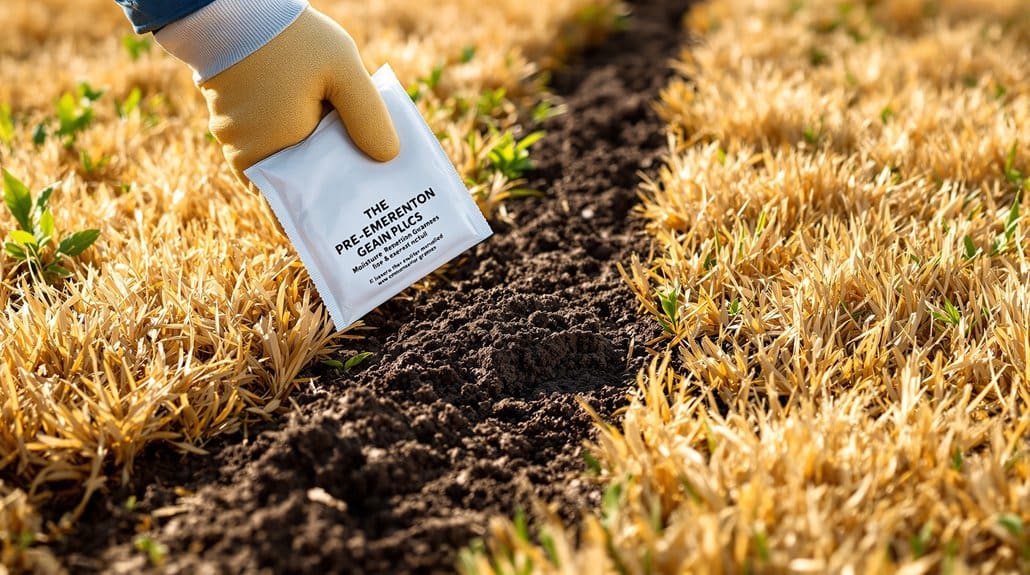
If you applied a January pre‑emergent, don’t expect to plant seed right away — those herbicides are doing their job and will usually stop grass seed from sprouting for a while, so plan ahead and avoid the temptation to patch with seed too soon. Now, do this: wait 2–4 months before seeding when you’ve used common products like prodiamine, dithiopyr, or oryzalin, and follow the label—trust me, I’ve learned the hard way. Something to bear in mind: corn gluten meal can block seed for an entire season, so don’t seed after heavy CGM. Sod is forgiving, you can lay it near treated areas, but don’t apply strong pre‑emergent over fresh sod for 6–8 weeks. Plugs? Plant first, then apply pre‑emergent and monitor. Always read the label.
Common Timing Mistakes in January and How to Avoid Reduced Effectiveness
Because January feels like the right time to get ahead of crabgrass, many folks apply a spring pre‑emergent too early and end up with weaker control by the time weeds actually germinate, so don’t be that person—wait for the soil to be ready. Step 1 — Don’t rush: if you apply too early the product can break down or wash away before the soil hits 50–55°F for several days, leaving no barrier when seeds wake up. Step 2 — Do check soil temp: wait until the top two inches are consistently 50–55°F or use local data, then apply. Now, avoid heavy watering within 24 hours and don’t disturb soil after application. Something to keep in mind: if weeds already sprouted, switch to a labeled post‑emergent or pull them.
Safety, Pet/Kid Precautions, and When to Call a Local Pro
Now that you’ve got the timing right and avoided the “apply in January, regret in May” mistake, it’s time to think about safety and when to bring in a pro. Step 1 — do this: keep children and pets off treated areas until the product is dry and the label re-entry time has passed, because granular pre-emergent often needs 2–24 hours. Wear gloves, long sleeves, long pants, and eye protection while applying, then wash up. Something to bear in mind — store products locked, cool, dry, out of reach, and follow disposal rules. Do not guess if a child or pet is exposed, call Poison Control immediately with the label in hand. When unsure about application timing or turf safety, call your county extension or a licensed pro.
Some Questions Answered
Is January Too Early for Pre-Emergent?
Not usually — you’ll want soil temp at 50–55°F for five days before application. Now, check temps or bloom cues; do this, not that: don’t rush an early spray and don’t wait until weeds pop. Something to keep in mind: application methods matter, use even spread and follow herbicide safety labels, wear protection, and avoid runoff. You’ll learn from past misses, so test temps first and you’ll get timing right.
When to Apply Pre-Emergent for Winter Weeds?
You should apply pre-emergent in early fall, when lawn biology shows seed dormancy ending—about when soil temps hit near 70°F—so seeds haven’t sprouted yet. Now, use proper application equipment, spread evenly, and water lightly within 3–5 days to activate. Something to keep in mind: don’t wait until seedlings appear, and if you’ve missed the window before, resist seeding too soon after application; follow label timing, learned the hard way.
When to Put Down Pre-Emergent in the South?
You should apply spring pre-emergent when soil temperature hits about 50–55°F for five straight days, now check with a thermometer. Bed preparation matters, avoid seeding those areas and don’t aerate after application. Use proper application tools, spread evenly and water in 0.5 inch within three to five days. Something to keep in mind: if you missed the window, switch to post-emergents or pull weeds by hand.
What Happens if You Put Pre-Emergent Down to Early?
You’ll reduce chemical persistence, lose barrier effectiveness, and fail to stop seed germination when you apply pre-emergent too early. Now: don’t panic—check soil moisture and temperature, wait for consistent 50–55°F, and avoid heavy watering or tilling that breaks the barrier. Something worth noting: you may need a follow-up application later. Do this, not that: time it right, don’t overapply, and pair with spot-treatments for emerged weeds.