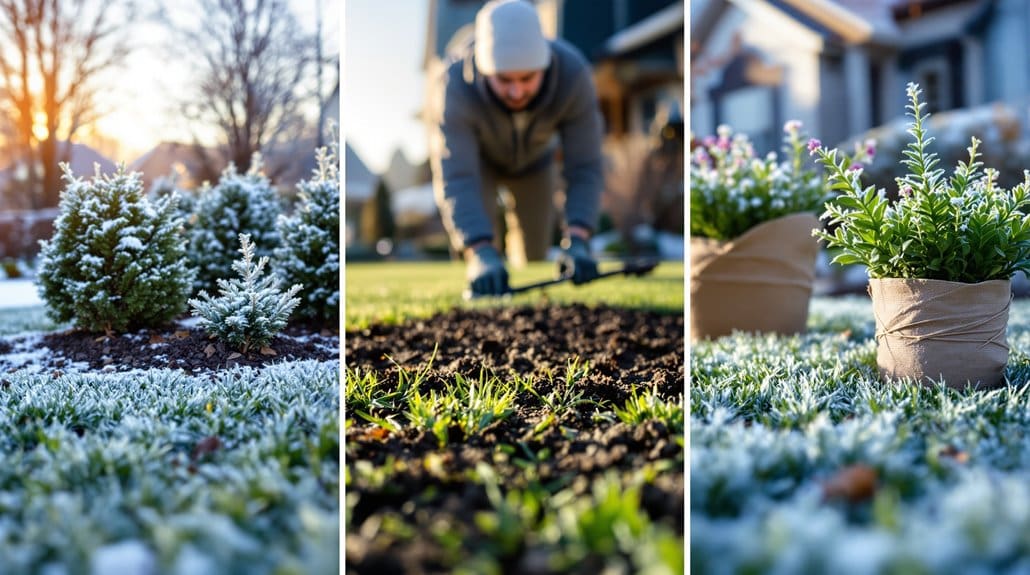
You’re seeing bumpiness because wet topsoil froze into ice lenses and literally pushed the turf up; now, don’t try to fix it while the ground’s rock‑hard or bone‑dry, wait until it’s thawed and squishy, then press small hummocks down or lightly roll them (use heavy rollers once, not repeated passes), topdress shallow depressions with 1/4–1/2" screened mix, and remove sod to regrade deeper spots; something to take into account — improve drainage and aerate afterward to prevent repeats, and keep going for full repair guidance.
Some Key Points
- Frost heave happens when wet topsoil forms ice lenses that push turf upward during repeated freeze–thaw cycles.
- Fine silty or clay-rich soils with poor drainage are most prone to producing noticeable bumps.
- Bumps usually settle after thawing as the ice melts, leaving temporary soggy or sunken spots.
- Prevent recurrence by improving drainage, adding organic matter, and avoiding overwatering before freezes.
- Repair small bumps when soil is soft: press or lightly roll, then core-aerate and topdress if needed.
What Is Frost Heave and Why Does Your Lawn Buckle After a Freeze?

If your lawn looks like a mini-hill country after a freeze, don’t panic — that bumpy, buckled turf is usually frost heave at work, and it’s more annoying than mysterious. You’re seeing frost heaving: water in the soil freezes into ice lenses, pulls more water up from below, and lifts turf and roots. It happens during freeze–thaw cycles when topsoil is wet, so soil moisture matters a lot. Now, don’t blame the grass; it’s physics. Do improve drainage, add organic matter, or mulch, not ignore puddles and compacted dirt like I once did. Something to keep in mind: after the ice melts the lawn will settle, but persistent damp spots need fixing, or the bumps will come back. Consider using a core aerator to reduce compaction and improve drainage.
Which Soils and Conditions Make Frost Humps Most Likely?
Now, look for cold, wet spots first — you’ll see frost humps where the soil is fine-textured, silty or clayey, because those soils hold water and feed the ice lenses that push the turf up. Something worth noting: if your yard has a high water table or stays saturated after rain or snowmelt, and the frost only goes a few inches deep, you’ll get more heaving than on sandy, well-drained ground — been there, cursed that patch myself. Here’s what to do now: mark those low, soggy areas and plan drainage or soil amendment, not more mulch, to keep moisture from fueling future bumps. For regular maintenance and to prevent moisture-related problems, consider testing soil conditions and pH with homeowner ph test kits to guide drainage and amendment choices.
Cold, Wet Soils
Understanding which soils are most likely to heave starts with remembering that water, not just cold, does the lifting—you've probably seen a smooth lawn turn into a bumpy mess after a wet freeze, and that’s a dead giveaway that your soil held too much moisture near the surface. Now, if your yard has heavy clay or loam, or sits where poor drainage or a high water table keeps the top inches saturated, you’re inviting frost heave when freeze–thaw cycles hit. Here’s what to do now: stop compacting the turf, improve drainage where you can, and avoid overwatering in fall. Something to keep in mind: sandy, fast‑draining spots rarely heave, so think “drain, don’t drown.” Been there—learned the hard way. Consider improving your lawn with quality topsoil and proper equipment to help manage moisture and drainage topsoil tips for healthier turf.
Fine, Silty Texture
You’ll often see the worst frost humps on soils with a fine, silty texture, because silt holds water and lets it move up toward freezing fronts through capillary action, feeding ice lenses that lift the turf; I learned this the hard way when a “nice, level” yard turned into a lumpy mess after a wet winter. Now, if you have fine, silty soils or clay–silt mixes, expect more ice-lens growth during repeated freeze–thaw cycles, especially with poor drainage or a shallow water table. Something to keep in mind: a silty top over coarser subsoil funnels water upward, concentrating bumps near the surface. Do this: improve drainage, avoid saturation, aerate; not that: ignore standing moisture. You’re not alone in this. Improving drainage and regular aeration can significantly reduce frost heaving by helping water move away from the surface and reducing soil compaction, so consider aeration frequency as part of your maintenance plan.
How to Diagnose Frost Heave vs. Animal Activity or Root Clumps?

If your lawn’s gone bumpy after a freeze, start by looking for patterns and probing the soil—don’t just stomp around guessing. Step 1, note timing and pattern: frost heave from freeze–thaw cycles shows broad, firm bumps across moist clay or loam after cold snaps, whereas animal activity makes irregular mounds, tunnels, fresh spoil piles, and runways. Now probe: use a screwdriver—frost-heaved spots resist while frozen but settle and probe deeper once thawed; burrow voids probe easily both times. Something to bear in mind: root clumps are persistent, stationary hummocks with dense tufted grass and tougher turf that won’t flatten after thawing. Do this, not that: test, observe patterns, don’t assume it’s wildlife if it’s wide and uniform. Also check your sprinkler heads and irrigation patterns, since overwatering can increase soil moisture and make lawns more prone to frost heave.
When Is the Short Window to Correct Frost Heaves Safely?
Now is the time to act: wait until the soil is thawed but still squishy after a few warm days and a good soaking rain, then roll or lightly tamp only while the topsoil gives underfoot, not when it’s frozen or bone‑dry. Something to bear in mind — after you’ve made that quick correction, follow up within days to a couple of weeks with core aeration to relieve any compaction you just caused, because skipping that step is a mistake I’ve made more than once. Don’t overwork saturated ground or try to fix frozen turf; time your move to that narrow moisture/temperature window and you’ll save yourself trouble later. If you use the right tools for the job, like a sturdy wheelbarrow and proper lawn equipment, the work goes faster and with less strain on your back.
Ideal Soil Moisture Window
Timing your repair work is everything, so watch the soil like you’d watch your favorite game — it can flip in a day. Now, check soil after a few warm days or a long rain, because freezing and thawing cycles make a tiny window when water content is right. Aim for spongy ground that a screwdriver sinks into 6–8 inches with moderate effort, that’s about field capacity, not soggy mud. Do this, not that: don’t roll when frozen or when turf tears from excess water. Something worth weighing: top dressing and quick rolling during this brief stretch fixes bumps, but plan crews fast, you’ll miss it if you wait. Been there — learned the hard way. Follow up with core aeration soon. Consider adding organic soil amendments to improve drainage and reduce future frost heaving.
Post-Rolling Action Timeline
When the ground finally gives—after a full thaw or a long, warming rain—and you can push a screwdriver down four to six inches with steady pressure, that’s your golden few days to roll and fix frost heaves before the soil firms up, so move fast but smart. Now: roll only while that soft-soil window holds, use a heavy roller, and don’t be tempted to roll frozen or repeatedly thawing ground—been there, ripped turf, not fun. Next: within a week follow rolling with core aeration to relieve compaction and let roots breathe, otherwise you’ll choke recovery. Something worth weighing: if you miss the window and soil hardens or refreezes, stop, plan topdressing or regrading in the growing season, and call a pro if unsure.
Quick Fixes for Minor Bumps: Step-Downs, Topdressing, and Spot Filling

If frost heaves have left little popcorn-size bumps across your lawn, don’t panic — you can usually press them back in and tidy things up without calling in a pro. Step-downs work: when soil is moist, stomp small humps or use a moderate-weight lawn roller, just 300–900 lb, to press a bumpy lawn flat without crushing roots. Now topdress shallow spots with a thin 1/4–1/2 inch mix of topsoil and sand and a bit of compost, rake it in so grass grows through, and never dump more than 1/2 inch at once. Something to ponder: for tiny holes remove sod, add compacted fill so it finishes slightly high, replace sod or seed. Afterward, aerate to relieve compaction.
When to Remove Sod and Regrade Deeper Depressions (2+ Inches)
Because small bumps are easy to stomp flat, you might be surprised at how different the fix is once depressions get serious — deeper than about 2 inches calls for pulling up the sod and regrading. Now, don’t panic: remove the affected sod in strips with a cutter or sharp shovel, set it aside if you’ll reuse it, and expose the subsoil so you can regrade properly. Fill low spots with a well-draining blend (two parts topsoil, two parts coarse sand, one part compost), compact lightly so it won’t settle again, then re-lay the sod or seed and keep it watered. Something to ponder: wait until soil’s workable in spring, and slope away from foundations to avoid repeat frost heaving.
Should You Roll the Lawn? Timing, Roller Weight, and Compaction Risks
Now that you’ve handled deeper depressions by lifting sod and regrading, you might be wondering whether a roller can save you time and effort on the rest of the lawn. Step 1 — timing matters: roll only when the soil is very soft after a full day of rain, or while still soggy, otherwise the roller just rides over frost humps and wastes your time. Step 2 — pick weight wisely: use a heavy steel roller, several hundred up to ~900 lb filled, small poly models usually can’t correct heaves. Something to ponder — apply the minimum effective weight and avoid repeated heavy passes, because rolling causes compaction; plan to core-aerate afterward to restore porosity. Don’t roll frozen, bone-dry, steep, or fragile turf.
Follow-Up Care After Smoothing: Aeration, Overseeding, and Drainage Fixes
You’ve smoothed the bumps, and it’s tempting to call the job done, but don’t pack it in yet — the work you do next will make the difference between a lawn that bounces back and one that looks patchy all season. Now, aerating the lawn with 2–3-inch tines relieves compaction from rolling, so do it right away, you’ll thank yourself later. Something to keep in mind: overseed thin spots when soil temps hit about 50–65°F, keep the seedbed moist for 2–3 weeks. Next, topdress seeded areas lightly with 1/4–1/2 inch of a screened topsoil:sand:compost mix for good seed contact and drainage. For persistent trouble, pursue drainage fixes like shallow swales, organic amendments, or a sand layer under paths.
Prevention: Long-Term Soil, Drainage, and Turf Strategies to Reduce Future Heaving
You’ve done the smoothing and the follow-up work, but if you want to stop frost heaving from coming back next winter, you’ll need to change how the ground behaves over the long term, not just patch spots after they pop up.
Step 1 — Fix drainage: regrade low spots for a 2–3 inch fall per 10 feet, add French drains or perforated pipe where water pools, because standing moisture fuels ice lenses. Now address soil compaction: core aerate annually, more in clay or high-traffic areas, to improve water movement and prevent perched water. Step 3 — Improve soil: amend clay with 2–4 inches of compost and a 1:2 sand:soil mix over seasons, creating a layer of organic material that helps infiltration. Step 4 — Turf care: overseeding and a steady fertility program build deep roots to resist uplift. Something to ponder: mulch 3–4 inches in fall, and don’t overwater late season.
Some Questions Answered
How to Fix a Bumpy Lawn After Winter?
Fix bumps now by working while the soil’s soft, tamping small heaves, or cutting and lifting sod for bigger patches, then add and compact quality fill for good grading solutions. Now topdress thinly, reseed with proper seed selection, and avoid overwatering by adjusting irrigation timing. Something worth considering: avoid heavy rolling to fix soil compaction without follow-up aeration. You’ll learn, we’ve all made that mistake.
What Does Frost Damage Look Like on Grass?
About 30% of lawns show visible stress after a hard freeze. You’ll see freeze discoloration, blade shredding, and patch dieback, sometimes with soggy crowns hinting at root rot. Now, inspect raised humps, brown blades, and exposed roots, don’t assume it’s dead. Something to contemplate: gently press crowns, brush turf, then wait for thaw before repairing. Do this, not that—avoid heavy raking too soon, you’ll thank yourself.
Why Does My Grass Look Bumpy?
Your lawn looks bumpy because frost heave and uneven soil let the surface shift, and factors like soil compaction, shallow root depth, microclimates, and thatch buildup make it worse. Now, aerate to relieve compaction, dethatch if you’ve let that pile up, and overseed deeper to improve roots; don’t just topdress and walk away. Something worth thinking about: fix drainage, and be patient—your turf will settle if you treat the causes.
How to Fix Frost Heave in Lawn?
Fix it by waiting for a thaw, then tamping bumps or rolling gently when soil’s soft — think Renaissance-era patience, not panic. Now, lift and regrade large humps, add a topsoil-sand mix for grade correction, replace sod or seed overseeding where needed, and protect crowns for root protection. Do soil aeration soon after to relieve compaction. Something to keep in mind: avoid working when too wet, and overseed to restore density.