Dormant oil is a light horticultural oil you’ll spray on fully dormant trees to smother overwintering eggs and soft pests; now, do this before buds swell, on a calm dry day above about 40°F, and coat bark crevices and bud scales thoroughly for 2–4% dilution—don’t spray after green shows or on oil‑sensitive species. Something to ponder: armored scales often need follow‑up scraping or repeats. Keep kids and pets away until dry, and if you keep going you’ll get exact mix, timing, and technique tips.
Some Key Points
- Apply a 2–4% horticultural (dormant) oil spray when trees are fully dormant and before any buds swell.
- Drench trunks, scaffold limbs, crotches, and bud scales for complete coverage to smother overwintering insects and eggs.
- Use calm, dry days above about 40°F (4°C), with no frost, rain, or high winds forecast for 24–48 hours.
- Mix oil into water with agitation until it emulsifies, keep the tank agitated, and avoid runoff while ensuring thorough coating.
- Wear PPE, avoid oil‑sensitive species or open blooms, and scout after application for remaining pests or need to re‑treat.
What Dormant Oil Is and How It Protects Trees Before Bud Break

You’ll want to start by understanding what dormant oil actually does, because getting the timing and coverage right makes all the difference: dormant oil is a light horticultural oil, either petroleum- or plant-based (think neem), that you spray over fully dormant trees to coat bark, buds, and crevices and physically smother overwintering insects, their eggs, and some fungal spores. Now, you’ll apply dormant oil as a thorough drenching spray, diluted to about 2–4%, aiming to hit overwintering pests and aphid eggs before they hatch. Here’s what to do now: focus on full coverage, don’t skimp, and accept that some armored scales hide and may need follow-up. Something to ponder: wrong timing or strength can harm sensitive trees, so be careful. You’re doing good work. Consider the oils used on equipment like chainsaws and trimmers when choosing compatible products for your tools and storage, especially bar and chain oils that are sold alongside horticultural supplies.
When to Spray: Exact Timing and Weather Conditions for Dormant Oil
Now, start by planning your spray for late winter to early spring while trees are still fully dormant, before any buds swell, because that's when oil works best and you don't want to waste a round. Something to keep in mind: only spray on dry, calm days with temps steady above about 40°F (4°C), no frost or rain forecast for 24–48 hours, and aim for times when pollinators are inactive so the oil can dry before bees start working — trust me, I once sprayed just before a cold snap and paid for it. Do this, not that: cover branches thoroughly and follow label rates, but don't spray drought‑stressed or sensitive species like blue spruce or Japanese maple. Use a properly fitted respirator and follow basic respirator safety practices when mixing and applying oils.
Ideal Dormant Window
If you want your dormant oil spray to actually work and not scorch buds or wash away, aim for late winter to just before bud break, when trees are fully dormant and no green tissue shows—usually between January and early spring depending on your local climate. Ideal Dormant Window — Now, you’ll want to apply dormant oil on a dry, calm day, before bud break, targeting overwintering insects and insect eggs tucked in bark and buds. Do this when nights and days stay mild enough for drying, avoid frost or rain forecasts, and time it with no open blooms so you don’t harm pollinators. Something to keep in mind: one thorough drench usually suffices; only repeat if heavy infestations persist. Homeowners should also follow product label instructions and safety precautions when using non-selective herbicides or other lawn-care chemicals.
Weather And Temperature Limits
You’ve picked the right window for dormant oil, so next focus on the exact weather and temperature that’ll make it work without frying bark or washing off. Step 1 — Pick the right day: apply dormant only while trees are fully dormant, before bud break, and choose a dry calm day with temperatures above 40°F so the oil spreads and dries. Now, avoid application if frost, freezing, or rain is forecast within 24–48 hours, or if wind could cause drift. Step 2 — Timing and care: spray early morning or dusk, when pollinators aren’t active, and make sure no open blooms are present. Something to ponder: don’t rush; bad timing means wasted spray and regret. For homeowner projects, also consider wearing a proper dust mask and other basic PPE when mixing and spraying to limit inhalation and exposure.
Which Pests and Trees Benefit Most From a Winter Oil Drench
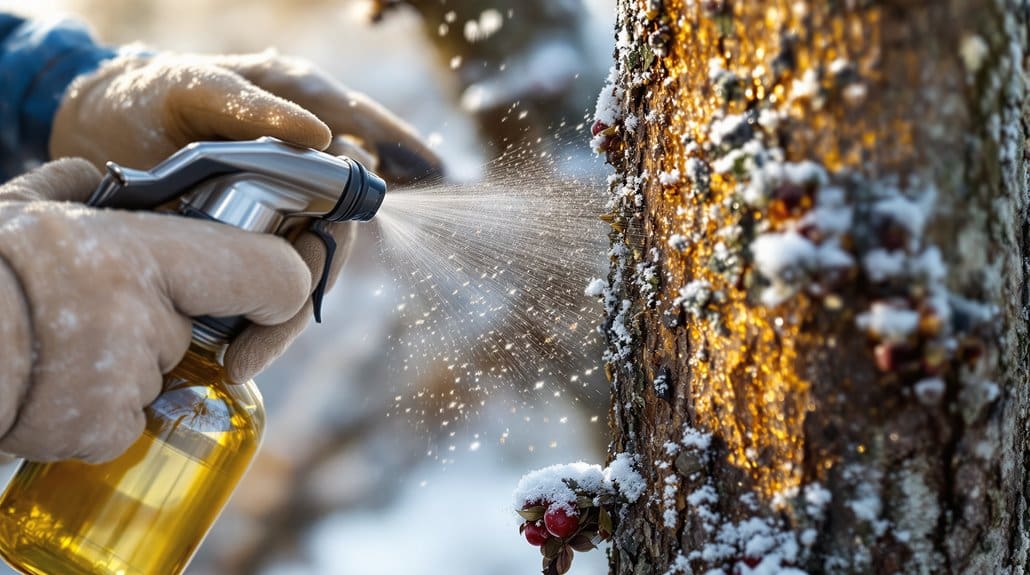
Now, start by focusing on the soft-bodied overwinterers — things like scale insects, eriophyid and spider mite eggs, aphid eggs, and some adelgids — because a 2–4% dormant oil drench can smother them when you hit all the bark crevices and bud scales before bud swell. Fruit trees such as apple, pear, and peach usually give you the best payoff, since many damaging pests spend winter on limb crotches and under bud scales where oil contact kills them, but armored scales often need extra work, like scraping, pruning, or repeat treatments because a single spray can fall far short. Something to ponder: timing and full coverage are key, so don’t skimp or spray too late — I’ve learned that the hard way — and plan for follow-up checks and possible repeat applications. For homeowners maintaining their property, using proper lawn care equipment can help ensure thorough, even coverage and better pest control results.
Common Target Pests
Usually, a single dormant oil drench targets the small, soft-bodied critters and eggs that actually spend winter on your tree, so you’ll want to focus on pests like aphid eggs, soft scales, and many mite eggs that hide in bark crevices and under bud scales where oil can smother them. Now, for Dormant Oil Applications you’ll treat overwintering stages on fruit trees, aiming for thorough coverage so insect eggs don’t survive. Do this: spray when fully dormant, above about 40°F, on a calm day, and coat branches, bud collars, and crevices; don’t skimp. Something to keep in mind: armored scales and pests off the plant often need other tactics. Scout after treatment, repeat only if needed, learn from misses, and keep going. We recommend pairing treatments with proper lawn and garden equipment maintenance to ensure effective application and coverage, including selecting the right sprayer for lawn care equipment.
Most Vulnerable Trees
Next, think about which trees will give you the biggest payoff for a winter oil drench, because some species and pests respond much better than others. Now, if you care for fruit trees like apple, pear, and peach, don’t skip dormant oils in late winter or early spring—the oil smothers overwintering scale insects, aphid and codling moth eggs, and woolly apple aphids hiding in bark and buds, and you’ll often cut problems before bud break. Something to weigh: soft scales and many spider mites are extremely vulnerable, a single thorough drench can drop populations dramatically. Do this: spray when fully dormant, calm and above about 40°F. Not that: armored scales and heavy infestations often need pruning or repeat tactics, and some evergreens are oil-sensitive, so test first. Consider integrating lawn care equipment and targeted treatments for follow-up control around susceptible trees.
How to Prepare Plants and Equipment for a Safe, Thorough Application
Before you touch the sprayer, take a good look at the trees and shrubs and clean up the obvious mess—prune out dead limbs and rake away heavy debris so you can actually reach the bark crevices where eggs and scales hide; you’ll thank yourself when the spray wets those spots instead of just the leaves. Now, prep gear and plants like a team. Use a clean pump sprayer or backpack sprayer, add water first, then dormant oil, and keep it agitated until it looks like skim milk. Scout for sensitive species and drought stress, don’t spray if it’s too cold or wet. Wear protective gloves and eye protection, keep kids and pets away, follow label rates, and aim for full coverage of overwintering eggs.
Step-by-Step Dormant Oil Application: Coverage, Rates, and Spray Technique
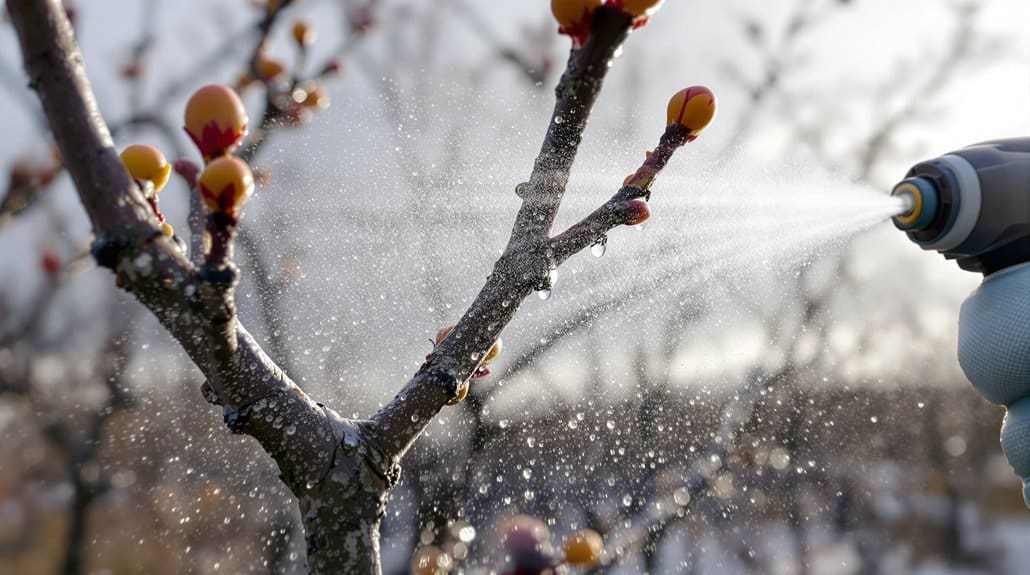
Now that you’ve cleaned up branches and checked your gear, it’s time to actually spray — and doing it right means thinking like a bug: you want the oil to touch every hiding place. Step 1: mix Horticultural Oil at the label rate, usually 2–4% (think 2–4 fl oz per quart), add oil to water with constant stirring until the emulsion looks like skim milk. Step 2: set your pump or backpack sprayer, keep the wand close, and drench from top to bottom, coating bark, crotches, bud scales, and undersides of any leaves; effectiveness depends on contact with Dormant Pests. Now, apply on a dry, calm day above 40°F, follow PPE instructions, and avoid sensitive species. Something to contemplate: aim for coverage, not runoff.
Common Mistakes, Plant Sensitivities, and Post-Spray Care
If you skipped a detail during mixing or rushed up the ladder last time, don’t worry—you’re not alone, but do learn from it: common mistakes usually come down to timing, coverage, and plant sensitivity, and getting those three right will save you headaches and harmed trees. Step 1: Timing — do dormant oil treatment only when temps stayed above 40°F for 24–48 hours, and never before buds show green, or you risk phytotoxicity. Step 2: Coverage — avoid poor coverage by drenching undersides of buds, crotches, and scaffolds; spotty sprays fail against insects and insect eggs. Something to keep in mind: test sensitive species, like Japanese maple, first, or use lower rates. Post-spray care: keep people and pets away until dry, monitor for discoloration, scout and re-treat if needed.
Some Questions Answered
What Pests Does Dormant Oil Control?
You’ll control many overwintering pests: scale insects, mite eggs, egg sacs and overwintering aphids are smothered when oil contacts them, and it can even reduce some fungal spores on bark. Now, spray thoroughly on buds and twigs, not soil or leaf litter. Something to ponder: armored scales and heavy infestations often need repeats or extra tactics. Do this carefully, don’t skimp—trust me, I’ve learned that the hard way.
Where to Spray Dormant Oil?
Imagine a paintbrush smoothing over bark as you spray: aim tree trunks, branch bases, pruning wounds, and structure crevices where pests hide, and coat ornamental shrubs thoroughly. Now, work from the top down so you don't miss crotches and scaffold limbs, and don't spray flowers. Something to keep in mind: be honest, you might've missed bud scales before — so take your time, cover undersides, and treat all sides of limbs for best control.
How Long Before Rain to Spray Dormant Oil?
Spray at least 24–48 hours before rain for reliable pre rain efficacy. Now, pick a dry, calm day above 40°F, because evaporation rates and timing windows let the oil form a film, not wash off. Something worth noting: soil absorption isn’t your friend here, it’s about covering bark and buds. Do this, not that — don’t spray if rain’s forecast within a day, or you’ll waste product and need to reapply.
What Temperature to Spray Dormant Oil?
You should spray when temperatures are consistently between about 40–85°F (4–29°C), don’t spray if frost’s coming, and avoid prolonged heat. Now, aim for ideal timing in late winter or very early spring, when freeze risk is low and the oil can emulsify and dry. Something to keep in mind: pick calm, dry days, use good coverage techniques, and don’t overdo application frequency — once per dormant season usually does the trick.