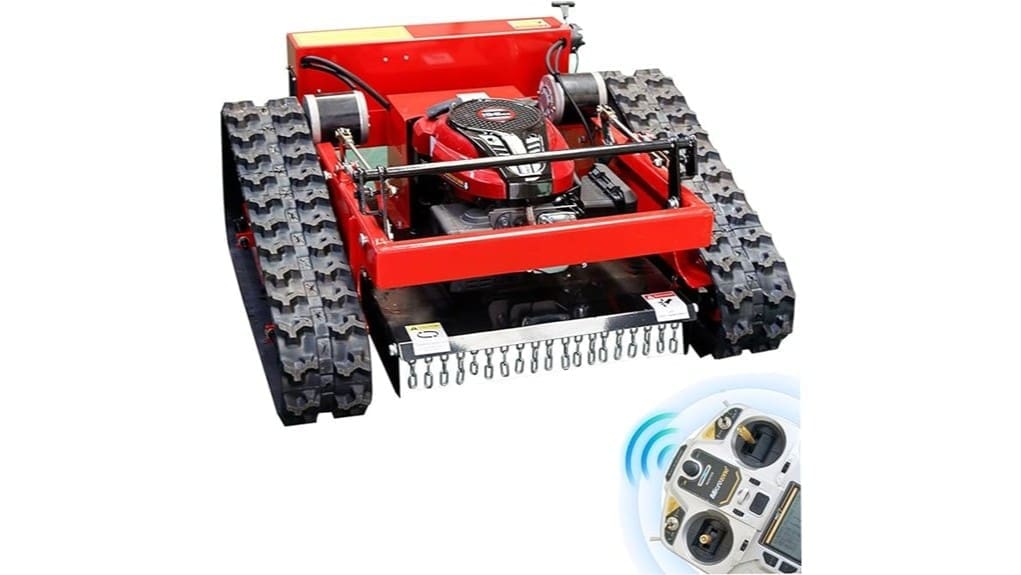
You’ll get a remote-driven, hybrid oil‑electric mower with zero‑turn handling, tracked traction, two alloy blades and a snow‑plow attachment—great for slopes and big properties. It delivers strong torque, better fuel efficiency than gas alone, and quieter operation, but it’s heavier, needs battery care and regular track/blade maintenance. Service and spare‑part availability can vary regionally, so check support before buying. Keep going to see detailed performance, upkeep and attachment considerations.
Some Key Takeaways
- Hybrid oil-electric remote zero-turn mower offers strong torque, better fuel efficiency, and electric assist for starts and dense grass.
- Tracked all-terrain system improves grip, slope handling, and stability but needs regular track tensioning to avoid derailment.
- Two alloy blades provide precise cuts; blade-rebound reduces impact damage but requires frequent inspection and sharpening.
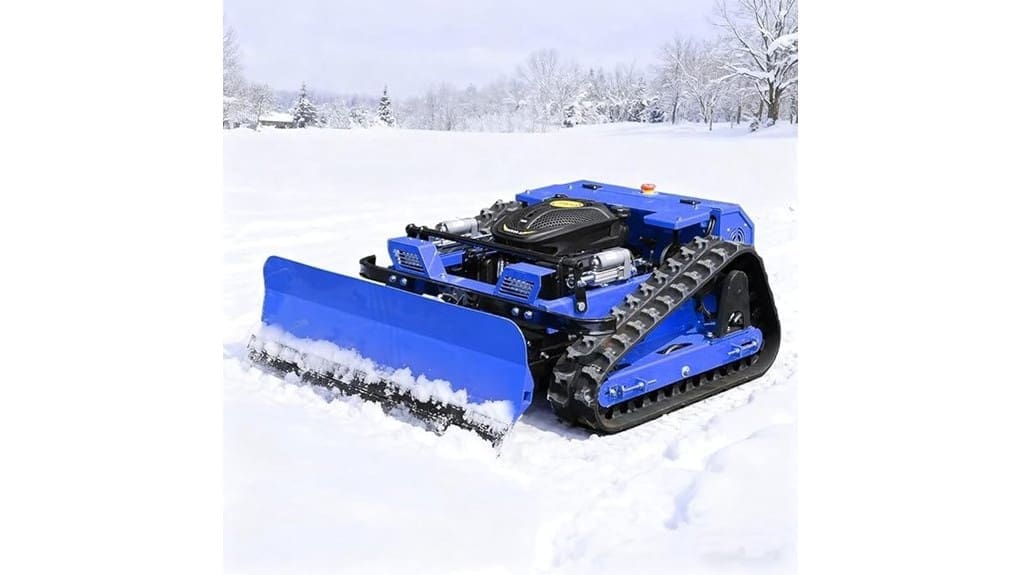
- Snow-plow attachment converts mower for winter use; verify attachment compatibility, adapters, and included mounting hardware.
- Quieter ride with reduced vibration; confirm local service, spare-part availability, and battery maintenance requirements before purchase.
Quick Verdict and Key Specs for the Infront Remote Control Lawn Mower
While it looks like a traditional mower, the Infront Remote Control Lawn Mower gives you remote-driven, zero-turn performance and hybrid oil-electric power that’s built for large, uneven lawns and steep slopes. You’ll appreciate intuitive remote controls and adjustable mowing height for precise cuts. Specs include a brushed motor, tracked all-terrain system, two alloy blades, and a snow-plow attachment. Critically, hybrid operation aids battery longevity by sharing load with oil power, and design choices reduce vibration for noticeable noise reduction. It’s powerful and versatile, though you’ll want to verify service support and spare-part availability before committing. Many typical homeowners prefer battery mowers for regular property maintenance due to lower noise levels and reduced emissions compared with gas-only models.
Hybrid Oil-Electric Powertrain and Zero-Turn Performance on Real Lawns
Because the Infront pairs an oil engine with electric drive, you get sustained torque for long runs without constantly draining batteries, and that balance matters on large or hilly lawns. You’ll notice improved torque delivery during starts and when negotiating dense grass, so the cutter keeps momentum without stalling. The hybrid setup also boosts fuel efficiency compared with pure gas units under similar loads, since the electric assist reduces engine strain. Zero-turn responsiveness feels sharp; you’ll slice around obstacles with minimal repositioning. Still, expect slightly heavier steering inputs than a lightweight rider—trade-offs for durability and consistent power. Proper battery charging and maintenance help ensure the electric assist performs reliably over time.
Traction and Stability: Crawler Track System, Slope Handling, and Rough-Terrain Tests
When you drive the Infront across uneven ground, its crawler track system delivers noticeably better grip and stability than wheeled mowers, letting you maintain steady speed and control on loose soil, mud, or gravel. You’ll find slope handling superior: tracks spread ground pressure evenly, reducing slip on inclines and soft patches. In rough-terrain tests the unit held course over ruts and rocks, though you’ll want regular track tensioning to prevent derailment and premature wear. Steering is predictable but slower than zero-turn wheels at low speeds. Overall, traction is excellent for steep or irregular lawns, with minor maintenance trade-offs. For homeowners maintaining their property regularly, regular use of edging and lawn-care equipment helps keep turf healthy and boundaries neat, making the Infront a strong option for properties that need consistent upkeep and care with essential edgers.
Cutting, Safety, and Durability: Blades, Rebound Function, and Maintenance Needs
Although the Infront uses two alloy blades that deliver precise, even cuts similar to a traditional push mower, you’ll want to inspect and sharpen them regularly to maintain cutting performance and turf health. You’ll appreciate the blade rebound function: it reduces impact damage by flipping blades away from hard objects, protecting the drive and reducing downtime. Still, you should monitor blade corrosion, especially if you mow damp or coastal lawns. Follow a strict maintenance schedule—cleaning, balancing, torque checks, and seasonal sharpening—to prevent premature wear. With attentive care, durability is strong; neglect accelerates failures and safety risks. Regular blade sharpening and proper edge maintenance will help preserve cut quality and extend blade life.
Snow Plow, Attachments, and Who Should Buy This Mower
Keeping up with blade care and seasonal maintenance also pays off when you swap on attachments, particularly the dedicated snow plow that turns this mower into a winter workhorse. You’ll get genuine winter versatility—clearing driveways, paths, and packed snow while retaining mowing function in warmer months. Check attachment compatibility carefully; the plow fits the chassis but other add-ons may need adapters. Consider user profiles: ideal for large-property owners, those on slopes, or anyone who wants a two-season tool with remote control convenience. For purchase guidance, weigh cost versus multiuse value and maintenance demands before committing. Many homeowners also pair the mower with dump carts for easier debris and snow removal around their property.
Some Questions Answered
Does the Mower Come With a Warranty and What’s Covered?
Yes — you get a limited warranty; the warranty duration is typically one year for parts and labor, sometimes extended on the powertrain. You’ll find coverage includes defects in materials and workmanship, remote and motor faults. Coverage exclusions apply: normal wear (blades, tracks), misuse, improper maintenance, accidental damage, and unauthorized repairs. You should register promptly, keep service records, and read the full terms to confirm exact limits and claim procedures.
How Long Does Charging or Refueling Take Between Uses?
You’ll typically wait about 2–3 hours for a full battery charging cycle, depending on charger capacity, and only minutes for quick top-ups. Fuel refills for the hybrid oil-electric system take roughly 3–5 minutes, letting you resume mowing fast. You should plan sessions around the battery charging time for longer jobs, and keep spare fuel and charging access nearby to avoid downtime and maintain consistent performance.
Can the Remote Be Used Beyond Line-Of-Sight or via Smartphone?
Yes — you can use the remote beyond line-of-sight within an extended range, but you’ll want to test coverage in your terrain first. The handheld controller gives reliable direct control; app integration is available for smartphone use, offering convenience and telemetry. Don’t assume flawless operation through heavy obstructions or long distances; rely on fail-safes and keep visual contact when possible. Always verify firmware and signal strength before critical tasks.
What Is the Mower’s Noise Level During Operation?
You’ll experience relatively quiet operation for a hybrid oil-electric mower; it’s noticeably calmer than gas-only models. In a decibel comparison, expect sound levels comparable to a riding mower—moderate but not intrusive—typically in the mid-range 70s dB under load (varies with terrain and blade speed). You’ll still hear motor whine and blade noise near obstacles, but overall it’s tolerable for residential use and less disruptive than conventional petrol alternatives.
Are Replacement Blades and Parts Readily Available?
Yes — replacement availability is good; you’ll find OEM blades and common parts from the manufacturer and major dealers. Aftermarket compatibility is moderate: standard alloy blades and some components fit third-party options, but unique hybrid powertrain and tracked parts may need OEM replacements. You’ll want to verify part numbers before buying aftermarket items to avoid fit or durability issues. Keep spare blades and wear parts on hand for uninterrupted use.