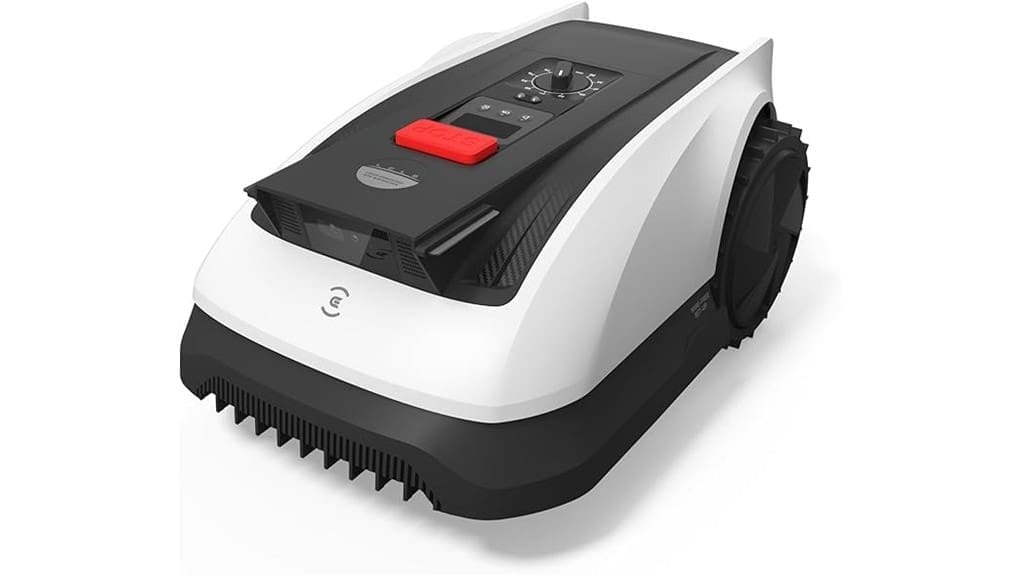
You’ll get industrial-grade RTK positioning, AI-driven mapping, and precise LELS navigation that produces consistent U-shaped coverage with near zero-edge trimming. The O1000 handles steep 24° slopes, runs in heavy rain (IPX6), and uses AIVI 3D sensors to classify and avoid pets or wildlife with configurable zone behaviors. App controls let you edit, merge, and sequence zones and set avoidance heights. It’s premium-priced but ideal for complex or commercial sites—keep going to see detailed tradeoffs and alternatives.
Some Key Takeaways
- RTK positioning and AI-driven mapping deliver highly precise perimeter-free maps and consistent U-shaped coverage for minimal missed strips.
- AIVI 3D sensors provide reliable pet and wildlife detection, with reroute or pause responses and configurable zone behaviors.
- Handles up to 45% slopes (about 24°) with low center of gravity, IPX6 water resistance, and durable, corrosion-resistant construction.
- App gives editable multi-zone control: merge/split areas, set cutting height, schedules, avoidance heights, and sequencing.
- Premium price suits complex, steep, or commercial sites; not ideal for small simple lawns or strict budgets.
Real-World Performance: Coverage, Navigation, and Mapping Accuracy
While mapping your yard the ECOVACS Goat O1000 RTK builds a highly precise layout without perimeter wires, and you’ll notice its AI-driven automated mapping captures complex boundaries and obstacles with minimal intervention. You’ll value mapping precision: editable maps let you merge, split, or mark no-go zones, and LELS navigation yields consistent U-shaped coverage patterns that minimize missed strips. TruEdge delivers near zero-edge trimming, reducing manual touch-ups. Ultra-slim clearance improves access through narrow passages. Evaluate battery life against your acreage—charge cycles influence runtime and scheduling frequency. Overall, navigation and coverage balance efficiency with predictable, adjustable performance. For homeowners looking to protect water usage and prevent overwatering, consider how integrating a rain sensor with your irrigation system can complement robotic mower scheduling.
Obstacle Avoidance and Safety: AIVI 3D, Pet/Wildlife Handling, and Zone Settings
Because the Goat O1000 RTK pairs AIVI 3D sensing with zone-specific settings, you get precise, configurable obstacle handling that minimizes collisions and protects pets and small wildlife. You’ll appreciate AIVI 3D’s layered sensors for reliable pet detection and object classification; it reroutes or pauses rather than forcing contact. Zone-specific avoidance height and behavior let you tune responses for gardens, play areas, or wildlife corridors. From an obstacle ethics perspective, the mower prioritizes non-destructive maneuvers and minimal disturbance. In practice you’ll set conservative defaults near animal zones and tighten efficiency in low-risk areas for balanced safety and coverage. The site also recommends essential protective gear like face shields for homeowners performing routine lawn maintenance.
Terrain, Weather, and Durability: Slopes, IPX6 Rating, and Build Quality
If your yard includes steep sections or unpredictable weather, the Goat O1000 RTK pairs robust mechanics with weatherproofing to keep mowing reliable and safe. You’ll appreciate 45% climbing ability for 24° slopes and a low center of gravity that maintains traction on inclines. IPX6 sealing supports operation in heavy rain; thermal resilience in electronics prevents heat-related shutdowns. Durability testing shows frames resist impacts and vibration; impact resistance in bump zones reduces component fatigue. Corrosion resistance coatings protect fasteners and exposed metal. Overall build quality balances ruggedness with serviceability, minimizing downtime and maintenance. The Goat O1000 RTK is a practical fit for homeowners who want reliable equipment protection and long-lasting performance for their lawn care equipment.
Customization and Control: App Features, Zone-Specific Settings, and Workflow
Having proved reliable on slopes and in wet conditions, the Goat O1000 RTK hands you granular control through its app, letting you tailor mowing behavior per zone and optimize workflows. You’ll use automated mapping to define, merge, split or delete areas, then apply Multi zone presets for cutting height, speed, mowing direction and avoidance height. App workflows let you sequence zones, set recurring schedules, and choose U-shaped or alternate paths for efficient coverage. Controls are precise: edit paths between zones, assign no-go areas, and tweak obstacle-avoidance per sector. Evaluation: controls are robust, intuitive, and built for operational efficiency. The app also integrates with common lawn care equipment used by homeowners for simple, ongoing maintenance.
Value and Buying Guide: Pricing, Alternatives, Who Should (Or Shouldn’t) Buy
While the Goat O1000 RTK commands a premium price, it justifies cost through precision mapping, RTK-level navigation, robust slope handling, and advanced obstacle avoidance that reduce manual intervention and trimming. You’ll evaluate value by doing a cost comparison against high-end competitors and midrange robomowers lacking RTK or 3D AIVI. If your site has complex zones, steep slopes, narrow passages, or you want near-zero edging, the Goat delivers measurable time savings. Consider warranty options and service coverage; extended plans matter for commercial or heavy-duty use. Don’t buy if you have a small, simple lawn or strict budget constraints. Battery mowers aimed at typical homeowners often prioritize ease of use and lower maintenance over commercial-grade features, so weigh homeowner-focused priorities when deciding.
Some Questions Answered
Does It Require Monthly Subscription for Map Updates or Cloud Features?
No — you don’t need a monthly subscription for map updates or cloud features. Subscription cost is typically optional for premium cloud services; core update frequency for onboard AI mapping and app-controlled edits is handled via free firmware/app updates. You’ll get automatic map improvements and editable maps without recurring fees, while advanced cloud-only services (if offered) would state a separate subscription cost and higher update frequency for cloud-driven features.
How Long Is the Battery Runtime per Charge on Average?
You’ll typically get about 90–120 minutes of battery runtime per charge, depending on cutting settings, terrain and slope. Battery longevity is good with proper care; expect gradual capacity loss over many charge cycles. After roughly 300–500 cycles you’ll notice reduced runtime, so plan for replacement or backup batteries if you run large yards frequently. Monitor app diagnostics to track cycle count and remaining capacity for precise planning.
Can It Be Scheduled to Avoid Specific Times or Events Automatically?
Yes — you can schedule it to avoid times or events automatically. You’ll use app-based geofencing automation to block zones or time windows and calendar integration to sync events (meetings, mowing bans). You’ll set zone-specific rules that pause or reroute the mower during predefined periods, and link external calendars for dynamic suppression. Evaluate schedules for conflict resolution and fallback behaviors to guarantee reliable, predictable avoidance without manual intervention.
What Maintenance Is Required for Blades and Sensors, and How Often?
You should sharpen blades every 4–6 weeks during heavy use and replace them yearly; blade sharpening preserves cut quality and reduces motor load. You’ll clean sensors weekly and perform sensor calibration monthly or after collisions or firmware updates to maintain AIVI 3D accuracy. Inspect blades for chips after impacts. Keep cutting height and moisture-free contacts clean; log maintenance in the app so you’ll track service intervals and performance changes.
Is There a Manual Remote Control Mode for Spot-Mowing or Retrieval?
Yes — you can take direct control. You’ll use a manual joystick-style control via the app or optional remote to perform spot-mowing or retrieve the unit; it acts as a direct override to autonomous navigation. This manual joystick/direct override lets you fine-tune position, back out of tight spots, and execute targeted cuts. It’s responsive, but you should maintain line-of-sight and follow safety prompts when operating manually.