You’ll get a rugged, high‑torque mower that handles slopes, mixed turf, and long runs with minimal hands‑on work. Dual 300W motors and 2500W peak push through thick patches while intelligent torque management prevents stalls. A 38.4Ah battery gives about 120 minutes and ~0.25 acre per charge, with solar as an option. The 20‑inch deck, blade choices, and 0.8–4.0″ heights suit varied lawns. AI vision, RTK, tracks, and IPX6 keep it reliable — more details follow.
Some Key Takeaways
- Twin 300W motors with 2500W peak deliver steady torque and extra push through thick or wet grass.
- Up to about 120 minutes runtime per charge; covers roughly 0.25 acres under normal conditions.
- AI vision + RTK enables perimeter‑wire‑free navigation, zone mapping, and precise path planning via app.
- Patented tracks handle slopes up to 70% and IPX6 rating allows operation in heavy dew and rain.
- 20‑inch deck with adjustable 0.8″–4.0″ heights; choose razor or straight blades for finish or overgrowth.
Performance and Power: How the Dual 300W Motors and 2500W Peak Torque Handle Real Lawns
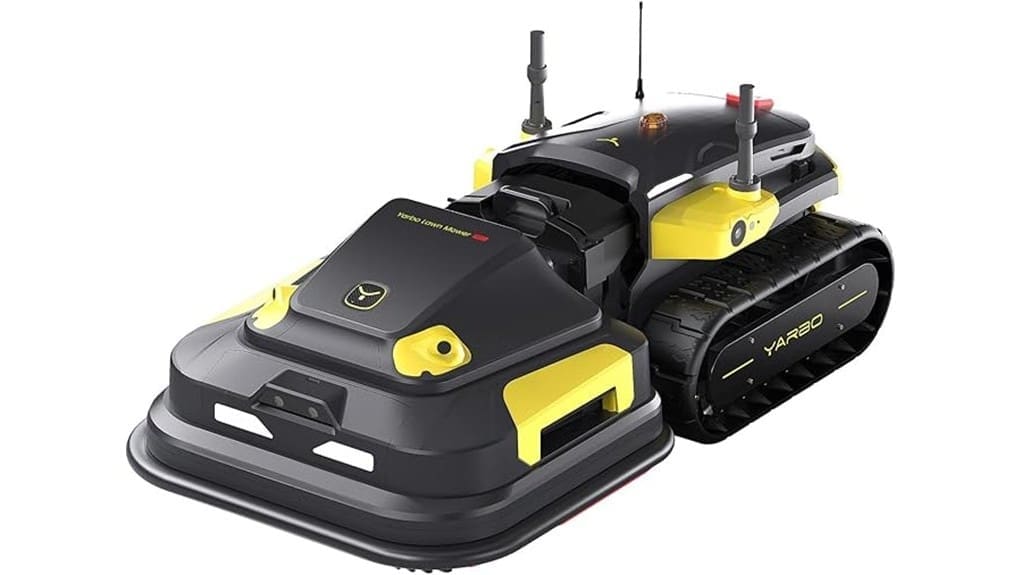
Experience confident mowing: the YARBO’s twin 300W motors deliver steady torque and, when needed, spike to 2500W peak to push through thick patches, wet grass, and uneven terrain without bogging down. You’ll notice controlled acceleration and fewer stalls, thanks to intelligent torque management that adapts to load. That control reduces wear, supporting motor longevity so the unit stays reliable over seasons. In practice, you’ll get consistent cuts on mixed turf and better handling on slopes and clumps. For demanding yards, the powertrain balances peak output with protective regulation, giving you dependable performance without sacrificing durability. This makes the mower a solid choice for homeowners maintaining their property with regular care.
Battery Life, Coverage, and Charging: What 38.4Ah and 120 Minutes Runtime Mean for Your Yard
Typically, the YARBO’s 38.4Ah battery gives you up to about 120 minutes of runtime, which translates to roughly 0.25 acres per charge under normal conditions. You’ll cover small yards easily; for larger properties you’ll plan charging breaks or multiple passes. Charging speed and smart energy management matter—expect return-to-base cycles that balance runtime and uptime. Consider battery degradation over seasons; heavy use and heat will reduce capacity, so factor replacement costs. If you’ve got a solar charging setup, you can extend autonomy and lower grid draws. Overall, the battery suits daily residential needs but needs planning for extensive acreage. This evaluation is aimed at typical homeowners shopping for battery lawn mowers and related equipment for maintaining their property, including considerations about battery lawn mowers.
Cutting Quality and Adjustability: 20 Deck, Blade Options, and Height Settings in Practice
Although the 20-inch deck gives you broad coverage, the real advantage comes from choosing the right blade and height to match your lawn: use the razor blades for routine, fine finishes and switch to the straight blades when tackling thick overgrowth, wet grass, or tricky terrain to reduce clogging and get a cleaner cut. You’ll set heights from 0.8″ to 4.0″ depending on grass type and season. In practice, blades need regular blade maintenance and occasional seasonal calibration of cutting height to avoid scalping or missed tufts. Results are consistent across wide swaths, saving time while keeping edges tidy. For typical homeowners, selecting the correct mower blade type can significantly impact cut quality and lawn health, so consider blade options when shopping.
Navigation, Terrain Handling, and Weather Durability: AI Vision, RTK, Tracks, and IPX6 Tested
When you put the YARBO on the lawn, its AI vision paired with RTK keeps it precisely where you want it, eliminating the need for perimeter wires and reducing missed spots. You’ll rely on AI mapping to define zones, no-go areas, and efficient paths via the app, and RTK keeps position errors negligible. The patented tracks give exceptional Track grip on slopes up to 70% and over rough terrain, so it won’t slip or stall. IPX6 water rating means you can run in heavy dew and rain without worry. Setup is straightforward; maintenance is minimal. YARBO is designed for typical homeowners who maintain their property regularly and integrates well with other lawn care equipment and accessories for a complete yard care solution.
Who Should Buy It and Which Accessories to Add: Use Cases, Costs, and Installation Notes
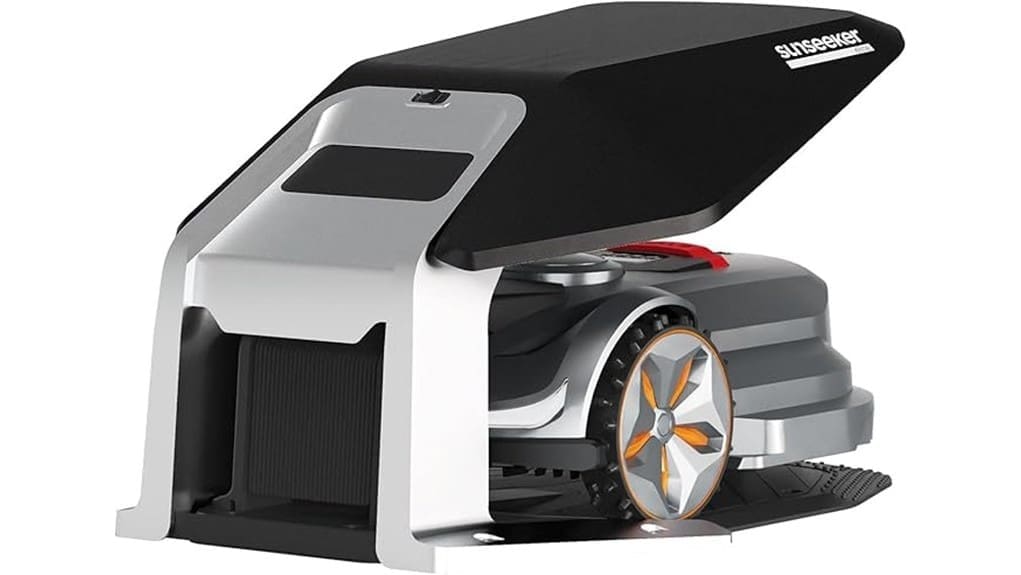
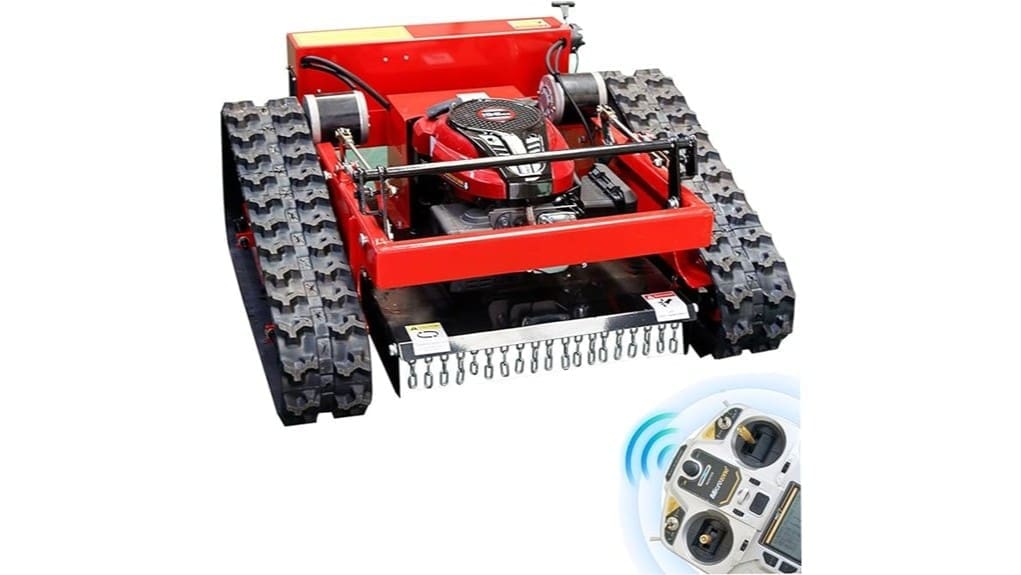
If you need a heavy-duty, low-maintenance mower that handles large or complex properties, the YARBO is worth serious consideration: it’s built for homeowners with acreage, landscapers, golf-course crews, and municipal teams who value long runtimes, steep-slope capability, and perimeter-wire‑free navigation. You should buy it if you manage multiple acres, need reliable daily operation, or want all-season versatility with blower/snow modules. Factor accessory costs for modules, remote control, and spare blades into ROI. Installation tips: unpack with two people, position Data Center with clear sky view, follow the setup video, and map zones via the app before first run. Consider adding durable protective covers to extend the lifespan of stored equipment.
Some Questions Answered
Does It Require a Subscription for App Features or Data Center Connectivity?
No, it doesn’t strictly require a subscription model for basic app control, but advanced cloud integration features may need one. You’ll get core scheduling, no-go zones, and local mapping without extra fees, yet premium services (remote Data Center connectivity, enhanced cloud backups, and advanced analytics) could be locked behind a subscription. You should evaluate needs: casual users won’t need it, while commercial or multi-site operators may find the subscription worthwhile.
What Is the Expected Maintenance Schedule and Typical Service Costs?
You should plan annual tune ups and routine checks: blade sharpening/replacement every 2–3 months (or sooner with heavy use), belt/track inspection monthly, and firmware/app updates as released. Expect professional service costs around $100–$250 per annual tune up; parts or heavier repairs can run higher. Practice battery conditioning quarterly to preserve capacity; full battery replacement may be needed after several years, typically costing a few hundred to over a thousand dollars.
Can It Operate Safely Around Pets and Small Children Unattended?
No, you shouldn’t leave it completely unattended around pets or small children. The mower supports pet interaction precautions and safety zoning via app-defined no-go zones and AI vision, but its blades and weight mean supervised operation is safer. You can schedule runs when kids and pets are indoors, set exclusion areas, and enable sensors. Regularly test sensors and keep a safe perimeter; treat it as a powerful tool, not a toy.
How Loud Is It During Operation (dB Level) at Typical Mowing Distances?
You can expect operational noise around 60–70 dB at typical mowing distances (1–3 meters), so sound levels are similar to a normal conversation to a loud vacuum. You’ll notice reduced noise compared with petrol mowers, especially at a distance, and dual motors run smoothly. If you need quieter operation near people or pets, schedule mowing when they’re away or use remote control to pause; sound levels drop further at 5+ meters.
Are Replacement Batteries and Blades Readily Available Locally?
Yes — you’ll usually find replacement blades and batteries through local retailers and specialty dealers, but availability varies by region. Batteries are high-capacity and often proprietary, so generic compatibility is limited; expect OEM or compatible third-party packs rather than universal swaps. Blades are more commonly stocked and sometimes accept generic equivalents. Check local retailers’ inventory and confirm specs before purchase to guarantee fit, performance, and warranty compliance.