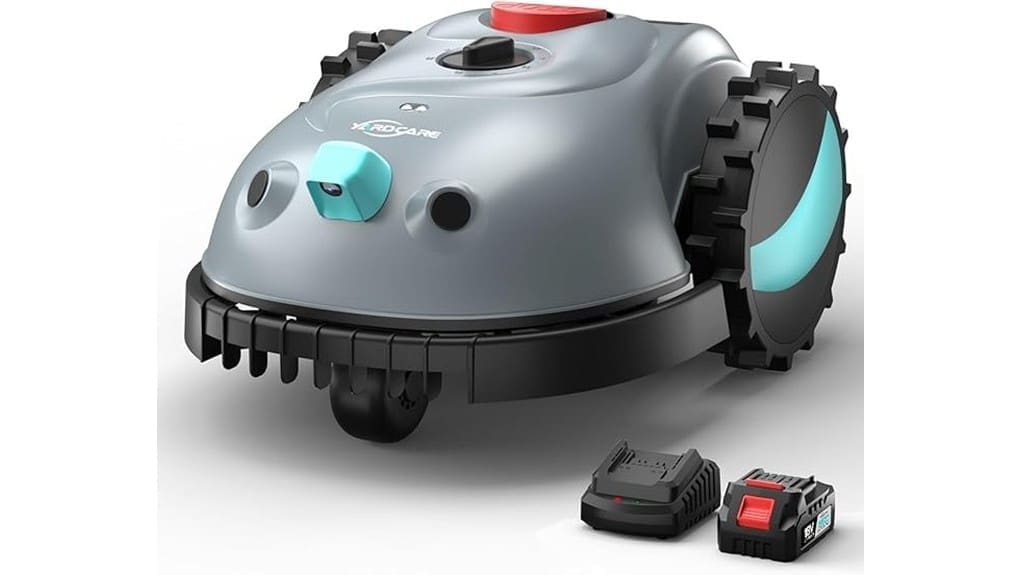
The YARDCARE V100 uses a camera-first navigation system with collision sensors to mow small, well-defined lawns without a boundary wire in clear sightlines, and it delivers fine clippings and reliable mulching with a 6.3‑inch deck. You’ll get up to ~1,600 sq ft per 4 Ah charge in ideal conditions, slower but consistent coverage, and optional wire for tricky edges. It’s a practical, budget-friendly pick for routine trimming—keep going to learn setup and limits.
Some Key Takeaways
- Vision navigation reliably distinguishes grass from non-grass in clear, small lawns but struggles in heavy visual clutter or ambiguous edges.
- 6.3-inch cutting width and adjustable deck (0.8–2.4 in) deliver fine clippings and good mulching for routine trimming.
- 4 Ah battery covers up to about 1,600 sq ft per charge; actual runtime varies with terrain and processing load.
- Navigation uses random patterns and spot spirals, offering consistent coverage but slower progress than wider mowers.
- Manual boundary wire is recommended for unclear edges, adjacent beds, or heavy clutter; camera navigation suffices for well-defined yards.
How the V100’s Vision Navigation and Sensors Actually Work
How does the V100 actually “see” your lawn? You rely on a high-definition camera discrimination system that distinguishes grass from non-grass in varied light, letting the mower prioritize turf. You also benefit from sensor fusion: camera data combines with high-precision collision sensors to confirm obstacles and minor bumps, prompting immediate path adjustments. That layered sensing reduces false positives and keeps navigation precise without boundary wire in clear gardens. You’ll find detection is strong for small, well-defined lawns, though performance assumes visible contrast between grass and surroundings. Overall, the V100’s vision and sensors deliver robust, confident navigation. The V100 is aimed at homeowners who want to simplify yard maintenance with automated equipment and other lawn care products, making it a good fit for typical homeowners.
Real-World Mowing Performance: Coverage, Cutting Width, and Patterns
Curious about what the V100 actually does on your lawn? You’ll find its 6.3-inch cutting width and adjustable 0.8–2.4-inch deck suit small yards, covering up to 1,600 sq ft per 4 Ah charge. Navigation yields random patterns on defined lawns and spot spiral when needed; coverage is consistent though slower than wider mowers. Cut quality is neat for regular maintenance; expect fine clippings and reliable mulching efficiency that nourish turf. You can add a battery for longer runs. Overall, it’s efficient for routine trimming, best where boundaries and sightlines let the vision system work unhindered. It’s particularly well suited to homeowners who value precise, low-maintenance tools and reel mower care practices.
Setup, Boundaries, and When You Need a Manual Boundary Wire
Because the V100 relies on visual cues, you’ll get the best results when you prepare your yard before first runs: remove small obstacles, trim tall grass along edges, and mark any indistinct shifts. You should follow installation tips: level high-contrast markers, clear debris, and position the charging base where the camera sees wide approaches. The V100 excels with natural boundaries—hedges, walls, and driveways—so it navigates without wires. Install a manual boundary wire only when your lawn has ambiguous edges, heavy visual clutter, or adjacent garden beds you won’t tolerate beheading. Be deliberate: wires are a precise fallback, not a default. For homeowners maintaining property regularly, pairing vision navigation with irrigation flags can help preserve garden beds and mark delicate features during setup.
Battery Life, Expandability, and Expected Runtime per Charge
While the V100’s 4 Ah battery gives you up to about 1,600 sq ft of coverage per charge, actual runtime depends on terrain, grass height, and navigation complexity, so expect variation from the ideal. You’ll typically see shorter runs on uneven or tall grass; the camera-based navigation can add processing time that trims runtime. Battery expandability is practical — you can add a second battery (sold separately) to extend coverage and reduce downtime. For runtime optimization, schedule shorter, more frequent sessions, keep blades sharp, and minimize obstacles so the mower works efficiently and maximizes each charge. Be sure to follow essential battery charger tips for home lawn care, including storing batteries properly and using the correct charger for battery health.
Who Should Buy the YARDCARE V100 and Best Use-Case Scenarios
If you’ve got a small, well-defined lawn and want hands-off maintenance, the YARDCARE V100 is a strong choice—its vision navigation and 4 Ah battery suit yards up to about 1,600 sq ft, while obstacle sensors and spot spiral mode handle common interruptions. You should buy it if you’re a first time homeowners seeking low-maintenance care, renters with modest yards, or busy households wanting tidy turf without weekly chores. It’s especially good for pet friendly yards thanks to gentle collision sensing and clippings-as-fertilizer. Avoid it for large, irregular lots or lawns needing frequent height changes beyond its 0.8–2.4 inch range. Consider also choosing a mower based on essential tips like cutting height range and battery capacity to match your lawn care needs.
Some Questions Answered
Does the V100 Work on Wet or Recently Watered Grass?
You can run the V100 on mildly wet or recently watered grass, but wet performance will be diminished and clumping may occur. You’ll want to avoid heavy saturation or muddy conditions to prevent slipping, blade clogging, and traction loss. Increase mowing frequency when grass grows faster after rain to keep clippings light and reduce buildup. For best results, mow when turf is damp-to-dry and add an extra battery if needed for longer sessions.
Can the Mower Be Scheduled Remotely via Smartphone or App?
Yes — you can use remote scheduling via app control to set mowing times and manage the V100. The app lets you program routines, start or stop jobs, and adjust basic settings remotely. It’s reliable for routine scheduling on small lawns, though advanced features depend on the app version. You’ll want a stable Wi‑Fi or mobile connection and to confirm the specific app capabilities and updates before relying fully on remote scheduling.
How Loud Is the V100 During Operation (In Decibels)?
You won’t get an exact dB spec from YARDCARE, but the noise level is low—roughly comparable to a quiet conversation or ambient lawn equipment, typically around 55–65 dB in operation. In sound comparison, it’s noticeably quieter than gas mowers and similar to other battery robotic mowers, so you can run it without disturbing neighbors. You’ll still hear motor whir and blade rotation up close, but it’s generally unobtrusive.
Are Replacement Blades and Parts Readily Available From YARDCARE?
Yes — replacement availability is decent: you can buy replacement blades and some parts through Yardcare’s channels and third-party sellers. You’ll want to check parts lists before buying, since specialty items may be limited. Contact customer support for part numbers, compatibility, and ordering help; they’ll guide you and confirm stocks. If you need extended availability, consider purchasing spare blades and an extra battery early to avoid downtime.
Is There Theft Prevention or Anti-Theft Tracking Included?
No, it doesn’t include GPS tracking or a built-in Alarm system. You’ll rely on physical security and optional third-party solutions instead. You can lock the mower or register serial numbers, but the unit itself lacks remote tracking or audible anti-theft features. If theft prevention matters, you should add a GPS tracker and alarm module you trust, or choose a model that advertises integrated GPS tracking and alarm system for real-time recovery.