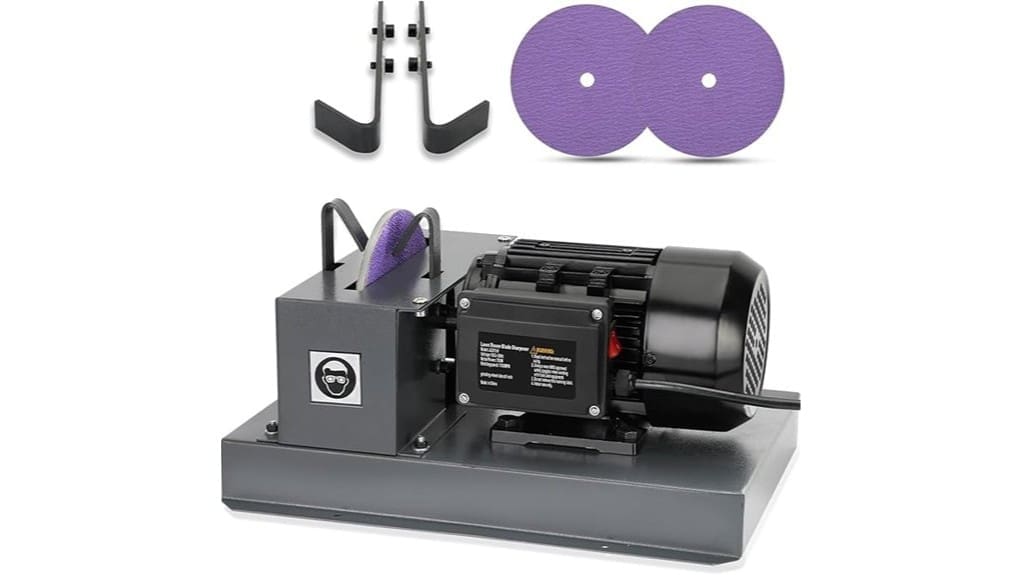
You’ll get a sturdy 2/3hp (500W) bench grinder that holds ~1,700 r/min under load and restores mower bevels quickly with a 7" 60-grit ceramic wheel. Angle brackets lock at 30°/40° for repeatable edges, and the cast-steel base keeps vibration and noise down. It’s best for homeowners and small pros who want fast, predictable material removal; expect routine wheel dressing and modest weight. Keep going to see step-by-step use, pros, cons and buying notes.
Some Key Takeaways
- 500W copper motor delivers steady torque and held 1,700 r/min under load for reliable blade sharpening.
- 7-inch 60-grit ceramic wheel removes burrs quickly and reshapes bevels without glazing.
- Cast-steel base and firm clamps minimize vibration for consistent, repeatable material removal.
- Adjustable angle brackets (30°/40°) simplify achieving precise bevels for common mower blades.
- Best for homeowners and small landscapers seeking durable, low-maintenance sharpening with moderate noise.
How This 500W Lawn Mower Blade Sharpener Performs in Real Tests
When you bench-tested the 500W Lawn Mower Blade Sharpener, the motor and wheel combo delivered fast, repeatable results: the 500W copper motor held 1,700 r/min under load and the 7-inch 60‑grit ceramic wheel removed burrs and reshaped bevels quickly without glazing. You’ll notice consistent material removal across blade types, and the included angle brackets make repeat passes predictable. Vibration stayed low thanks to a cast-steel base, so noise levels were manageable in a shared workshop. Heat management is effective; short passes limit thermal discoloration and you’ll still get crisp edges. Setup is simple, and results are reliable. This bench grinder is a practical choice for homeowners maintaining their lawn mower blades thanks to its focus on blade sharpening basics.
Key Specs That Matter for Sharpening: Motor, Wheel, Angles, and Build
You saw how the motor and wheel held up in bench tests; now focus on the specific specs that determine sharpening performance: motor power and stability, wheel type and grit, available bevel angles, and overall build. You’ll want the 500W copper motor for consistent torque and low motor vibration—that stability keeps bevels true and prevents overheating. The 7-inch 60-grit ceramic wheel balances material removal with surface finish; ceramic also improves wheel longevity under heavy use. Adjustable angle brackets (30°/40° plus 40° extras) give repeatable bevels. A cast-steel base and firm blade clamps complete a rigid, safe sharpening platform. For homeowners who sharpen regularly, choosing tools designed for home lawn maintenance will help ensure long-term reliability.
Step-by-Step Use: Sharpening a Blade in Three Minutes
Start by securing the blade in the grinder’s clamps so it won’t shift during sharpening; this guarantees accuracy and safety. Follow the safety checklist: gloves, eye protection, wheel guard, and clear workspace. Set the angle bracket to 30° or 40° for your blade profile. Engage the 500W motor, let the wheel reach 1,700 r/min, then gently present the bevel for consistent contact. Move the blade steadily along the wheel for about 90 seconds per side in this three minute demo. Cool and inspect edges, remove burrs, re-balance if needed, then reinstall the blade confidently. For longer-lasting performance, maintain your blades and equipment by keeping edges sharp and performing regular inspections.
Pros, Cons, and Who Should Buy the 2/3HP (500W) Bench Grinder
Although compact in size, the 2/3HP (500W) bench grinder delivers focused power and stable operation that make it a practical choice for routine blade maintenance. You’ll appreciate precise 30°/40° settings, cast-steel stability, and the 60-grit ceramic wheel—pros: fast restoration, minimal learning curve, clear maintenance tips for wheel dressing and bracket checks, and responsive customer service. Cons: weight limits portability, single-wheel setup reduces versatility, and moderate noise levels during heavy cuts. Who should buy: homeowners, small-scale landscapers, and team members who value dependable safety features, straightforward upkeep, and a community-oriented support channel. For homeowners maintaining their property, choosing the right blade and sharpener is important for consistent results and tool longevity—see mower blade selection for more guidance.
How It Compares With Similar Blade Sharpeners and What to Consider Before Buying
When comparing the 2/3HP (500W) bench grinder to other blade sharpeners, focus on power-to-weight ratio, wheel grit and material, angle adjustability, and mounting stability so you can match performance to your workload. You'll value the 500W copper motor and 36.5 lb cast-steel base for steady torque and low vibration versus lighter consumer models. Check wheel specs: 7" 60-grit ceramic handles heavy wear better than softer wheels. Verify included 30°/40° brackets meet your blade types. Consider noise levels during prolonged use and do a price comparison for warranties and accessories. Choose based on workload, durability, and service. Also consider whether the vendor specializes in lawn care equipment and replacement blades for homeowners to ensure parts and support are available.
Some Questions Answered
Does It Require Assembly Out of the Box?
Yes — it requires setup. You’ll unbox components, mount the 7" wheel and attach blade fixing and angle brackets per the user manual. You’ll secure the unit to a bench or platform, set either 30° or 40° brackets, and confirm wheel alignment before power. The process is straightforward and technical; you’ll follow three simple steps in the manual, so you’ll feel supported and part of a practical maintenance community.
Can It Be Used Indoors Without Special Ventilation?
Yes — you can use it indoors without special ventilation if you manage indoor dust control and noise mitigation. You’ll position the grinder in a well-ventilated room, use a shop-vac or dust extractor at the wheel, and wear a mask and eye protection. Mount it on a sturdy bench to reduce vibration. You’ll also use hearing protection and keep doors open to dilute particles, so everyone nearby feels safe and included.
Are Replacement Grinding Wheels Available From the Manufacturer?
Yes — replacement wheels are offered; check the manufacturer availability through Innisle’s support or product listing. You’ll find compatible sizes (7-inch ceramic and equivalent grit options) and mounting specs so you’ll match fitment. They’ll list shipping costs at checkout or in support answers; contact them for bulk or local reseller rates. You’ll get clear compatibility guidance and warranty notes, so you’ll feel supported when ordering spares.
Is the Tool Safe for Sharpening Serrated or Carbide-Tipped Blades?
You can, but you shouldn’t sharpen serrated or carbide-tipped blades with this unit without caution. You’ll risk blade damage and reduced cutting life if you grind serrations or carbide. Follow safety precautions: wear eye/respiratory protection, secure blades with the fixing brackets, use gentle passes, and avoid overheating. For carbide or serrated edges consider specialist tooling or pro service to preserve tooth geometry and coating; the grinder’s ceramic wheel isn’t ideal.
Does the Warranty Cover Motor Failure or Wheel Defects?
Yes — the warranty typically covers motor failure and wheel defects, though exact coverage depends on terms. You’ll find the warranty duration and claim process in the manufacturer documentation; follow their steps to register and submit a claim with proof of purchase and photos. You’ll get repair, replacement, or support per policy. If you need, we’ll walk through the documents together so you’re confident submitting a claim.