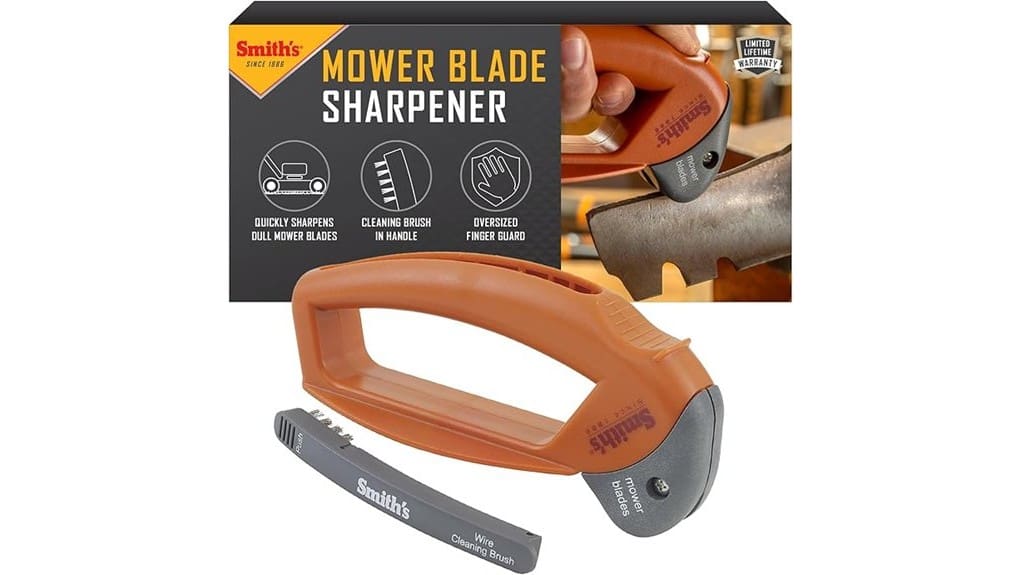
You’ll find the Smith’s 50603 is a compact, user-friendly handheld sharpener that gets mower blades serviceable fast with minimal fuss. It has a sturdy plastic housing, oversized grip for gloved hands, and a preset coarse-carbide insert that removes nicks quickly. Safety guard and lock are simple but effective; the coarse grit won’t give a razor finish and the plastic head isn’t for heavy commercial use. Keep strokes even and you’ll save trips to the shop — more details follow.
Some Key Takeaways
- Compact, user-friendly handheld sharpener designed for quick, at-home lawn mower blade touch-ups.
- Preset coarse carbide bit removes nicks quickly but lacks a fine finishing grit for polished edges.
- Oversized, glove-friendly handle and built-in brush storage improve comfort and cleanup convenience.
- Durable plastic head with safety guard suits regular homeowner use but isn’t ideal for heavy commercial work.
- Affordable, portable option that reduces shop trips; replace carbide inserts when wear reduces effectiveness.
Quick Verdict: Is Smith’s 50603 Worth Buying for Home Use?
If you mow regularly and like tackling DIY maintenance, Smith’s 50603 is worth a look: it’s compact, easy to use, and sharpens dull mower blades in a few pulls thanks to its preset coarse-carbide edge. You’ll find easy maintenance appeals—brush stores in the handle and the oversized grip fits gloved hands. Expect quick operation that gets you back to the yard without a shop run. Cost savings add up over seasons, and the durable plastic head seems made for repeated use. It’s practical, reliable, and even has genuine gift potential for fellow homeowners who care about their lawns. For basic upkeep, using a blade sharpener at home can extend blade life and improve cut quality blade maintenance.
What to Expect Out of the Box and First Impressions of Build and Safety
After the quick verdict, you'll want to know what actually arrives and whether the tool feels built to last. You get the sharpener, brush tucked in the handle, and minimal compact packaging that’s easy to recycle. A tactile inspection reveals sturdy plastic housing and a snug carbide insert; it doesn’t feel flimsy. The oversized handle shows clear glove compatibility, so you and your crew can share tasks comfortably. The large safety guard and a simple safety lock mechanism add confidence during use. Overall, unboxing reassures you this little tool’s designed for routine DIY lawn care. Homeowners who maintain their property regularly will appreciate how sharpening stones and similar accessories keep blades effective by preserving edge life and cutting performance, especially when paired with regular maintenance.
How to Use the Sharpener Step-by-Step and Real-World Sharpening Results
Getting started is straightforward: secure the mower blade, slide the sharpener into place, and give a few firm pulls along the cutting edge, keeping the carbide bit aligned with the factory bevel. You’ll work one side, count strokes, then flip the blade to match stroke count and maintain blade angle. The oversized handle and safety guard make this feel communal — like shared tips from neighbors — while the coarse carbide removes nicks fast. Results: edges look clean and cut grass better, though stubborn dents need more passes. For frequent users, consider motorized versions for speed; this handheld remains reliable and portable. Regular blade maintenance is important for lawn health and prolongs the life of mowing equipment.
Pros, Cons, and Who This Tool Is Best For
While simple in design, the Smith’s 50603 shines for homeowners who want a quick, on-the-spot edge—its preset carbide bit and oversized handle let you restore a blade’s bevel with a few confident pulls, and the built-in brush and safety guard make routine maintenance safer and neater. Pros: fast, portable, comfortable grip, brush storage, affordable replacement carbide. Cons: coarse grit limits finishing finesse, plastic head less robust than metal, not for heavy commercial use. Who it’s best for: home DIYers who value convenience, community-minded gardeners, and anyone mindful of Safety concerns and Environmental impact from fewer shop trips. It’s a smart pick for homeowners who prefer tools designed for regular blade maintenance and simple, at-home upkeep.
Buying Tips, Maintenance, and Alternatives to Consider
When choosing a handheld sharpener like the Smith’s 50603, focus on fit, grit, and build: make sure the preset carbide bit matches the coarseness you want (coarse for quick edge restoration, not fine finishing), check that the oversized handle feels secure in your gloved hand, and inspect the plastic head and guard for solid molding to avoid premature wear. Buy one if you value convenience, but compare price to replacement blades. Maintain it by cleaning filings with the stored brush, checking carbide wear, and storing dry. Track sharpening frequency, mark calendar reminders, and follow local blade disposal rules for worn bits. Also consider whether the sharpener suits the typical homeowner’s needs for replacement blades and routine lawn care.
Some Questions Answered
Does the Carbide Blade Require Special Disposal or Recycling?
No, the carbide blade itself doesn’t usually require special disposal, but you should be mindful of carbide toxicity concerns and local disposal regulations. You’ll want to avoid breaking or grinding the cartridge; seal and label worn blades, and check municipal rules—some areas accept metal recycling, others treat carbide as hazardous. If unsure, contact local waste services or the manufacturer for guidance so you and your community stay safe and included.
Can This Sharpener Be Used on Mulching Blades?
Yes — you can use it on mulching blades, but be cautious: you’ll want a consistent edge to preserve mulching efficiency and avoid uneven grass clipping. Sharpen carefully to maintain blade balance; removing too much metal or changing the bevel will hurt performance and lawn health. Take your time, check balance after sharpening, and belong to a community that values proper tool care — your mower and yard will thank you.
Are Replacement Carbide Blades Widely Available?
Yes — carbide availability is decent but not universal; you'll find original Smith’s replacements and aftermarket sources online and at some hardware stores. You should check compatibility by model number before buying, since sizes and grits vary. Expect to pay modestly for OEM blades; aftermarket sources often offer lower prices but mixed quality. Join local DIY groups to share sourcing tips and avoid buying incompatible or poor-performing replacements.
Is There a Warranty Registration Process Online?
Yes — you can usually complete product registration and warranty activation online through Smiths’ customer service portal or by contacting them. You’ll register your product details, purchase info, and serial/model number to activate coverage. It’s straightforward, but check terms and keep proof of purchase. If you want help, reach out — you’ll belong to a community that values durability and support, and Smiths will guide warranty activation if anything’s unclear.
Can It Damage Blades if Used Incorrectly?
Yes — if you use it incorrectly, you can damage blades. You’ll risk blade overheating, which can weaken metal, and edge rounding that reduces cutting performance. Don’t press too hard, don’t drag repeatedly in one spot, and keep strokes even. Let the carbide cool and inspect often. You belong with careful DIYers — treat the tool gently, follow safe technique, and you’ll avoid harm while keeping blades sharp and reliable.