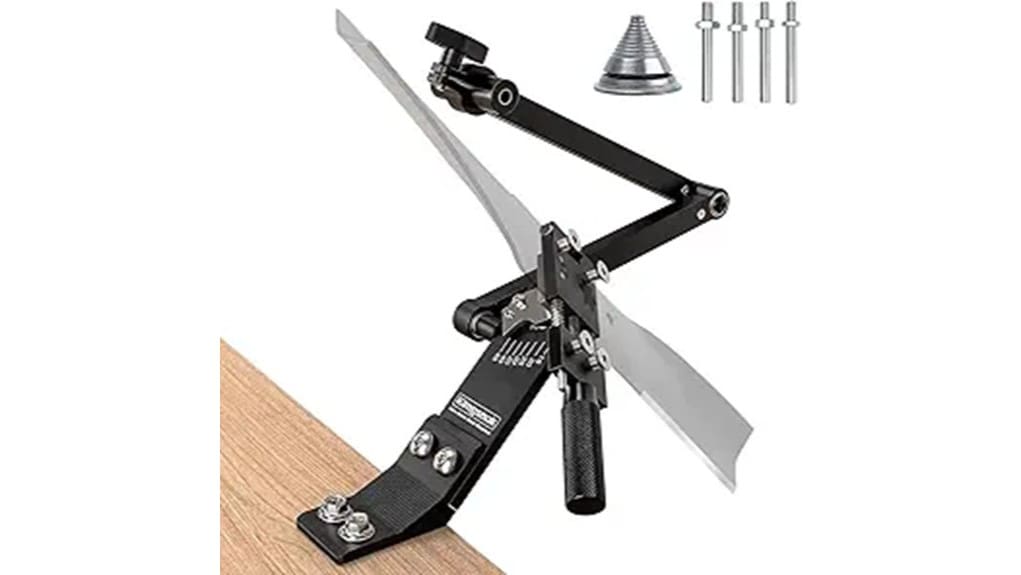
You'll get a durable aluminum sharpening jig, four guide pins, snug bushings and a zinc-alloy balancer that’ll restore mower blades (1.69–3.54" wide, ≤0.28" thick, up to 30") to consistent factory geometry. Setup is quick: secure the blade, fit the bushing for 15°–45° angles, and grind with steady passes. The alloy resists heat and wobble; balance and vibration checks confirm better cuts. Keep safety gear on — more detailed setup, tests, and limits follow.
Some Key Takeaways
- Heavy-duty aluminum-alloy jig with adjustable bushings provides consistent 15°–45° edge angles for repeatable, professional-like sharpening.
- Compatible with blades 1.69–3.54" wide, ≤0.28" thick, and up to 30" long; confirm blade specs before purchase.
- Included zinc-alloy balancer and snug-fit design make it easy to detect and correct heavy sides for reduced vibration.
- Requires grinder skill: maintain consistent passes, pressure, and timing; deburr and balance after sharpening for best results.
- Best for DIY maintenance—robust and quick setup—but size/thickness limits may require professional sharpening or blade replacement.
What’s in the Kimgsoak Lawn Mower Blade Sharpener Kit and Who It’s For
When you open the Kimgsoak Lawn Mower Blade Sharpener Kit, you'll find the aluminum-alloy sharpening jig and a premium zinc-alloy balancer plus four guide pins that snugly fit most grinders. You get a high-density jig, balancer, and pins sized for blades 15°–45°, 1.69–3.54" wide, ≤0.28" thick, up to 30" long. You're the practical user: hobbyist or pro maintaining blades quickly. Follow concise installation tips included with the kit and heed safety reminders—secure blade, wear eye and hand protection, and disconnect power. The kit’s robust materials and balancer reduce vibration and restore cut quality. For regular home lawn care, keeping blades sharp improves grass health and mower efficiency, which is an important part of basic blade maintenance.
How to Set Up and Sharpen a Blade With This Sharpener (Step‑by‑Step)
Start by removing the blade from the mower and securing it on a stable work surface; you’ll need the blade free of debris and oil for accurate setup. Inspect blade dimensions against the kit specs, then fit bushings and guide pins. Mount the sharpener body, align edge and set angle adjustment per blade spec (15°–45°). Wear gloves and eye protection—safety tips: clamp firmly, disconnect power tools, and keep fingers clear. Using a grinder, follow step by step passes, maintain even pressure and consistent timing guidelines per pass. Finish by deburring, balancing with the included balancer, and reinstalling securely. Choose the replacement blade type that matches your mower to ensure proper fit and performance blade compatibility.
Sharpening Performance and Balance Testing : Real Results and Measurements
With the blade sharpened and lightly deburred, you'll move on to measuring cutting performance and balance to confirm shop-quality results. You’ll check edge angle across the length for angle consistency using a digital protractor; deviations over 1° indicate rework. Perform a cut test on a standard sod strip and record cut cleanliness and resistance. Mount the blade on the included balancer and note any heavy side; shim or remove material until it rests level. Finish with vibration analysis at operating RPMs—measure overall vibration and compare to pre-sharpen values. Target reduced vibration and uniform edge for smoother mowing. For homeowners, maintaining blades with proper stones and techniques can extend tool life and improve results, especially when using sharpening stones suited to lawn care.
Compatibility, Build Quality, and Durability: Materials, Fit, and Limits
Although compact, the sharpener's high-density aluminum alloy body and snug-fit bushings give you a precise, rigid platform that minimizes wobble during grinding. You’ll appreciate the anodized finish for corrosion protection and a wear-resistant surface that stays true under frequent use. Heat resistance in the alloy and bushings prevents distortion during extended runs, preserving blade geometry. Fit is practical: four guide pins suit most grinders and the balancer accepts blades to 30" length within specified widths and thicknesses. Design also contributes to noise reduction by damping vibration. Compatibility limits are clear—confirm blade specs before you buy. This product is aimed at the typical homeowner who maintains their property regularly and values lawn care equipment that balance performance and ease of use.
Final Verdict: Pros, Cons, Alternatives, and When to Buy
When you need a fast, reliable way to restore mower blades and verify balance, the Kimgsoak Lawn Mower Blade Sharpener delivers precision without fuss; it sharpens blades quickly, reduces vibration when used with the included balancer, and holds blades securely thanks to its snug bushings and rigid alloy body. You’ll get consistent edges, easier maintenance schedule integration, and reduced engine strain. Pros: robust aluminum build, snug fit, balancer included, quick setup. Cons: size limits and max thickness constraints; check blade specs. Alternatives: pro bench sharpeners or replacement blades. Buy if you value DIY upkeep and resale value. Proper blade care, including regular sharpening and cleaning of edges, helps keep your lawn looking its best and prolongs blade life.
Some Questions Answered
Does the Kit Include Replacement Guide Pins or Spare Parts?
Yes — the kit includes replacement pins: you get four guide pins that act as replacement pins and fit most grinders. You’ll also find spare adapters in the sense of bushings that snug over guide pins to reduce wobble. You’ll appreciate the practical, technical fitment: the pins and bushings support angles 15°–45° and typical blade widths, so you’ll feel confident restoring and balancing blades with minimal fuss.
Can This Sharpener Be Used on Mulching Blades?
Yes — you can sharpen mulching blades, but check mulching compatibility and blade profiles first. You’ll fit the guide pins and set the angle (15°–45°) to match curved or asymmetric profiles. The kit’s bushings reduce wobble for precise grinding; use the balancer after sharpening to confirm even mass. If your mulching blade exceeds width, thickness, or profile complexity, you might need a specialized jig or professional service.
Is Any Protective Gear Included or Recommended?
No protective gear’s included, but you should wear safety goggles and heavy gloves while using it. You’ll protect your eyes from sparks and debris and your hands from sharp edges and hot metal. Follow a steady setup, secure the blade, and balance after sharpening. If you’re working with others, share PPE and procedures so everyone stays safe and confident. Kimgsoak recommends checking blade dimensions before starting.
Can the Balancer Be Used Independently for Other Blades?
Yes — you can use the blade balancer independently for other blades. You’ll mount blades using the balancer’s independent mounting hub and premium zinc-alloy body, verify balance, then adjust as needed. It fits most mower blades within specified widths and thicknesses, so check dimensions first. You’ll appreciate the precise, low-wobble fit from snug bushings, and you’ll feel supported by Kimgsoak’s quick customer service if you need setup help.
Is There a Recommended Maintenance Routine for the Tool?
Yes — you should perform seasonal tuneups and routine checks. You’ll clean debris, inspect guide pins and bushings for wear, lubricate moving parts lightly, and verify alignment before each use. After sharpening, you’ll use the balancer to confirm balance. For storage tips, dry the tool thoroughly, apply a light corrosion inhibitor, store in a padded case or hang it in a dry spot, and cycle inspection quarterly to stay confident and connected.