Keep your main woodpile 20–30 feet from the house, elevated 6–12 inches on a rack or pallets, and cover only the top so air flows through the sides, which speeds drying and denies soil insects easy access; clear three feet around the stack and keep only a day or two’s supply by the door, inspect logs for exit holes, frass, hollow sound, or live pests, remove and burn infested pieces away from structures, and call a licensed pro if activity recurs or you spot mud tubes or swarmers — now keep going to learn specific inspection steps and treatment options.
Some Key Takeaways
- Keep the main firewood stack 20–30 feet from the house, away from doors, windows, and dense shrubs to reduce pest and rodent bridges.
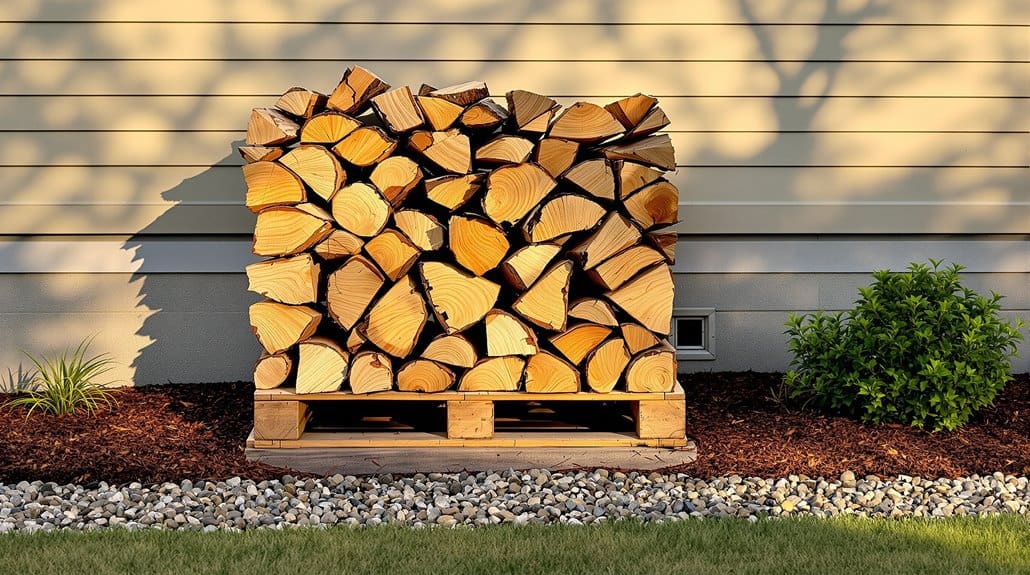
- Elevate wood 6–12 inches on racks or pallets and stack loosely with gaps for airflow to speed drying and deter soil insects.
- Cover only the top with a vented tarp or small roof, leaving sides open so moisture escapes and mold or pests are less attractive.
- Store only a day or two’s supply near entrances; rotate main pile (first-in, first-out) and split wood well before use.
- Inspect stacks regularly for exit holes, frass, hollow sound, live insects, or rodent signs and remove or burn infested pieces away from structures.
Choose the Right Location: Keep Your Woodpile 20–30 Feet From the House
Start by placing your main firewood pile 20–30 feet from the house, because that simple distance can make a big difference in keeping insects and rodents from using your stack as a bridge into your home; now, pick a spot that’s away from entrances, windows, and exterior walls, and avoid low-hanging branches or dense shrubs that give pests extra cover. You'll want to Store your firewood where it won't offer easy access to cracks or gaps in your foundation, maintain clear space on all sides so you and neighbors feel confident about safety, and keep a small, daily supply near the door while the main stack stays 20–30 feet away. The key is thoughtful placement, regular checks, and shared responsibility for a pest-resistant yard. Consider also choosing gloves and gear designed for homeowners who do regular yard work, like durable work gloves to protect your hands while stacking and inspecting wood.
Elevate and Cover: Rack Wood 6–12 Inches Off the Ground and Keep It Dry
Elevate your firewood and keep it covered, because lifting the pile 6–12 inches off the ground and sheltering the top is one of the simplest, most effective steps you can take to keep moisture and pests away. You’ll elevate firewood on racks, treated pallets, or concrete blocks to deny soil-dwelling insects like termites and ants easy access, and this is where airflow beneath the stack speeds drying, lowering internal moisture that attracts earwigs and wood-boring beetles. Now cover the top with a vented tarp or small roof, leave the sides open for air circulation, and you’ll shed rain and snow while the wood seasons. The key is keeping the main pile dry, off the soil, and inspected before bringing small amounts indoors. Use proper gopher traps around your yard to protect your landscape and lawn-care investments.
Stack Smart: Airflow, Rotation, and Clearing Vegetation to Deter Pests
Now stack your firewood loosely with gaps between logs so air can flow and the wood dries faster, because well-seasoned, dry wood is far less appealing to moisture-loving pests. This is where rotating your pile with a "last in, first out" routine matters—use older wood first and remove any damp or infested pieces promptly to stop insects and spiders from settling in. Also keep the stack clear of vegetation and at least 20–30 feet from the house, so you break pest travel routes and make inspections and removals quick and effective. For homeowners, choosing the right mole trap options and other targeted pest-control tools can help protect your landscape and stored firewood.
Maximize Airflow Between Logs
You’ll usually get the best results when you stack firewood so air can move freely between each log, because good airflow speeds drying and makes the pile far less inviting to moisture-loving pests; this is where simple spacing, orientation, and elevation come together into a practical system you can set up in an afternoon. When you build a stacked row, place bark-side up, leave 1–2 inch gaps between logs, and elevate the pile 6–12 inches on a rack, pallet, or concrete blocks so air circulates beneath, reducing ground moisture that draws termites and beetles. Now clear at least three feet around the pile and cover only the top with a vented tarp, the key is open sides so moisture escapes while rain stays out. Consider storing and handling fuel safely using approved fuel containers to keep nearby combustible materials organized and reduce fire risk.
Rotate And Remove Old Wood
Good routine maintenance will keep your woodpile from becoming a pest hotel, so make rotating and removing old wood a regular part of your firewood care. You’ll stack firewood storage loosely on a raised rack, now rotate your supply with a first-in, first-out system so seasoned logs get used before newer ones, aiming to split in fall and dry 6–12 months. This is where you inspect and remove any logs with sawdust, exit holes, crumbly wood, or live insects, and you’ll burn or discard those away from the house. Keep the main pile 20–30 feet out, clear nearby vegetation, and store only a day or two’s supply near doors; the key is steady inspection, rotation, and removing problems early. For ongoing vole and small-rodent control, consider integrated vole repellent practices around wood storage areas.
Daily-Use Supply: How Much Wood to Bring Close and How to Inspect It
When you grab wood for the evening, bring just a small, ready-to-burn stash close to the house—enough for one to two days—so pests stay with the main pile 20–30 feet away; the key is to top up that short-term supply from the larger stack rather than hauling the whole lot near your living space. You’ll want to store firewood a short distance indoors when in use, but keep most firewood stacked outside, and this is where inspection matters: before each log comes inside your home, look and tap it, shake off loose sawdust, check for holes, webs, droppings, or live insects, and avoid recently cut or long-stored pieces that warm and wake hidden pests. Place wood on a raised, nonporous mat or metal rack, sweep beneath it often, and if you find heavy infestations, leave that log outside to burn. Keep wood piles at least 20–30 feet from your home to reduce shelter for snakes and other wildlife and follow snake-safety practices.
Recognize Infestations: Signs in Wood That Mean Remove or Burn Outside
You’ve already learned to keep only a day or two’s worth of wood near the house and to inspect every log before it comes inside, and now it’s time to sharpen your eye for the signs that mean a piece must stay outside and be burned or discarded. Listen for hollow sounds or find crumbly tunnels, that usually means termites, so remove and burn away from structures to stop firewood pests spreading. If you see small round exit holes with powdery frass, that’s wood‑boring beetles—discard those logs. Large galleries, chewed wood, winged or carpenter ants on split pieces signal a serious infestation; return and burn them outdoors. Visible larvae, sudden beetle emergence, or fresh rodent droppings also mean pest problems, separate and dispose safely. Store firewood away from structures and use smart lawn care to reduce pest harborage.
When to Call a Pro: Pest Risks That Require Inspection or Treatment
If you spot visible structural damage like crumbly or hollow logs, mud tubes, or small round exit holes with fine sawdust, that's a clear sign you should call a pest pro now, because these can mean active termites or wood‑boring beetles that threaten your home. If you're seeing live pests—large carpenter ants, swarms of winged ants, or rodents with droppings and chew marks—this is where an inspection and possible treatment are needed to stop nests or infestations from spreading into the house. The key is recurring activity after you clean or move the pile, or any pests found inside that might trace back to your firewood, and when that happens you shouldn't wait to get a professional assessment. Consider also keeping tools like humane animal traps on hand to monitor and address wildlife issues before they escalate.
Visible Structural Damage
You’ll want to pay close attention to the way stored firewood sounds and looks, because visible signs of wood-eating pests often mean the problem’s moved beyond simple prevention and needs a pro’s eye. If logs sound hollow, crumble, or shed fine sawdust—frass—you should treat this as more than nuisance activity, and call a licensed inspector to confirm whether termites or wood-boring insects are present. Find large carpenter ants or other insects inside stacked wood at least once, remove and burn affected pieces away from your home, then schedule an evaluation. This is where visible damage to nearby structures—mud tubes, blistered wood, new foundation cracks, or droppings inside basements—signals migration and demands prompt professional treatment, so act quickly to protect your place.
Active Pest Sightings
Often you’ll spot the first real problems at a glance or by sound, and when that happens you should move from watchful homeowner to decisive actor: hollow-sounding logs when you tap them, flying swarmers around the pile, mud tubes on nearby walls, or neat piles of fine sawdust (frass) are all strong clues that wood-eating pests are active and the situation needs a pro’s inspection right away. If you notice swarmers, mud tubes, frass, small exit holes, large carpenter ants, or increased rodent signs, don’t shrug it off; these are clear signs of pest infestation and the key is prompt assessment. Now call a trusted inspector to help identify species, keep the affected wood isolated, and plan treatment.
Recurring Infestations
When pests keep coming back around your firewood, don’t treat it as a nuisance you can ignore; this is where a professional inspection really pays off, because recurring activity usually means the pile has become a dependable breeding or feeding site and may be putting your home at risk. If you notice crumbly, hollow logs, piles of frass, tiny exit holes, or regular carpenter ants or termite workers on multiple pieces, call a licensed pro, now, because those signs mean wood‑boring insects or colonies nearby. If rodents use the pile or you find droppings and chew marks, that’s also grounds for intervention. When insects keep showing up inside after you Store or bring wood in, this is where treatment and corrected storage prevent further spread. The key is prompt identification and targeted action so you and your neighbors stay protected.
Some Questions Answered
How to Keep Firewood Pest Free?
You keep firewood pest free by storing main piles 20–30 feet away, elevating them 6–12 inches for airflow, and bringing inside only a day or two’s supply, now inspect each log and knock off debris. This is where heat treatment or sealed containers help for long-term storage, and the key is regular inspections to spot holes or sawdust, rotate older wood first, and cover tops while leaving sides open for ventilation.
How Do You Store Firewood Without Attracting Termites?
Store firewood away from your house, about 20–30 feet, and elevate it on a ventilated rack so soil termites can’t reach it, now; this is where ortar barriers (concrete or treated barriers) help protect foundations. Use seasoned rounds, keep them dry under a breathable cover, and rotate older wood first. Inspect for hollowing or mud tubes, discard infested pieces, and you’ll keep termites out while staying confident and connected to your yard.
How to Properly Store Firewood Outside?
Store firewood outside on a raised platform with ground protection—concrete blocks or treated pallets—to improve airflow and block pests, now place stacks 20–30 feet from structures. This is where seasonal rotation and firewood labeling pay off: mark ends by date so older, seasoned logs get used first, and keep cover ventilated to avoid humidity. Inspect before bringing wood in, and rotate stock regularly to maintain dry, pest-resistant fuel.
What Is the Amish Method of Stacking Firewood?
The Amish method of stacking firewood uses Amish stacking in straight, single-row wood cribs with bark-side down, now you’ll form low, compact rows on a raised rack to boost dry airflow, this is where alternating end pieces create stable vertical ends without nails. You’ll keep piles off the ground, cover them with a sloped, vented roof, rotate older wood first, and place the main pile away from buildings, so your wood seasons efficiently.