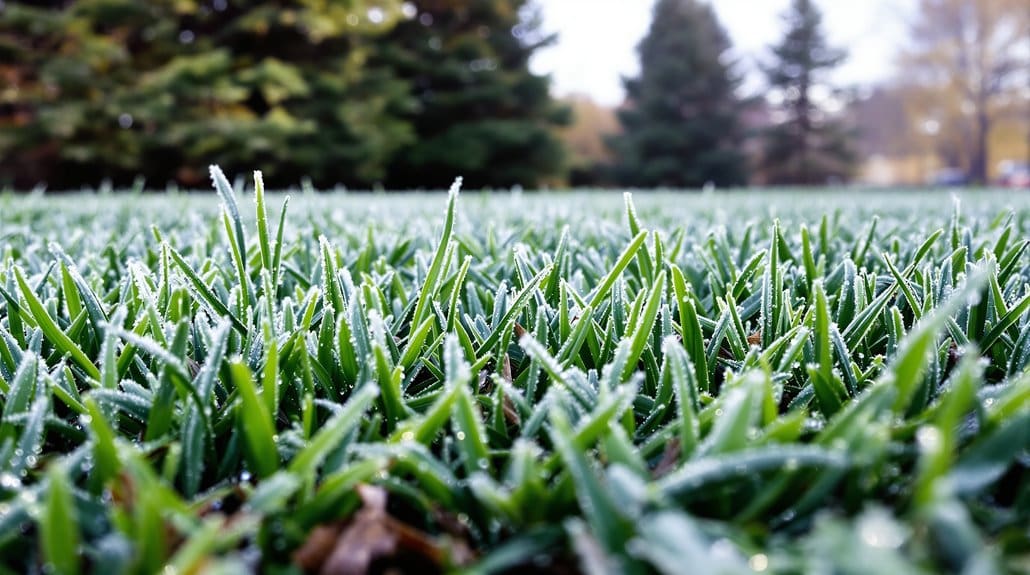
Kentucky bluegrass mostly goes into survival mode in cold soils, so don’t panic if your lawn turns yellowish‑green or light brown and lies flat at the crown. Now, check crowns by pulling a few small plugs—live crowns are firm and pale with tiny green points, dead ones are soft and dark. Don’t reseed or feed yet; wait for sustained soil warmth and new shoots. Something to bear in mind: high spots, ice‑prone areas, and thin turf need extra care, and if you keep going you’ll learn practical recovery steps.
Some Key Points
- Kentucky bluegrass slows growth and often enters dormancy when soil temps drop into the 40s°F, conserving energy at the crown.
- Dormant turf blades turn uniform yellowish‑green to light brown but crowns remain viable and can green up when soils warm.
- Irregular brown patches, footprints, or circular dead spots usually indicate winterkill or localized damage, not dormancy.
- Test recovery by pulling 2–3" plugs to inspect firm, cream‑colored crowns or incubate plugs indoors for 7–14 days.
- Prevent winterkill by improving drainage, aerating compacted areas, avoiding traffic on frozen turf, and maintaining good fall carbohydrate reserves.
How Kentucky Bluegrass Goes Dormant in Winter (What “Sleep” Looks Like)
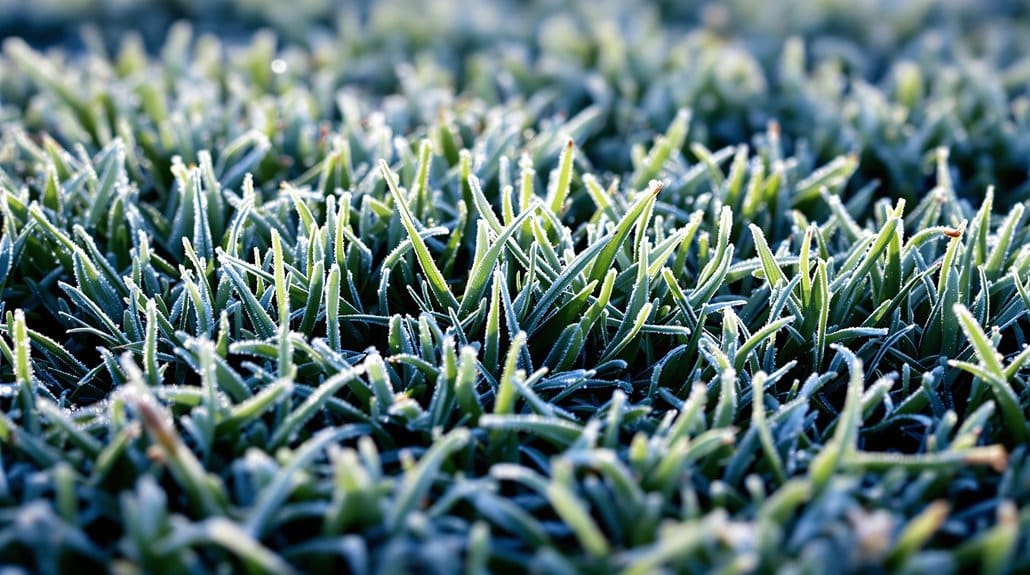
When soil temps dip into the 40s°F and your grass starts slowing down, don’t panic — Kentucky bluegrass is simply shifting into survival mode, not dying. You’ll see blades turn yellowish-green to light brown, and that’s okay; the plant’s gone quiet, conserving sugars in the crown, the growing point at or just below the soil surface. Now, don’t overreact by feeding or tearing up turf; dormancy is normal, driven by low soil temperatures that shut down leaf growth while roots and crowns store energy for spring. Something to keep in mind: avoid heavy traffic that can bruise crowns, and don’t confuse paler blades with permanent loss. Trust the crown, be patient, and plan gentle care until soils warm. For homeowners, using the right tools and products can help maintain healthy turf throughout the season.
How to Tell Dormancy From Winterkill or Other Damage
Now look at the overall color pattern: dormancy usually shows a uniform yellowish-green to light brown across the lawn, while winterkill or other damage shows irregular brown patches or footprints, especially in low, wet spots. Do a simple recovery test by pulling a few soil plugs, crowns included, from both discolored and green areas, keep them moist and warm indoors for 1–3 weeks, and you'll see if crowns regrow — I once waited too long and reseeded when the crowns were actually alive, so don’t repeat my mistake. Something to bear in mind: poor recovery is more likely where turf was thin, newly seeded late fall, low on carbohydrates, or compacted, so wait until soil temps hit the 50s°F and new leaf growth appears before you start repairs. Consider assessing and aerating compacted areas to improve recovery and overall turf health by promoting better root growth.
Overall Color Pattern
If you’ve been staring at a lawn that looks like it forgot to wake up, start by looking at the overall color pattern, because that tells you more than a close-up of one sad patch. Now, scan for a uniform yellowish-green to light brown—cool-season grasses like Kentucky bluegrass go this route in winter dormancy, and that’s usually normal, not tragic. Something worth weighing: distinct, patchy brown areas, circular or irregular, often mean winterkill, disease, ice encasement, or traffic damage, not dormancy. Do this next: pull a small plug in a thawed spot—if crowns are white and firm and new shoots appear with warmth and water, relax. Don’t assume every brown spot is doomed; wait for soil temps to climb first. Also consider testing soil pH and other conditions with reliable home kits to help diagnose persistent problems soil pH.
Patchy Versus Uniform
Start by stepping back and looking at the whole lawn, because a few brown spots tell a very different story than a yard that’s gone uniformly straw-colored; you’ll save time and wrong-headed fixes if you learn to read the pattern before you dig. Now, if the color change is uniform across the lawn, you’re likely seeing dormancy—bluegrass conserving carbs for winter survival—so don’t panic or reseed yet. Something to ponder: patchy, irregular brown areas usually mean winterkill, desiccation, ice damage, disease, or localized wear, especially in low spots or thin stands where soil stays cold or wet. Here’s what to do now, trust me I’ve rushed fixes: inspect crowns and nearby soil plugs in spring, wait for sustained soil warming, and act only if plugs fail to green. Consider using a core aerator to relieve compaction and improve soil oxygenation before the next growing season.
Recovery Test Methods
Check your lawn the way a detective would—methodically and with a few simple tests—because telling dormancy from real winterkill usually comes down to seeing whether crowns are alive, not guessing by color alone. Now take labeled plugs from suspect and healthy spots with a cup-cutter or small spade, keep them watered indoors in a sunny window or under grow lights, and watch for green leaf growth over 7–14 days; that’s how you’ll know crowns and the root system will begin to grow again. Something to ponder: if ground’s frozen, use a drill and hole saw or wait to avoid more damage, then incubate cores at room temp. Inspect crowns—firm, cream tissue with green meristems is alive; soft dark crowns mean winterkill. Do a simple soil test if recovery stalls. For ongoing care of the equipment you’ll use to perform these tests, remember basic carburetor maintenance like regular cleaning and correct fuel mix helps keep small engines reliable, especially after winter storage carburetor care.
Major Winterkill Causes: Cold, Ice, Desiccation, Crown Hydration, and Disease
When winter settles in, you’ll want to ponder like the turf does—cold-sensitive crowns buried under ice or dried out from wind won’t forgive neglect—and that means recognizing several distinct threats that act alone or together. Now, cold kills crown tissue when temps plunge or freeze–thaw cycles shock plants, and yes, some species suffer more. Something to ponder: ice encasement for long stretches cuts off oxygen, builds toxins, and finishes turf that looked OK in fall. Don’t forget winter desiccation; dry soils or little snow leave crowns parched, even without extreme cold. Crown hydration during midwinter thaws can be a trap—cells take up water, then freeze and burst. Snow mold, under long wet cover or shade, adds fungal damage. Here’s what to do now: avoid late heavy mowing, keep carbohydrate reserves up, and resist overwatering before freezes. Consider choosing appropriate fertilizers and soil amendments, including phosphorus fertilizers, to support root and crown health through winter.
Which Areas and Lawn Types Are Most Vulnerable in Your Yard
Now, look for the low spots and poorly drained patches, because standing ice can smother crowns for weeks and you’ll regret ignoring them in spring. Something to ponder: shaded, compacted, or high‑traffic areas, where thin, low‑carb turf and frozen‑blade foot traffic leave persistent brown footprints, need gentler winter use and better fall care. Here’s what to do now—prioritize drainage fixes and redirect traffic, don’t keep treating every brown patch the same. Consider storing and handling fuel safely with a quality gas can to avoid spills that can harm turf and soil.
Low Spots And Poor Drainage
In low spots and poorly drained patches you’ll see trouble first, because standing water and saturated soil hold ice against crowns and roots for long stretches, cutting off oxygen and inviting winterkill. You’ll recognize low spots where puddles linger after rain, and poor drainage where soil stays soggy through thaw cycles; ice encasement for 90+ days is the real killer. Now, don’t beat yourself up—many of us built lawns without thinking about rooting depth, compacted subsoil, or adjacent hard surfaces that worsen freeze/thaw cycles. Here’s what to do: regrade or add organic topsoil or sand, install simple drains, and aerate to reduce compaction. Do that, not ignore it, and you’ll cut ice duration and give bluegrass a fighting chance.
Shaded And High‑Traffic Areas
You’ll often spot trouble under trees, along shady house walls, or on the worn path from the driveway to the back door, because shade and heavy foot traffic combine to make Kentucky bluegrass far more likely to fail over winter; these spots stay colder and wetter, plants make fewer carbs to survive stress, and compacted soil smashes the crowns that need to bounce back. Heading: Shaded and High‑Traffic Areas — You know these shaded areas and high-traffic zones, they drain carbs fast, reducing carbohydrate reserves and raising winterkill risk. Now: don’t walk on them when frozen, prune low limbs to add light, and fix drainage where water sits. Something to ponder: thin or new turf often needs spring reseeding, so plan repairs early, not later.
Quick Field Checks and Sampling Steps to Assess Damage Now
Start by sampling a few plugs from both the brownest and the greenest spots in your lawn so you can tell dormancy from real damage, and yes, I know folks often skip this and later regret it. Step 1, cut 2–3 inch plugs to the crowns, the growing point is what matters, so get firm samples. Now check crown color and feel; firm, white or cream crowns mean dormant life, soft gray or black means likely dead. Step 2, label plugs, keep moist in a sunny window or under a lamp, watch 7–14 days for green-up. Something to bear in mind, frozen ground? Drill small cores, seal and wait for thaw. Do this, not guesswork—your future spring self will thank you.
Practical Recovery and Spring-Prevention Actions for Lawns and Putting Greens
After a long winter you'll want to move quickly but sensibly, so here’s what to do now to help tired Kentucky bluegrass and greens recover without making common mistakes I’ve seen folks repeat: start by resisting the urge to dump a heavy dose of spring nitrogen or to frantically plant over every brown spot, because that often weakens crowns and wastes seed; instead, confirm which areas are truly dead, gently remove any matted snow‑mold debris to expose crowns and speed green‑up, and plan a careful spring reseeding only after you've verified crown viability and soil temps are consistently in the 50s°F.
Now, lean on fall slow‑release nitrogen you applied last season, it pays off. Something to ponder: sample suspicious plugs indoors to check crowns before reseeding. If you must seed, favor tall fescue or a KY‑bluegrass blend for faster spring recovery in cool season grasses, and avoid heavy spring fertilization or preemergent herbicides until seedlings establish.
Some Questions Answered
How to Prepare KBG for Winter?
You’ll prep KBG for winter with early fertilization in early fall to build reserves, then mow and water deeply, not frequently. Now do soil aeration to relieve compaction and overseed thin spots, that helps roots. Something to keep in mind: mulch management matters—remove heavy leaf litter so crowns breathe. For disease prevention, avoid late high‑N feeds and minimize traffic on frosty turf. You’ll thank yourself next spring.
How to Keep Cool-Season Grass Green in Winter?
Imagine your lawn as a tired traveler tucking in for winter; you keep it warm with simple care. Now: apply late-fall winter fertilization to boost carbs, that’s root insulation, not top growth. For chlorosis prevention, test soil and correct iron or pH issues. Frost management means avoid heavy traffic on frozen turf. Something to keep in mind: water only if soil’s dry before a hard freeze, and don’t overdo it.
What Height Should Cool-Season Grass Be Cut for Winter?
Cut cool-season grass to about 2.5–3.5 inches for winter; set your mower setting to leave that blade length, don’t scalp below 2.0 inches. Now, mow after frost tolerance shows and growth slows, removing no more than one-third at once. Something to keep in mind: mow slightly lower (but not under 2.0) before aeration or overseeding. You’ll learn — we’ve all cut too low once — so be steady, patient, and consistent.
Does Kentucky Bluegrass Stay Green in Winter?
No, it usually goes dormant and won’t stay green through deep cold, though crowns survive. Now, accept cold dormancy and winter chlorophyll loss as normal, nurture roots in fall so the soil microbiome stays healthy, and improve freeze tolerance with timely fertilizing and drainage fixes. Something to ponder: don’t overwalk frozen turf, do overseed thin spots in spring, and yes, we’ve all mowed too short once—learn and move on.