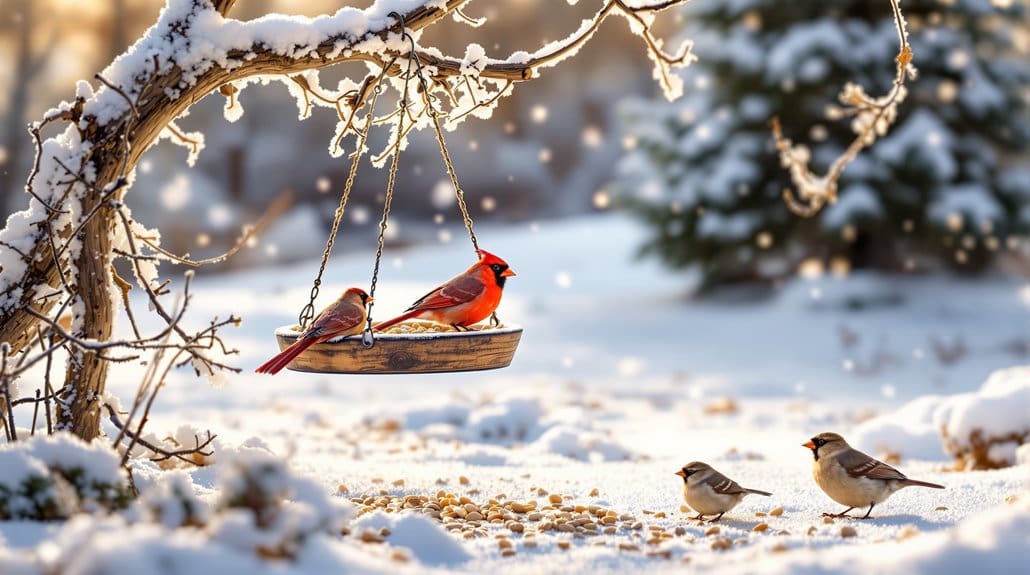
Winter Bird Feeding and Your Landscape — here’s what to do now: put high‑fat foods like black oil sunflower and suet near 4–6 ft feeders, keep them 10–12 ft from dense cover so birds have quick escape but no ambush, and offer heated or de‑iced water in sunny spots near evergreens. Start in late fall, keep feeders consistent through storms, taper gradually in spring, and leave seedheads and leaf litter for insects. Something worth noting: follow strict cleaning routines to prevent disease, and keep going to learn practical planting and placement tips.
Some Key Points
- Provide high‑energy foods (black‑oil sunflower, suet, unsalted peanuts) beginning in late fall and during severe cold.
- Place feeders 10–30 feet from evergreen cover and 4–6 feet high for quick escape and predator safety.
- Keep a heated or de‑iced birdbath with fresh water visible near cover, refreshing often to prevent contamination.
- Plant layered native vegetation—evergreens, shrubs, canopy trees—and fruiting species for year‑round food and shelter.
- Maintain clean feeders, remove waste, and rotate feeding through early spring, tapering as insect availability returns.
Which Winter Birds Visit Your Yard and What They Need
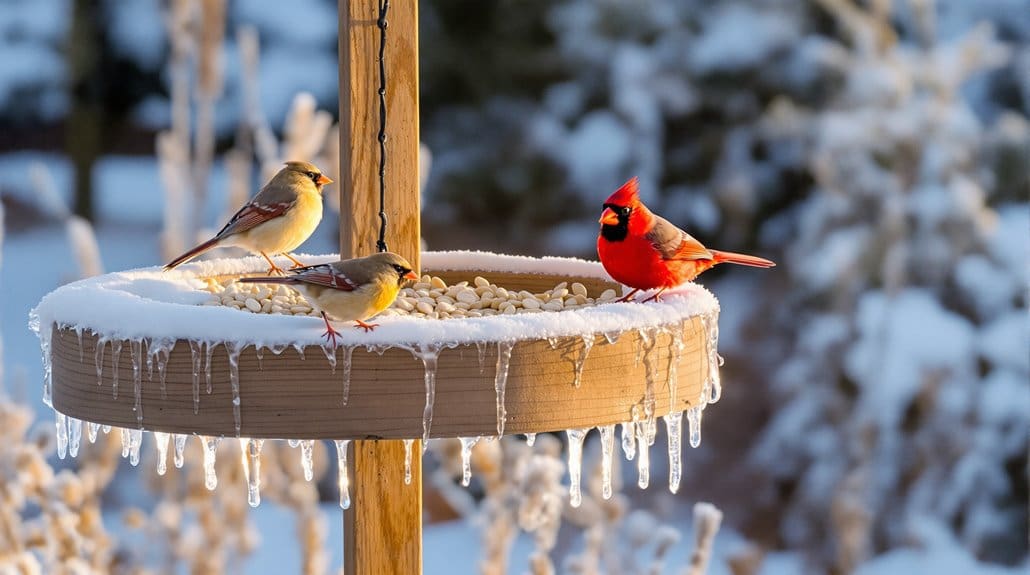
Usually, you’ll see a steady cast of hardy little regulars at your feeders—Black‑capped Chickadees, Dark‑eyed Juncos, nuthatches, cardinals, blue jays, and a few woodpeckers—so start by thinking about their basic needs. Now, treat them like neighbors: they want energy, shelter, and reliable water. Feed high‑fat fare, black oil sunflower and suet cakes, to help chickadees, nuthatches, titmice, and woodpeckers survive cold snaps; sprinkle some nyjer for finches when seeds run low. Something to ponder: unsalted peanuts give extra calories, but don’t overfill—you’ve learned that waste attracts pests. Provide dense evergreens or a roost box for wind protection, and keep a heated birdbath available in freezing weather. Do this, not that: prioritize quality food and safe shelter, and you’ll build a community that returns. Consider adding deer repellent around the perimeter to protect your plantings while supporting winter wildlife.
Where to Put Feeders and Birdbaths for Safety and Visibility
Now place feeders where you can actually see them from your window, either very close (1–3 feet) or well back (over 30 feet), because that helps you enjoy birds and cuts down on window strikes. Something worth thinking about: put feeders 10–12 feet from dense shrubs or branches for quick cover, mount tube or suet feeders 4–6 feet high and away from jump-off points, and keep birdbaths sunny but within 10–20 feet of evergreen cover so birds can escape predators; I learned this the hard way after watching a squirrel ambush a poorly sited feeder. Be practical about spacing and cleaning — 10–15 feet between feeders reduces crowding, and if you can see and reach them easily, you’ll keep birds healthier and safer. Smart netting bird control can protect feeders and shrubs when squirrels become a problem.
Visibility From Windows
You’ll want to think of your windows as both a front-row seat and a hazard zone, so place feeders and baths to let you watch birds without putting them at risk. Now, make a place for birds close enough to see—within 3–10 feet of glass—or far enough away, 30–50 feet, so reflections don’t fool them. Mount feeders at eye level, about 4–6 feet, near your main viewing window, and keep baths 10–20 feet from windows in sunny spots so water stays visible. Something worth noting: use decals spaced to break reflections, and position feeders 10–30 feet from shrubs so birds have nearby escape cover but can spot danger first. Do this, not that: prioritize safety over a perfect photo op. Many homeowners also appreciate using comfortable garden kneelers to make routine feeder maintenance easier and gentler on the knees (comfortable garden kneelers).
Safe Distance From Cover
If you want birds to feel safe and give you a good view, place feeders and baths where they can bolt to cover quickly but not be ambushed by it, because I once put a feeder too close to a hedge and learned the hard way that cats and other predators love hidden perches. Now, place feeders about 10–12 feet from dense cover like shrubs or brush piles, so birds can dart to safety while raptors or neighborhood cats can't hide nearby. Something to keep in mind: birdbaths should sit 10–15 feet from cover and near a perch 6–10 feet up, letting birds scan for danger before they sip. Do this, not that: avoid tight spots next to windows or dense plantings. You'll see more birds, and feel part of a safer, shared space. Consider placing feeding areas near lawn care equipment to keep the surrounding space maintained and discourage pest hiding spots.
Stable, Elevated Placement
You learned from the last section how close is too close to hedges and windows, so here’s what to do next to get feeders and birdbaths up where birds feel safe and you get a good view. Heading: Stable, Elevated Placement. Now, place feeders 10–12 feet from dense cover, so birds can bolt to shrubs yet cats can’t hide. Mount birdbaths and bird feeders at least 5–6 feet high when you can; it keeps ground predators and deer away, and it reduces tipping. Something to keep in mind: position feeders 3–4 feet from low shrubs to prevent ambushes but still offer a quick retreat to taller cover. Keep feeders visible from windows within 30–40 feet for safe viewing; add decals if you place feeders closer. Aim for a sunny, sheltered, level spot, especially for heated baths. For safe long-term maintenance, consider using sturdy mounting methods from irrigation and lawn-care suppliers.
Which Feeders and Foods Work Best in Winter (Seeds, Suet, Mealworms)
Start by choosing a few tried-and-true foods and matching feeders, because when temperatures drop birds need dense calories and predictable access more than fancy variety. Step 1 — pick your staples: black-oil sunflower seeds, in feeders that suit bird size, and suet cakes for high-energy fat. Now, use tube feeders for small perches like chickadees and titmice, hopper feeders for cardinals and jays; I learned the hard way with the wrong feeder, don’t repeat that. Step 2 — add treats sparingly: unsalted peanuts, dried fruit or mealworms during deep cold or migration stops. Something to take into account: clean feeders every two weeks with a 9:1 water:bleach mix, dry well, and keep them stocked so birds don’t waste energy searching. Consider keeping a pair of durable gardening gloves on hand to refill and maintain feeders safely gardening gloves.
Planting Seed- and Berry-Producing Natives for Late-Season Food
Now plant native fruiters like serviceberry, elderberry, and spicebush to give birds steady, high-fat meals from late summer through winter, and stagger those choices so something is always ripening. Leave standing flower stalks and seedheads—coneflowers, asters, goldenrod—through winter so finches and sparrows can forage when other foods are gone; I learned the hard way that cutting them back in November just sends the birds to the neighbor’s feeders. Something worth weighing: favor natives that bloom or set seed late and also support insects and cover, because that dual function helps nestlings in spring and hungry migrants in fall. Consider adding edging materials to keep planting beds tidy and protect native plants from lawn overgrowth.
Plant Native Fruiters
Think about planting a clutch of native fruiters this fall—shrubs and perennials that hold berries and seeds into the cold months—because they give birds the late-season calories they'll sorely need, and you’ll thank yourself when finches and sparrows are still around in December. Now, choose native plants like elderberry, winterberry, serviceberry, juniper and dogwood; they’re reliable, and fruiting trees and shrubs you cluster will become predictable foraging patches and shelter, which birds love. Do this: leave seed heads and stalks standing through winter, prioritize asters, goldenrods and coneflowers for seeds, and maintain diversity. Don’t cut everything back in fall. Something to keep in mind: spicebush and viburnum pack fat and persistence—learn from my past impatience, don’t tidy it away.
Extend Fall Blooming
Extending fall bloom into winter gives birds a lifeline when feeders freeze or insects vanish, so plant with purpose and a little impatience tempered by experience—I used to tidy every stalk in October and paid for it with quiet yards in December. Now, plant a mix of late-blooming native asters, goldenrods, and coneflowers that set seeds for finches and sparrows, and add berry shrubs like elderberry and spicebush for energy-rich fruit. Do this: leave seed heads and spent stalks standing through winter, space plants at varied heights for cover, and skip pesticides so insects and fruits stay safe. Something to bear in mind: don’t replace natives with ornamentals; you’ll lose food. Trust the process, we’re in this together.
Provide Winter Seedheads
Planting seed- and berry‑producing natives gives birds a steady snack through the cold months, so start thinking like a bird: leave the asters, goldenrods, coneflowers, and native grasses standing and add berry shrubs such as elderberry, winterberry, and viburnum near brushy cover where birds can tuck in after a storm. Now, do this: choose late-blooming asters and goldenrods so dried seedheads feed chickadees, finches, and sparrows all winter, and plant spicebush or viburnum for fatty berries that last into cold weather. Something to bear in mind: don’t cut stalks or rake everything away—seedheads drop seeds and shelter insects. Do this, not that: favor diverse natives for staggered seed and berry availability, and admit you might have trimmed too soon before—me too.
Designing Layered Shelter: Evergreens, Shrubs, and Brush Piles
Designing layered shelter starts with a simple principle: give birds choices at different heights, because they’ll use whatever combination of cover and windbreaks helps them save energy and stay safe. Step 1 — plant evergreens like pine or spruce for year-round roosting, they cut wind and keep heat in; I once underestimated spacing, don’t repeat that mistake. Step 2 — add dense shrubs, elderberry or rhododendron, close-foraging cover hides seed caches and shields against predators. Now build brush piles from untreated branches near those evergreens for insulated microhabitats; don’t use treated wood. Something to take into account: leave safe snags and dead limbs standing, cavity users need them. When you layer ground cover, shrubs, and canopy trees, you create thermal refuges at multiple heights that really help birds through cold snaps.
Create Overwintering Insect Habitat With Leaf Litter and Stems
Saving leaves and stems for winter is one of those simple, oddly satisfying things you can do that pays off big for birds come spring. Step 1: do this — leave leaf litter in beds and resist the tidy urge, because it insulates and shelters overwintering insects like caterpillars and beetles, which become essential food for nestlings. Step 2: do this — keep hollow or pithy stems standing, goldenrod or Joe-Pye weed included, they host solitary bees and pupae. Now, don’t rake everything or cut stems in fall; studies support leaving them. Something worth weighing: build small brush piles or keep a log or rock corner for ground dwellers. Do this, not that — avoid broad‑spectrum pesticides, they wipe out your insect base.
Provide Reliable Winter Water: Birdbath Placement and Heating Tips
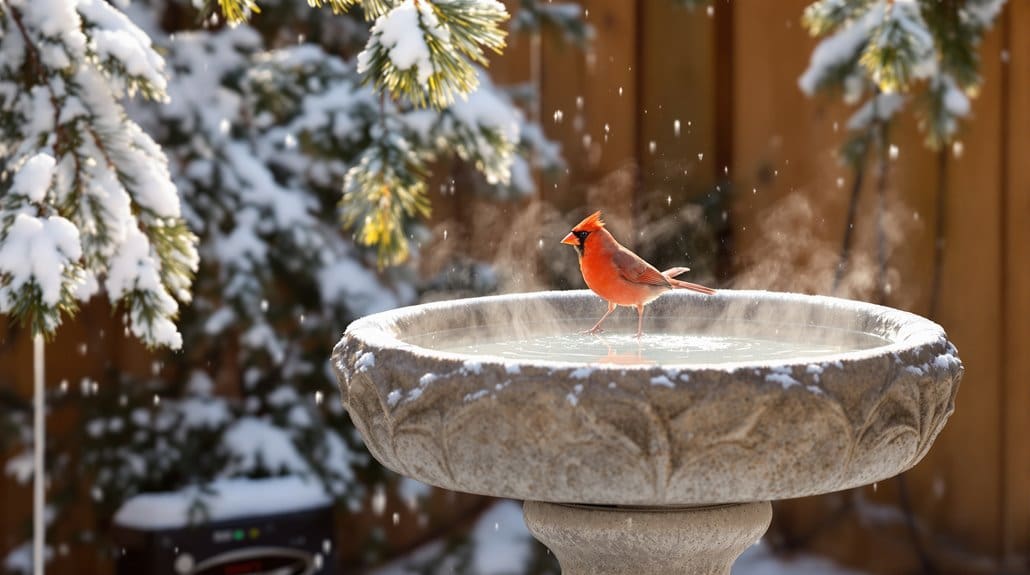
You’ll want to check your birdbath often in winter, because a little attention makes a huge difference for thirsty birds and you’ll kick yourself if you let it freeze solid. Step 1 — place it where afternoon sun hits, with 2–3 feet of open space so birds can watch for predators, and keep it 10–20 feet from evergreen cover so they can dart to safety. Now, do this, not that: don’t tuck it in deep shade or too far from shelter. Step 2 — use a thermostatically controlled heater or de-icer made for outdoors to keep a 4–6 inch hole of fresh water, follow safety instructions, and refresh water every 1–2 days. Something to ponder: clean weekly with diluted vinegar.
Sanitation and Feeder Maintenance to Prevent Disease
You’ve done the work to keep water open and safe, now keep your feeders just as tidy so birds don’t pick up more trouble than treats. Step 1: Clean feeders every two weeks, more often in wet weather, with a 9:1 water‑to‑bleach solution, scrub, rinse, and dry before refilling — yes, I skipped this once and paid for it in moldy seed. Now scan trays and the ground, remove wet clumps, hulls, and droppings to cut pathogens and rodents. Step 2: Rotate and inspect for cracks, rust, or slimy biofilm; replace damaged feeders and move stations to avoid soil saturation. Something to ponder: during local outbreaks, pause feeding, deep clean all gear, and report sick or dead birds.
Seasonal Timing: When to Start, Continue, and Taper Feeding
Now, start feeding in late fall as seeds and insects fade, keep feeders full through the freezing months, and don’t feel bad if you missed the first cold snap—just get going. Continue into early spring while mornings are still cold and insects are scarce, then taper off slowly over several weeks so birds have time to switch back to natural foods; abrupt stops cause hungry surprises. Something to ponder: if you can, keep feeders year-round but change what you offer seasonally and watch local weather and bird activity so you feed when it truly helps.
When To Begin Feeding
If temperatures are regularly dipping below freezing and you’re noticing fewer insects and seed-producing plants, that’s the cue to start putting out extra food—late fall is usually the sweet spot. Step 1: begin feeding once freezes are routine, you’ll help birds carry through, so keep feeders stocked and consistent, not sporadic. Now set up suet and mixed seed where birds feel safe, and remember I once stopped too soon—don’t repeat that. Step 2: continue through harsh storms and for a few weeks after cold snaps, migrants and residents still need energy. Something worth pondering: in mild regions you might maintain basic feeding year-round, but watch local cues rather than the calendar. Do this, not that: steady support beats well-meaning, erratic bursts.
When To Taper Off
When daytime temps regularly climb into the 50s and insects are buzzing again, it’s time to start easing off your feeders, so plan a gradual wind-down rather than an abrupt stop that can leave late migrants and nestlings in a lurch. Now, continue to provide food through early spring migration and nesting, but begin to taper off suet and high-fat mixes as insect activity rises, since chicks need protein-rich prey. Do this over several weeks, reducing portions and frequency, not nothing overnight. Something worth keeping in mind: keep water available and leave seedheads and native fruit standing into early summer to bridge the gap. You’ll feel guilty pausing too soon — been there — but phased reductions help birds shift to natural foods.
Low-Effort Landscape Changes That Bring Big Bird Benefits
You can get big bird benefits with a few simple changes to your yard, and you don’t need to turn your property into a nature reserve overnight—trust me, I’ve tried that and got overwhelmed. Now, plant native late-season seed and fruit producers like asters, goldenrod, elderberry, and winterberry so migrating and overwintering birds find high-fat food when insects vanish. Do this, not that: don’t deadhead—leave seed heads and native grasses standing through winter for seeds and shelter. Something to bear in mind: add evergreen shrubs or small thickets for cover and roosts, and provide liquid water with a heated or solar-deicing birdbath, refreshed often. Keep leaf litter and brush piles; they feed insects and future nesting birds.
Some Questions Answered
What Is the 5 7 9 Rule for Bird Feeders?
The 5‑7‑9 rule tells you where to place feeders: about 5 feet from dense cover for quick escapes, 7–9 feet from windows to prevent collisions, and 5–9 feet high to thwart predators. Now, use varied feeder placement with a good seed variety, don’t hug cover or crowd glass, and expect a learning curve — I’ve hung feeders too close before. Something to keep in mind: prioritize bird safety, then your viewing pleasure.
Is It a Good Idea to Feed Birds in the Winter?
Yes — you should feed birds in winter, but do it thoughtfully. Now, prioritize ethical considerations and reduce disease transmission by keeping feeders and baths clean, using high‑energy foods like sunflower and suet, and placing feeders near shelter. Something to ponder: don’t stop suddenly; continue through spring migration. You’ll learn from mistakes, like skipping cleaning, so be steady, patient, and neighborly — you’re helping birds survive, not creating dependence.
Why Should I Sprinkle Coffee Grounds Around My Bird Feeder?
Like a small umbrella in a storm, you might sprinkle grounds to deter pests, but don’t expect miracles. Now, use aged grounds sparingly, they help moisture retention and lure earthworms, yet watch soil acidity effects near acid-sensitive plants. Something to contemplate: caffeine can harm critters, so compost first. Do this: try baffles and squirrel-proof feeders too. Don’t rely solely on coffee — learn from my past hopeful mistakes.
How Do You Create a Bird Habitat?
You create a bird habitat by planting native plants for food and shelter, and by adding reliable water sources like a heated birdbath, now start small and expand. Do this: keep evergreens, leave leaf litter, and offer high‑energy feed, not processed mixes that spoil. Something to bear in mind: install nest boxes and roost sites, refresh water often, and yes, I’ve overplanted before — slow and steady wins the birds.