Measure your yard now and match mower type to size—don’t guess and buy a deck that’s too small. Walk the plot, mark slopes and beds, then pick push, self‑propelled, riding, or zero‑turn accordingly; choose gas for big lots, battery for quiet, and robotic for hands‑off clipping. Now watch March–April for selection and late summer/fall for deepest discounts. Something to ponder: dealer service and warranty beat a bargain with no backup. Keep going to learn timing, tracking, and inspection tips.
Some Key Points
- Measure your yard (acreage, obstacles, slopes) now to match mower type and deck size before spring shopping.
- Decide powertrain—gas for >½ acre, battery for convenience, corded for tiny plots, robot for hands‑off frequent clipping.
- Track prices and set alerts; buy research in winter, aim to purchase new models in March–April for selection.
- For deepest discounts, plan backups: hunt late‑summer demo or winter clearance if willing to accept limited selection.
- Choose buying channel by priorities—dealer for service/warranty, big‑box for returns/availability, refurbished for savings.
Measure Your Yard and Match It to Mower Types (Deck Size, Terrain, Features)
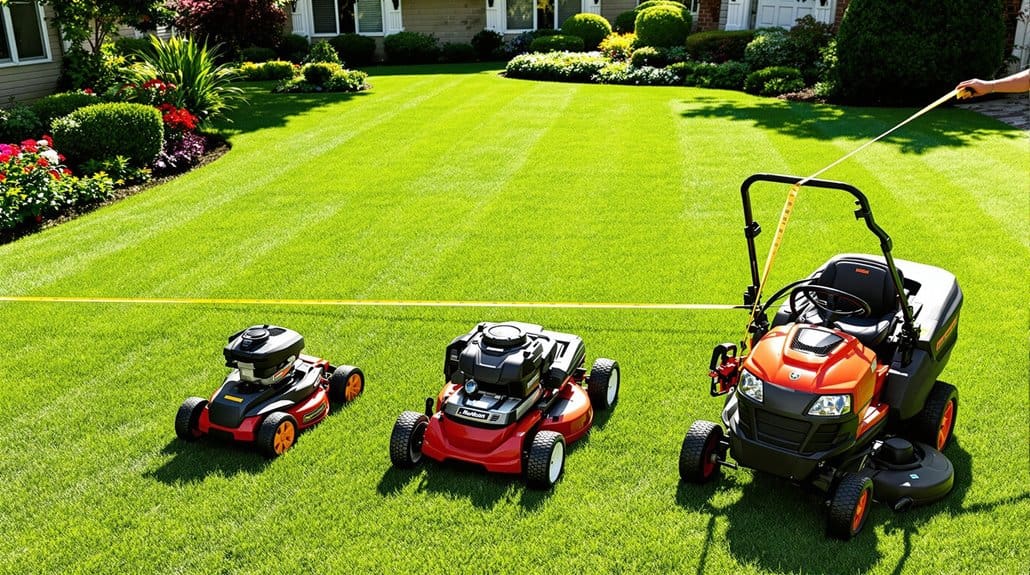
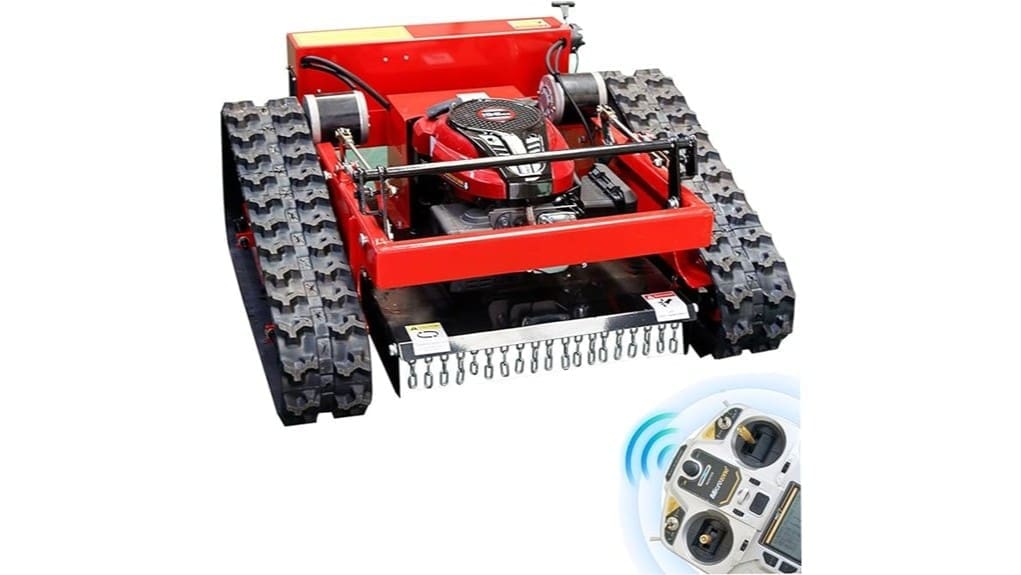
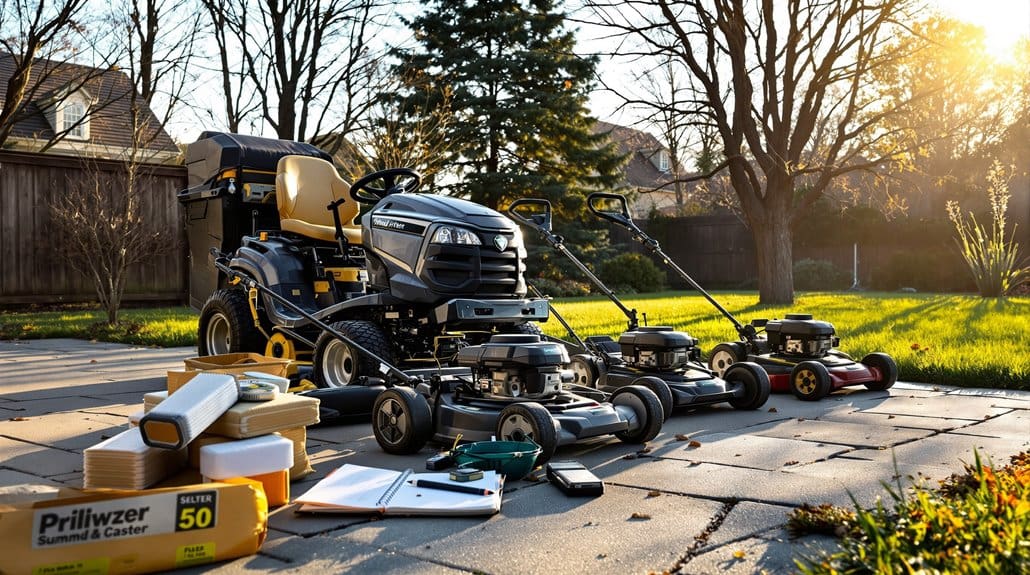
If you measure your yard first, you’ll save yourself from buying a mower that’s either too small and slow or too big and impossible to store. Step 1 — map your yard size and lawn area, pace it off, note obstacles; under 1/4 acre you’ll want a 16–20-inch deck size push mower for easy storage, don’t overbuy. Now for 1/4–1/2 acre, choose a 21–22-inch self-propelled to cut faster without wearing you out. Something to keep in mind: 1/2–2 acres calls for a riding mower, 42–54-inch deck, save time but need space. Over 2 acres or lots of beds, a zero-turn, 48–72-inch deck, is best. Match features to slopes, use adjustable cutting height, decide mulching vs bagging. Consider our best push mower picks to find models suited to careful homeowners.
Compare Powertrains: Gas vs Battery vs Electric vs Robotic - Pros, Limits, and Maintenance
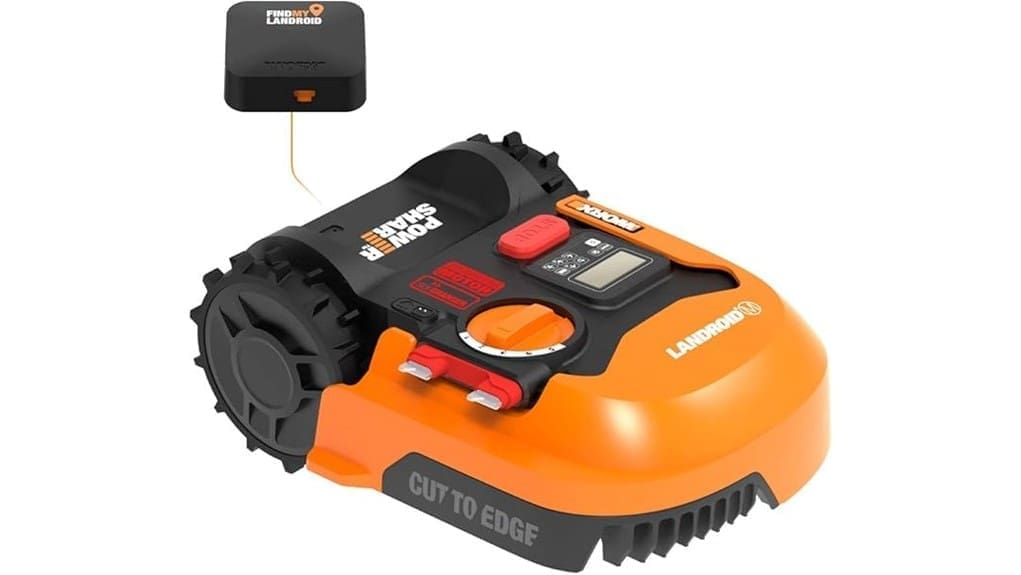
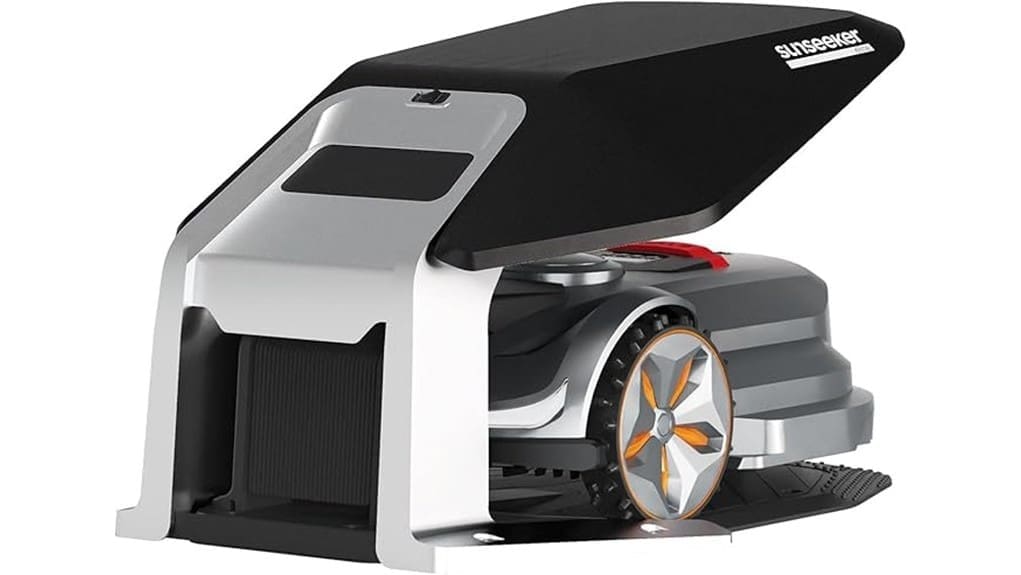
Now that you’ve matched deck size and features to your yard, it’s time to pick what actually powers the mower. Step 1 — match power to yard size: gas mowers give the highest sustained power for big yards over half an acre, but expect regular maintenance, oil changes, spark-plug swaps, and ongoing fuel costs; don’t underestimate the winter prep. Step 2 — go quiet and low-maintenance with battery electric if you want 30–90 minute runtime, less upkeep, and higher upfront battery replacement costs later. Step 3 — choose corded electric for tiny plots under 1/4 acre, unlimited runtime but tethered by cord. Step 4 — consider robotic mowers for frequent hands-off clipping, note installation, perimeter wiring, and periodic battery and blade replacement. For typical homeowners who maintain property regularly, prioritize battery mower options that balance run time, deck size, and ease of storage.
When to Buy by Month and Mower Type : Exact Windows for Biggest Savings and Best Selection
Now, pick your month based on what matters most: if you want the widest selection of new models and accessories, shop in March–April when manufacturers roll out new lines, but don’t expect deep discounts; if you’re hunting bargains, target late summer through early fall (August–October) for big markdowns on push, electric, riding and zero‑turn demo units, and watch Prime Day and Black Friday for steep cuts on electric and robotic mowers. Something worth pondering: post‑holiday winter clearances (December–February) can net huge savings, but selection is thin, so do this when you know exactly what you want, not when you’re just browsing. Trust me, I’ve waited for a sale only to regret the missing model—plan the month to match your priorities, and you’ll avoid that mistake. Our shop focuses on electric lawn mowers and related gear for homeowners.
Best Months To Buy
When it comes to timing your mower purchase, think seasonally and shop smart—you’ll save most by buying late summer into early fall, or during post‑holiday clearance in January and February. Now, do this: target late summer–early fall for the deepest discounts, when inventory clearance pushes riding mowers and demo zero‑turns down $300–$800. Something to keep in mind: post‑holiday clearance in Jan–Feb offers steep markdowns, but selection can be thin, so set alerts. If you want new models and choice, buy in early spring when manufacturers roll out new models with modest promos. For electric mowers watch Prime Day and Black Friday/Cyber Monday for big online deals. Don’t buy in peak season, May–July — that’s the costly, crowded mistake most of us made. Also consider seasonal inventory when choosing whether to buy new or look for showroom demos.
Selection Vs. Price
Because getting the best combo of selection and price means timing and a little stubbornness, you’ll want to plan by mower type and month so you don’t pay for convenience or miss the one with the features you actually need. Now, choose your focus: if you want the best selection, shop early spring when new lines arrive, accept smaller discounts, and avoid buying last year’s tech. Something to ponder: for deepest discounts, wait late summer into fall clearance sales and winter markdowns, you’ll score big on walk-behind mowers and dealer demo riding lawn mowers. Electric mowers often hit lows around Prime Day and Black Friday. Be mindful of regional timing; northern stores clear earlier, southern markets shift into summer. Don’t panic—plan, wait, then buy. Consider the typical homeowner’s needs when choosing features and deck sizes to match your yard lawn care equipment.
Mower-Type Timing
You’ve already picked whether you’re chasing selection or the lowest price, so let’s get specific about timing by mower type and month to help you buy smarter.
Now, do this: for push mowers aim August–October or January–February for late summer clearance and winter clearance, when 15–35% off is common; don’t buy at near‑MSRP in March–April unless you need choice. For riding mowers hunt demo models and last‑year models in late summer, dealers cut $300–$800. For cordless electric watch Prime Day discounts, Black Friday, and online events for 25–40% off, and weigh bare‑tool deals. Robotic lawn mowers dip around Prime Day and model launches, plus winter clearance. Something to ponder: commercial gear follows demo clearances and winter trade‑show promos. Consider zero‑turn mowers too — many dealers that sell residential equipment also stock zero‑turn models and run similar end‑of‑season discounts.
Where to Buy: Dealers, Big-Box, Online, and Used - Pros, Fees, and Warranty Tradeoffs
Now you’ll pick where to buy, and the choice matters more than you might think because dealers give you expert service and stronger warranties while big‑box stores and online sites trade those perks for lower prices and faster deals. Something worth weighing: online flash sales can save a bundle but often tack on shipping fees and assembly, certified refurbished units sit in the middle with limited warranties, and used buys can be great bargains if you’re ready to inspect for rust, leaks, and worn belts. Do this: start at a dealer for high‑ticket riding mowers or a certified refurb, use big‑box or online for seasonal markdowns, and only buy used if you can check the machine in person — learned that the hard way, trust me. For homeowners who maintain their property regularly, consider starting your search with reputable gas edger dealers because they commonly offer hands‑on advice and parts support.
Dealer vs. Big-Box
Start with manufacturer dealers for expert maintenance, dealer service, manufacturer dealers trade‑in options, demo units and flexible financing, and watch late‑summer demo clearouts for ride‑on discounts — I’ve missed one and regretted it. Now, big‑box stores give easy pickup, open‑box deals and lenient returns, but staff knowledge and bargaining room can be limited, so don’t expect deep haggling on riding mowers. Something to contemplate: certified refurbished models blend savings with warranty protection — ask what’s left on coverage. Do this: weigh service and warranty, not just the sticker price.
Online Marketplaces Tradeoffs
Online marketplaces can save you real money, but they’ll also test your patience if you don’t plan ahead. Now, scope the deals: flash sales around Prime Day and Black Friday often knock 25–40% off battery and electric mowers, and refurbished units give good middle-ground savings. Do this: factor in shipping costs and assembly fees up front, they can add $50–$150 and wipe out the discount. Something to weigh: read the returns policy closely, because returns/servicing are tougher online and warranty limitations vary by seller. Do not assume dealer-level support. If you want savings and community confidence, buy during targeted sales, keep receipts, and call the manufacturer to confirm warranty coverage before you click.
Used & Refurbished Risks
You’ve already seen how deals online can look great until the fine print eats the savings, so let’s look at used and refurbished mowers with the same skeptical eye. Now, start with certified refurbished if you want lower risk: they’re usually 15–30% off and often include a warranty, though you must check battery coverage and engine condition details. Something to weigh: dealers offer demo discounts and service plans, big‑box stores give easy returns, but private‑party buys save most and come with no warranty, so insist on a full inspection for deck rust, oil leaks, belts, compression and hours of use. Do this, not that: buy confidence and clear coverage, not just a cheap used lawn bargain you regret.
How to Track Prices and Set Buy Signals (Tools, Alerts, and Demo/Clearance Timing)
When you want the best deal on a mower, tracking prices and setting smart buy signals will save you time, money, and buyer’s remorse—trust me, I’ve chased “sales” that were just marketing fluff. Step 1 — set price alerts with tools like Honey, CamelCamelCamel, or Capital One Shopping, add retailer notifications and a Google Alert for model names, because alerts catch seasonal sales and major sale events fast. Step 2 — use price-history tracking to spot real declines, aim for 20%+ off spring MSRP as a solid buy signal, don’t buy hype. Now watch clearance windows and dealer inventory in late summer and winter for demo units and last-year models, pair those with manufacturer rebates, then pull the trigger.
Negotiation and Inspection Checklist for Spring Purchases (Scripts, Test-Ride Items, and Warranty Checks)
Before you sit down to haggle, get your homework in order so you can negotiate from strength, not hope: check invoice or last‑year prices and set a clear target (I’ve fallen for flashy demos before—don’t be me), then decide the exact percent or dollar amount you’ll accept for this spring purchase. Now, build negotiating power by citing invoice or a quoted last‑year model price and use this script: “I’ve found X at [competitor] for $Y — can you match that price and include first‑year maintenance and delivery?” On the test ride, follow an inspection checklist: engine start, transmission response, steering, deck vibration, cut width, demo/open‑box hours, battery charge. Do warranty checks, confirm manufacturer warranty terms, and photograph VIN, accessories, and paperwork before signing.
Some Questions Answered
Is It Better to Buy a Lawn Mower in the Spring or Fall?
Buy in fall if you want the best bargains, but spring if you need the newest models. Now, prioritize seasonal sales and dealer promotions, don’t panic over consumer demand. Something to ponder: inventory clearance gives big discounts, while model availability and warranty periods are better in spring. Do this: buy fall for trade in value and lower prices, not spring; plan maintenance timing and storage considerations, weather impact matters—learn from my past rushes.
What's the Best Month to Buy a Lawn Mower?
The best month is usually October. Now, aim for end of season clearance deals, when inventory levels drop and retailers push holiday sales and promotions, you’ll score bigger discounts on last year’s models. Something to keep in mind: new models arrive in spring, so buy fall for price cycles advantage, not selection. Do this: target late September–October, watch tax incentives and weather patterns, don’t pay peak summer prices.
What Is the 1/3 Rule of Mowing?
The 1/3 rule of mowing says cut no more than one-third of blade height each time, so you protect root growth and speed grass recovery. Now, set blade height for leaf density and clipping distribution, and increase cut frequency instead of scalping. Something worth pondering: too low cuts raise root stress, boost watering needs, worsen soil compaction and reduce shade tolerance. Trust this, you’ll fix past mistakes and get healthier turf.
Is It Cheaper to Buy a Mower in the Winter?
Cold hands, warm deals — yes, it’s usually cheaper to buy a mower in winter. Now, hunt seasonal discounts, holiday promotions, Black Friday and offseason pricing, hit warehouse clearances and inventory liquidation, and ask about manufacturer rebates and retailer markdowns, don’t be shy with price negotiation. Something to keep in mind: selection shrinks, demo units dominate, and delivery lags, so research now, buy smart, and avoid impulse spring panic.