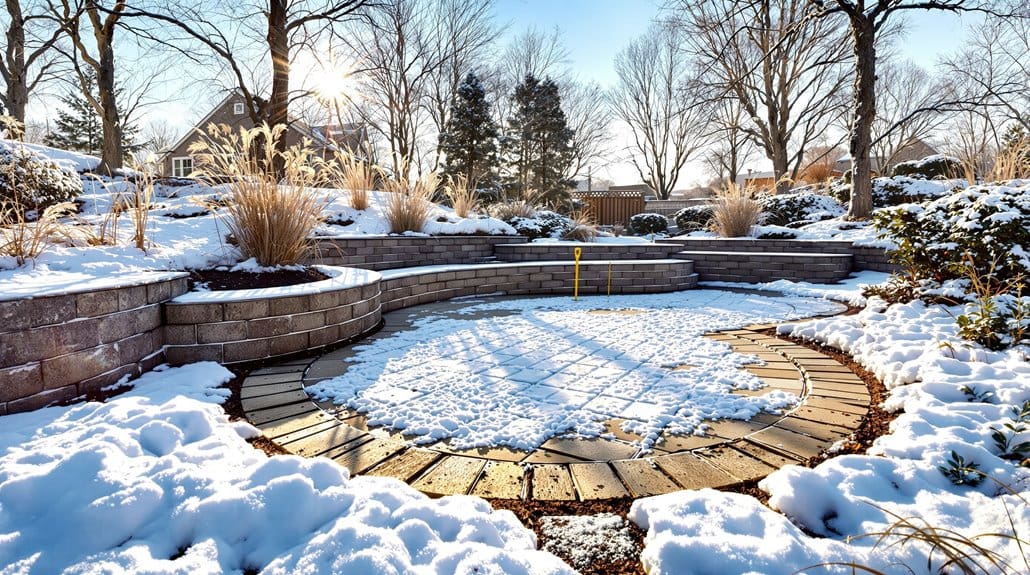
You should plan hardscapes in winter: contractors are quieter so you can lock crews and prices, submit permits early to beat spring backlogs, and order long‑lead materials now to avoid 6–12 week delays. Now, use firm, cool soil to get precise grading and fewer compaction passes, specify frost‑resistant materials and heated patios if needed, and sequence softscape after hardscape. Something to ponder: arrange utility locates and site visits while plants are dormant — keep going to learn how to turn this into a buildable schedule.
Some Key Points
- Contractors and municipal offices are less busy, so you can lock crews, submit permits early, and secure faster approvals.
- Cooler, firmer soil improves base compaction and grading, reducing settling and frost‑heave risk.
- Off‑season pricing and incentives let you negotiate fixed contracts, bundled rebates, and cost savings.
- Winter scheduling gives time to order long‑lead materials, specify heated patios, and plan drainage and lighting.
- Dormant plants and easier site access simplify utility marking, excavation, and follow‑up softscape sequencing.
Why Winter Hardscape Planning Speeds Up Patios, Paths, and Borders
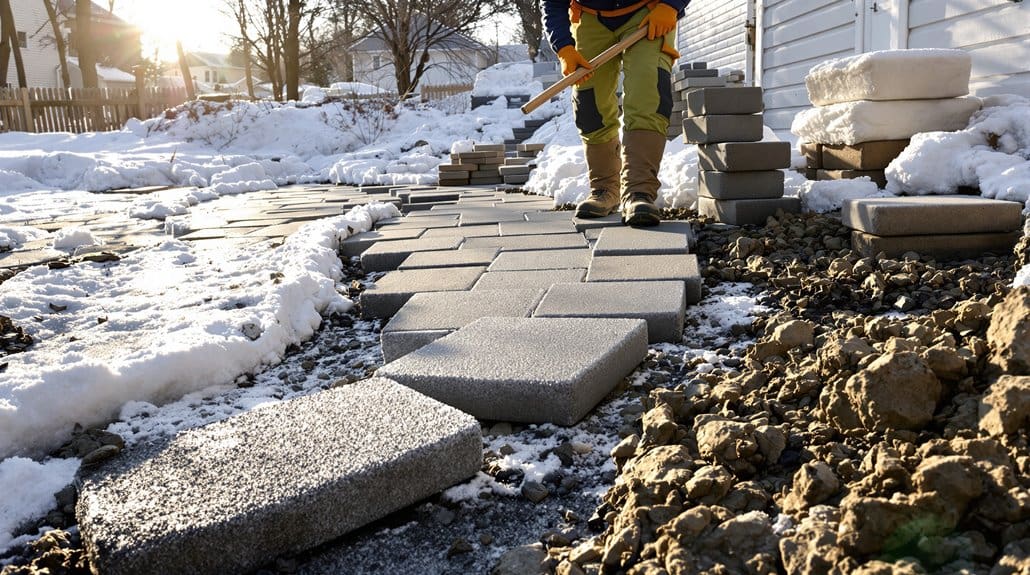
If you plan ahead this winter, you’ll get patios, paths, and borders built faster when spring arrives, because contractors are typically less booked and the groundwork is actually easier to manage. Now, start hardscape planning by contacting installers while contractor availability is higher, you’ll lock better lead times and off-season pricing, and you’ll avoid last-minute scramble. Do permits and scheduling in winter, so crews can move the moment ground conditions permit. Something worth weighing: cooler, drier soil helps base compaction, reducing settling later — I learned that the hard way. With dormant plants, crews won’t tear up beds, so patios and paths go in cleaner. Do this, not that: finalize plans now, don’t wait until the thaw. Consider adding durable plastic edging to define borders and simplify installation for cleaner, longer-lasting edges.
Which Hardscape Tasks Are Best Done in the Dormant Season
When the ground’s asleep and contractors have more open days, you’ll want to lock in the big, dirty work that’s easiest to do in cool, firm soil: think retaining walls, paver patios, and stone walkways, because compacting bases in 40–60°F dirt cuts down on later settling—trust me, I learned the hard way when a summer install shifted and I had to redo a border. Now, focus your hardscape winter plan on excavation and base compaction while site access is simple and vegetation is dormant, install drainage and conduits before spring planting, and pour concrete footings when cool curing helps avoid thermal cracks. Something to bear in mind: doing these tasks now saves turf, limits rework, and gets your project ready for a smooth spring finish. Consider coordinating irrigation components like sprinkler valves during hardscape work to streamline installation and avoid disturbing finished surfaces later.
How Cooler Soil Improves Grading, Base Compaction, and Paver Setting
Because cooler soil firms up under your boots and equipment, you can grade more precisely and set a proper paver base without fighting ruts and puddles like you do in spring, so start by walking the site and visualizing final grades now. Step 1 — Assess: feel the firm ground, note soil moisture, and mark high and low points for drainage. Step 2 — Grade: cut and fill while the ground holds shape, avoiding the spring mistake of reworking saturated soil. Step 3 — Base compaction: use fewer passes to reach target density with compacted aggregate, check depths so you don’t invite frost heave. Step 4 — Paver setting: set bedding and joints when cementitious curing will be even. Now you’re building something that lasts. Consider also planning equipment needs early so you can rent or buy the right tools, like a spike aerator for lawn care maintenance.
Scheduling Tips: Secure Contractors, Permits, and Materials Early
Now’s the time to lock in your contractor, because booking in late November through January gives you way more open slots and a better shot at an early‑spring start, not after the usual scramble. Something to keep in mind: submit permits and order long‑lead materials during winter so you avoid the spring backlog and surprise price hikes — I’ve learned the hard way that waiting means delays. Confirm site visits, soil/utility locates, and clear contract timelines with contingency windows now, so your crew can prioritize your job and you won’t be chasing schedules later. Also consider planning for tool organizers and storage solutions early to protect equipment and streamline your project logistics.
Secure Contractors Early
Lock in your crew while the calendar's quiet, because contractors have far more openings in winter and you’ll thank yourself when spring hits. Step 1 — book early: winter is the off-season, contractors show greater availability, so pick your preferred team and set a start window. Now, plan paperwork: submit permits and site plans in winter to dodge spring backlogs. Step 2 — order materials: lock prices and delivery by ordering long‑lead items now, don’t wait until everyone else scrambles. Step 3 — negotiate terms: ask for a fixed-price contract, milestone payments, and a clear scope — you’ll often get better deals in the off-season. Something to keep in mind: schedule soil tests and utility locates now, so excavation flows later. Also, consider early planning for equipment compatibility to ensure your chosen zero-turn mower integrates with any hardscape maintenance needs.
Permit And Material Timing
You’ve got your crew on the books — good call — and the next move is to get permits and long‑lead materials sorted while everyone’s calendar is quiet. Step 1: submit permits in winter, because municipal offices move faster off-season, so you’ll dodge the spring backlog and shave weeks off approval. Now, lock contractors’ schedules with written start-date windows, that way plans don’t slip when spring hits. Step 2: order long-lead materials early to secure current pricing, negotiate off-season pricing or holdbacks, and avoid 4–12+ week material lead times. Something to keep in mind: have contractors produce permit-ready plans and engineered drawings, and coordinate utility locates now, so when permits arrive, crews start without delay. Do this, not that — don’t wait. Also, consider planning around sprinkler system maintenance to ensure irrigation components integrate with new hardscapes and avoid rework.
How Off-Season Pricing and Incentives Lower Costs on Hardscapes
When chances to save pop up in the slow season, you should pounce — but do it smartly; winter’s lower demand often means contractors will shave 10–20% off labor, clear out surplus pavers and stone at 15–30% markdowns, and toss in upgrades or faster timelines just to keep crews busy. Now, you can use off-season pricing to your advantage: start conversations early, ask how contractors provide off-season discounts, and bundle incentives so manufacturer rebates and seasonal promotions stack for real cost savings. Something to bear in mind, don’t assume every deal is equal; use negotiating leverage to lock in pricing and request written terms. Do this, not that: plan for longer lead times, secure surplus materials, and avoid impulse changes that blow the budget. Also consider pairing purchases with dump cart options to move materials efficiently and reduce labor time.
Design Choices That Keep Patios and Paths Useful Year-Round
Start by thinking like a homeowner who actually uses the patio in January: aim to keep surfaces safe, dry, and comfortable so you get more nights out there, not just summer weekends. Step 1 — prioritize drainage and slope, do a 2% surface grade so water runs off, and use a compact base, not the soggy stuff you regretted before. Step 2 — pick frost-resistant pavers or natural stone with low absorption, add permeable pavers or a 1–2 inch open aggregate layer to reduce freeze-thaw damage. Now specify heated patio systems if you want ice-free nights, hydronic or electric. Something to ponder — add landscape lighting for short winter days and an ANSI-rated fire pit with clearance, and you’ll actually use the hardscape.
Practical Checklist to Move a Winter Plan Into Spring Construction
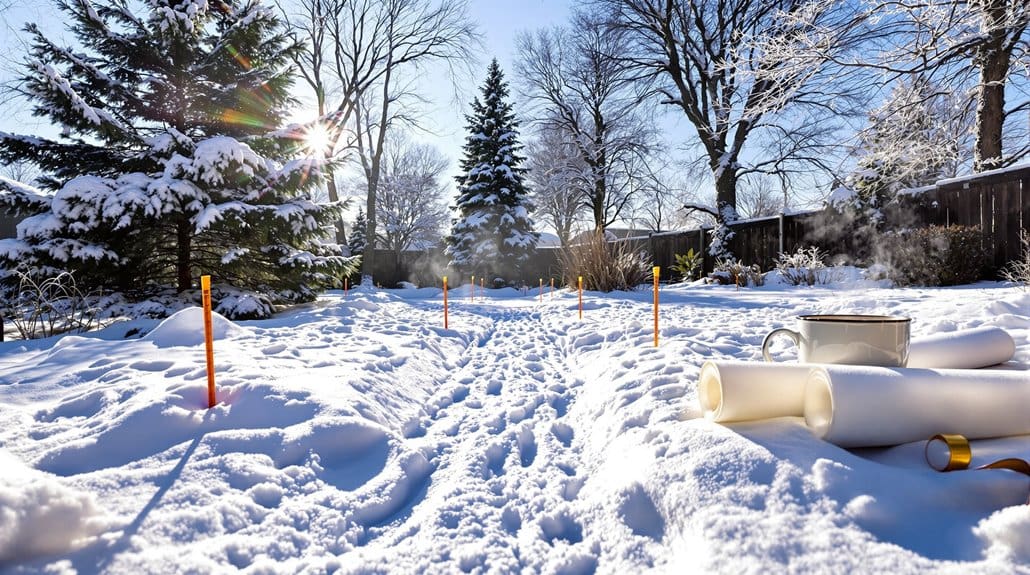
You planned your winter hardscape with drainage, frost‑resistant materials, and even the idea of a heated patio — now let’s make sure that thinking turns into a spring build, not a scramble.
Step 1 — Do this: submit permit applications and order long‑lead materials now, don’t wait and risk 6–12 week backlogs. Step 2 — Do this: arrange a site visit while plants are dormant so you can mark utilities, routes, and footprints; it saves time later. Step 3 — Do this: lock in crew availability and a provisional start date while contractor calendars are light. Something to keep in mind: confirm soil isn’t frozen and schedule excavation/compaction on a mild day for stable ground. Finally, plan softscape follow‑ups after the hardscape project finishes.
Some Questions Answered
Can You Do Hardscaping in the Winter?
Yes — you can do hardscaping in winter. Now, start with a winter site assessment, avoid frozen ground and plan seasonal scheduling so heavy turf work waits until spring. Do this: use cold weather materials, heater use, temporary protection and equipment winterization, and prioritize frost heave prevention and snow management. Something worth noting: contractors offer off-season deals, but don’t rush curing — I’ve learned that the hard way.
What Time of Year Is Best to Redo Landscaping?
Late fall through winter is best, because you can do soil testing, plant selection, drainage planning, permits timing, and design revision ahead of spring, so installation runs smooth. Now, focus on material sourcing, budget forecasting, irrigation layout, lighting placement, seasonal color, and maintenance scheduling, do this, not that—don’t wait for rush season. Something worth noting: contractors are freer, you’ll avoid frantic changes, and yes, you’ll sleep better.
Do Landscapers Get Laid off in the Winter?
You're right to worry — winter layoffs can feel like the sky's falling! Seasonal layoffs do happen, with weather related cuts and part time turnover common, though union protections and contractor retention vary. Now, here's what to do: ask about offseason hiring, staffing forecasts, benefits continuation, and temporary unemployment options, and seek employers who offer cross‑training. Something to keep in mind, be honest about past gaps, and prioritize firms with steady employment trends.
Do Landscapers Work During Winter?
Yes — landscapers do work during winter. Now, prioritize quiet consultations and design revisions while contractors handle snow maintenance, equipment storage, and ground assessment when conditions allow. Something to keep in mind: do proposal drafting, permits review, and material sourcing now to avoid spring rush. You’ll learn from past delays, so focus on client education and seasonal scheduling, do this early, not that—wait for thawed soil for big plantings.