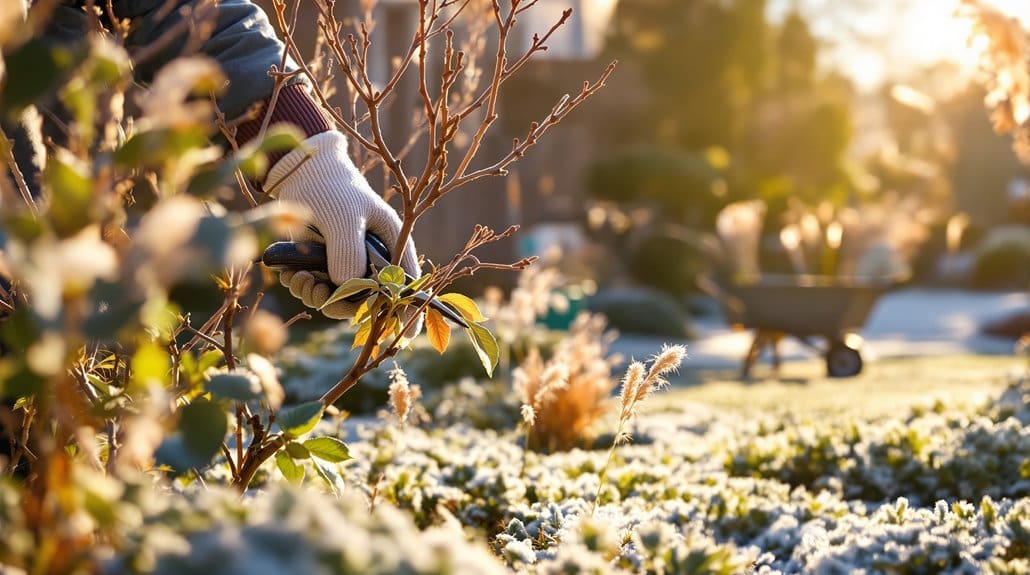
Now’s the time to prune smart: remove dead, diseased, or crossing branches first, cut new‑wood bloomers (butterfly bush, panicle hydrangea) and dormant roses back to strong buds, and thin shady crowns but never more than about one‑third; don’t touch spring‑bloomers (lilac, azalea, bigleaf hydrangea) or clematis Group 1 until after they flower. Make clean cuts just outside the branch collar, sanitize tools, work on a mild dry day, and call a pro for big or dangerous jobs — learn the rest here.
Some Key Points
- Prune dead, diseased, or crossing branches first to prevent decay and improve structure.
- Leave spring‑blooming shrubs (lilac, azalea, bigleaf hydrangea) until after flowering to preserve buds.
- Hard‑prune new‑wood bloomers (butterfly bush, abelia, panicle hydrangea) in late winter to encourage strong growth.
- Limit pruning to about one‑third of live canopy and avoid cuts once buds begin to swell.
- Use sharp, sanitary tools and call a certified arborist for large, high, or hazardous work.
Which Pruning Problems to Solve in Late Winter (Deadwood, Structure, Crossed Branches)
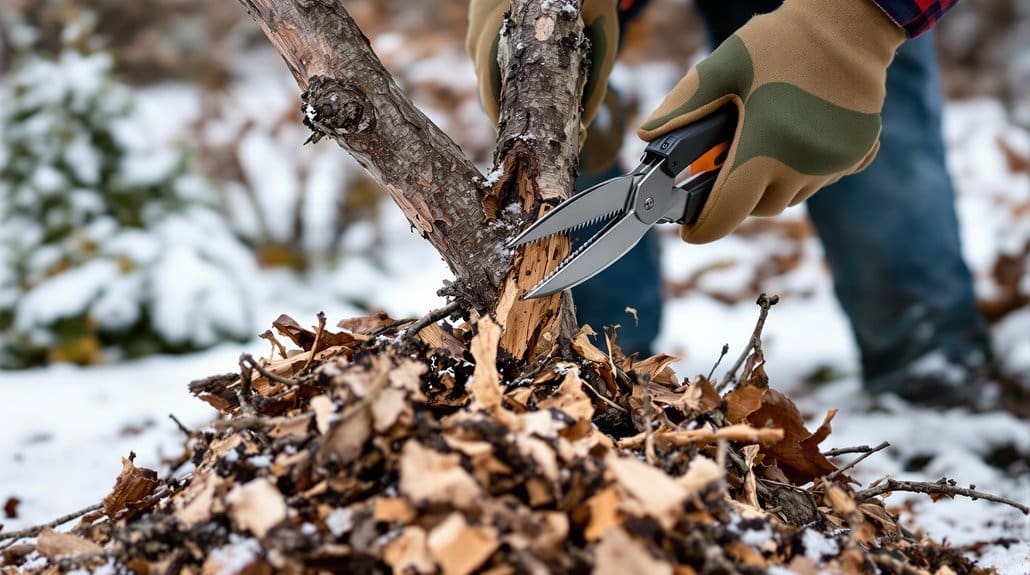
If you wait until late winter, you’ll find pruning problems stick out like sore thumbs, and that’s a good thing—start by taking care of the obvious stuff first. Step 1: Pruning in Winter means you’ll remove dead branches and remove diseased branches first, cutting back to healthy wood or the branch collar so decay and pests don’t move in. Step 2: Structural pruning fixes competing leaders, narrow crotches and crossing branches, so your deciduous trees and shrubs grow into a single strong form; don’t be shy, you’ll feel better afterward. Step 3: Thin crowded areas by taking up to a third of the wood, shorten inward growth on multi-stem plants, and use three-step cuts on big limbs to avoid tearing. For safer, cleaner cuts on home trees and shrubs, choose the right tools like garden rakes and proper pruning saws to finish the job.
Which Shrubs and Trees You Can Safely Prune Now (New‑Wood Bloomers, Roses, Shade Trees, Evergreens)
Now start with new-wood bloomers like butterfly bush, abelia and panicle hydrangeas, because you’ll get the best flowers if you cut them back now to encourage vigorous new stems; trust me, I’ve left a few too-long canes before and paid for it in a weak bloom. Next, prune roses while they’re still dormant—remove dead or weak canes and cut remaining healthy canes back to four or five buds so new growth is strong and well spaced. Something to keep in mind: dormant-season pruning of shade trees for structure and light, and light shaping of evergreens to remove damaged lower branches, will improve form and airflow, but don’t remove more than about one-third of growth or heavy-shear evergreens. For long-term results, pair pruning with proper lawn care and use of gopher repellents around planting areas to protect young roots and encourage healthy regrowth.
New‑Wood Bloomers First
Start by grabbing your pruners and taking a good look: plants that bloom on new wood—think abelia, butterfly bush, most roses, panicle and smooth hydrangeas, potentilla, rose of Sharon, summersweet, and many spireas—reward a hard prune now because they set their flowers on this season’s growth, not last year’s. Now, prune in late winter or prune in early spring, you’ll remove dead wood, open the center, and stimulate new growth, so don’t be shy about a hard-prune on shrubs that bloom on new wood. For roses, remove dead canes, cut to healthy buds, and accept that you might overdo it once—been there. Something to bear in mind: use sharp tools, limit cuts so you don’t remove more than a third. Consider also keeping your tools in good condition and using proper techniques to protect your lawn and plants, such as regular maintenance of lawn care equipment.
Dormant Trees And Evergreens
You’ve just finished getting brave with your new‑wood bloomers, so let’s move on to trees and evergreens that you can safely prune while they’re dormant. Now, dormant pruning favors deciduous trees like oak, maple and hornbeam, because structure shows without leaves and wounds heal with less pest pressure. Do remove dead or diseased branches first, make clean cuts just outside the branch collar, and never remove more than about one‑third of the canopy. Evergreen shrubs such as yew, holly and boxwood can be lightly trimmed for shape, but avoid heavy pruning that exposes large areas to winter desiccation. Something to keep in mind: late winter pruning on a mild dry day, with sharp sanitary tools, keeps things healthy. Call an arborist for big jobs. Choosing the right tools, such as a quality dethatcher and sharp pruners, makes pruning easier and more effective — consider investing in quality equipment.
Which Plants to Leave Alone Until After Flowering (Spring‑Bloomers, Clematis Groups 1–2, Some Hydrangeas)
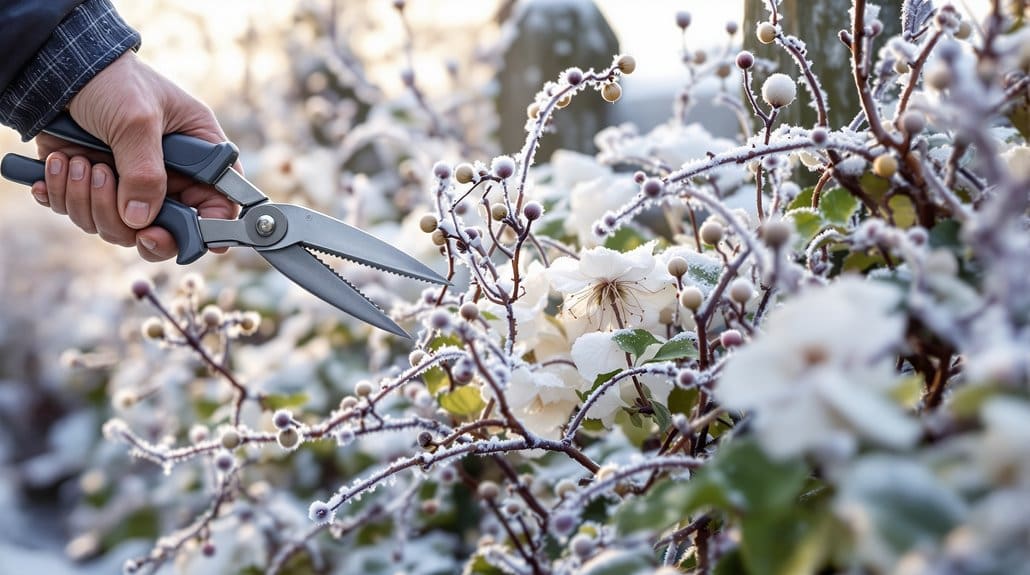
Now, don’t prune those spring-blooming shrubs like forsythia, lilac, azalea, rhododendron, mock orange, or viburnum in winter, because their flower buds formed last season and you’ll be cutting away this year’s blooms. Something to ponder: leave Clematis Groups 1 and 2 largely alone (Group 1 untouched, Group 2 only lightly trimmed) and avoid heavy cuts on bigleaf or oakleaf hydrangeas, deadheading or waiting until after they finish flowering instead. I’ve learned the hard way that when you’re not sure whether a plant blooms on old or new wood, it’s smarter to wait or check local guidance than to lose the show. For homeowners maintaining their property, also consider choosing fungicides and care products that are labeled for lawns and gardens and suited to typical residential use, especially when treating disease-prone areas lawn fungicides.
Spring‑Blooming Shrubs
If you want this spring’s blooms to show up, resist the urge to do heavy pruning now — those lilacs, forsythias, azaleas, rhododendrons, many viburnums, weigelas and most bigleaf hydrangeas set their flower buds last season, and cutting them back in winter will cut your flowers away. Now, here's what to do: treat spring‑flowering shrubs as treasures on old wood, don’t hard‑prune in winter, and wait until after flowering to shape or reduce size. Something to ponder: Hydrangea macrophylla and oakleaf hydrangeas carry bloom buds on last year’s stems, so post‑bloom pruning preserves next year’s display. If you’ve sheared too soon before, join the club—learned the hard way—and when unsure, wait until after flowering or check local guidance. Consider soil pH when planning long‑term shrub health and lime applications to maintain proper nutrient availability for your yard’s shrubs and lawn soil pH.
Clematis Groups 1–2
Because clematis in Groups 1 and 2 set a lot of their blooms on last year’s wood, resist the urge to do any heavy winter shearing or a “fresh start” that’ll cost you next spring’s flowers — trust me, I’ve learned that the hard way. Now, Clematis Group 1 early types bloom on old wood, so don’t prune in winter; you’ll remove their buds. Group 2 makes blooms on both old and new growth, so do only light pruning after winter, removing dead wood and shortening to the top healthy bud. Wait until spring to shape them, and treat these like other spring‑flowering shrubs: avoid cutting spring blooms. Something to keep in mind: if you’re unsure, play safe, remove only dead or damaged stems, then enjoy the show. For homeowners caring for their lawn edges and planting beds, using the right tools helps maintain plant health and a neat appearance, so consider investing in quality edgers and maintenance equipment to keep surrounding areas tidy and reduce accidental damage to shrubs and vines like clematis — lawn care equipment.
Old‑Wood Hydrangeas
Old‑wood hydrangeas demand a bit of patience, because pruners who rush in midwinter often pay for it with bare summer shrubs and wasted buds — trust me, I’ve hacked off a season or two of blooms in my time. Step 1: Know the type, Hydrangea macrophylla and oakleaf hydrangea bloom on old wood, so winter pruning will remove the flower buds set last year. Step 2: Do this, not that — don’t cut back hard in winter; only remove spent flowerheads down to the nearest pair of healthy buds or to the first strong bud below dead flowers. Now, wait to prune after flowering, shape lightly if needed, and check local guidance if you’re unsure. Something to ponder: patience preserves blooms.
How to Tell Old‑Wood vs. New‑Wood Bloomers Before You Cut
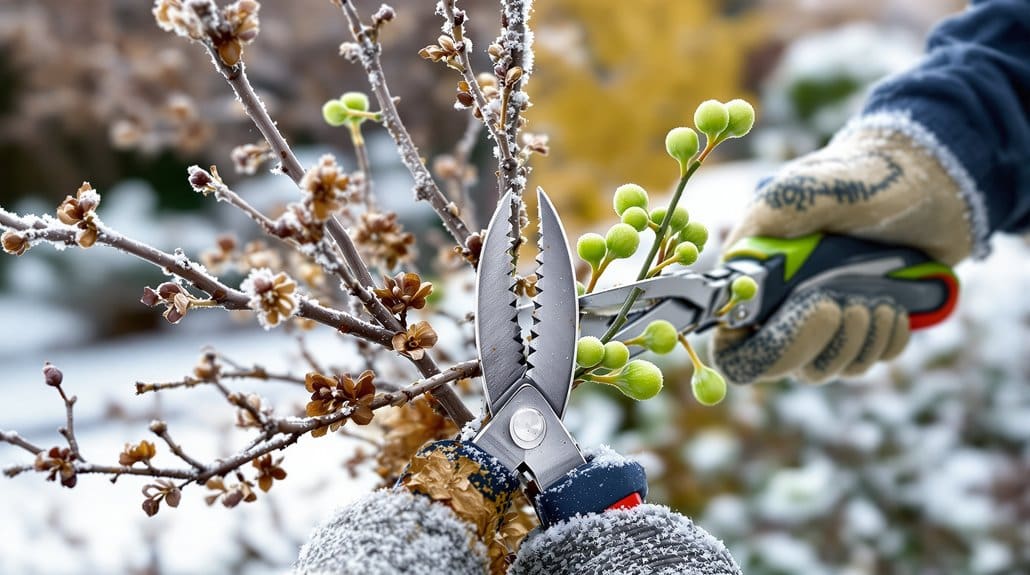
Think of this as a quick field test before you pick up the shears—look for plump, overwintering buds clustered along last year’s stems, because those are likely this season’s flowers and you don’t want to accidentally shave them off. Step 1, identify species: if it’s a spring‑flowering shrub like lilac or bigleaf hydrangea, it’s likely old‑wood bloomers; if it flowers in summer or fall, think new‑wood bloomers such as butterfly bush. Now, check flowering time from past seasons, or consult local resources to be sure. Something to keep in mind: when in doubt, remove only dead or diseased wood and wait until after flowering for major cuts, especially if you’ve cut wrong before.
Exact Timing Cues for Zone 7 and Other Common Climates (Buds, Leaf Drop, Last Hard Frost)
Timing matters more than most gardeners admit, and if you keep one simple rule in mind you’ll avoid a lot of sad, mistaken cuts: prune majorly in Zone 7 during late January through early March, after leaves have dropped but before buds begin to swell. Now, for a step‑by‑step cue: wait until deciduous trees have fully dropped leaves, then check buds — if they’re small and firm you’re in the dormant pruning window; if you see bud swell or green at the bud scale, stop. For old‑wood bloomers prune after blooms or visible bud swell; for new‑wood shrubs prune late winter while buds are tight. Something to ponder: time cuts after the last hard frost, and prune stone fruits in mid‑winter to reduce disease and sap‑bleed.
Pruning Techniques That Reduce Winter Damage and Disease (Proper Cuts, Tool Care, How Much to Remove)
If you want your cuts to heal and your plants to shrug off winter, start by making clean, confident cuts with the right tools and a clear plan. Step 1: Use sharp bypass pruners for small stems and a pruning saw for big limbs, cutting just outside the branch collar, never flush to the trunk — proper cuts matter. Now sanitize: wipe blades between plants with 70% isopropyl or a diluted bleach rinse, it’s tool sanitation that stops you from spreading disease. Step 2: For large branches, use the three-cut method, undercut, top cut, then final cut outside the collar to avoid bark tears. Something to ponder: remove one‑third of live crown max, on a mild dry day, above freezing.
When to Call a Pro and Check With Your County Extension (Large Trees, Safety, Local Timing Exceptions)
Now that you’ve got the right cuts and clean tools, you’ll need to know when to step back and call in help. Step 1 — Call a certified arborist if work is above ground you can’t reach safely, for removal of large limbs or hazardous trees, or when a branch exceeds about 2–3 inches; professional crews have rigging, fall protection, and insurance, so don’t chance it. Step 2 — Contact your county extension before big jobs to check local timing and species rules — some areas advise against winter pruning of stone fruit, others suggest pruning oaks in January to reduce oak wilt. Something to bear in mind: don’t attempt major canopy reduction, utility easement work, or chemical treatments alone; get a licensed pro. You’re part of a community, and asking for help is smart.
Some Questions Answered
What Plants Should You Cut Back in Winter?
Cut back summer-flowering shrubs and fall-fruiting berries, and prune dormant fruit trees and dead branches on shade trees and evergreens. Now, you’ll do dormant pruning for woody renewal, trim raspberries to ground, and shape evergreens for root protection and stem insulation. Something to keep in mind: avoid cutting spring-flowering shrubs that hold buds from last year. You’ll welcome soil amendment, container preparation, shade management, and fewer late season pests.
What Are the 3 C's of Pruning?
The 3 C’s of pruning are clean cuts, canopy considerations, and continuity considerations. Now, make clean cuts with sharp tools and sanitize, timing cues matter too. Do canopy considerations: remove dead, crossing, or weak wood, don’t remove more than about one-third, and mind cutting cost and contractor considerations. Something to contemplate: care considerations, climate considerations, and continuity considerations keep structure steady over seasons, don’t rush it.
What Plants Should You Not Cut Back for Winter in the Fall?
Don’t cut back spring bloomers, evergreen shrubs, or ornamental grasses now; leave seed heads left for birds and the wildlife habitat they support. Now, hold off on trimming late bloomers and frost hardy herbs, and let bulb foliage die back naturally. Something to ponder: native perennials generally stay untouched through fall. You’ll save blooms, shelter, and future growth—trust me, I’ve hacked an iris or two too soon.
What Perennials Need to Be Cut Back for Winter?
Cut back herbaceous perennials like hostas, daylilies, and hardy sedums now to 2–4 inches, but leave seedheads on ornamental grasses and late-season seeding plants for wildlife. Now, trim summer-bloomers later, and remove spent berry canes to the ground. Something to ponder: divide perennials, mulch layering, soil testing, deadheading timing, companion planting, root zone heating and protective coverings help; sanitize tools, you’ve learned that the hard way.