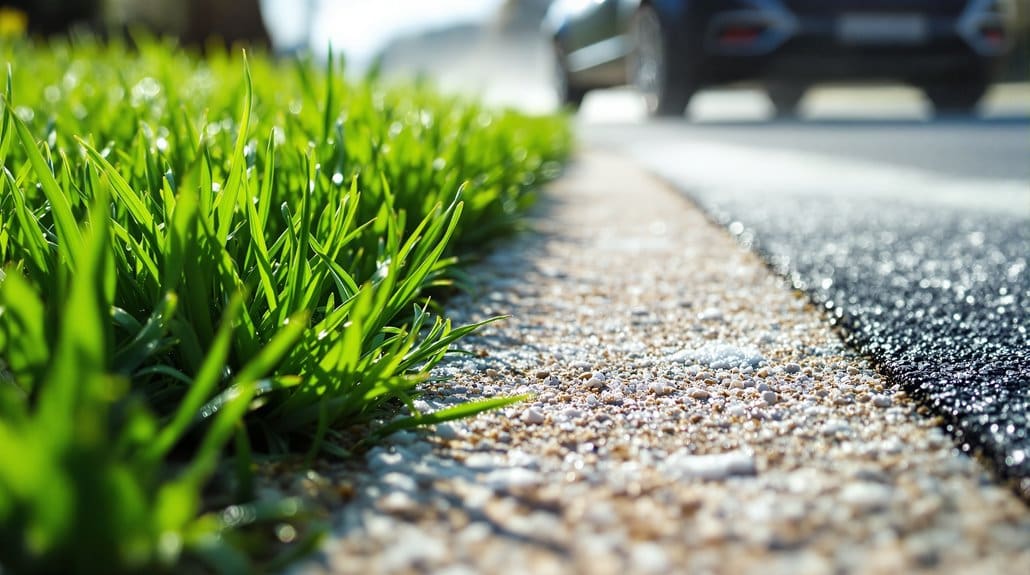
Salt spray from roads dries and poisons turf, so stop it at the edge: leave a 12–18 inch no‑salt buffer, shovel early, and don’t pile treated snow against grass. Now pick gentler deicers—calcium or magnesium chloride over plain rock salt—and apply just a handful to icy spots with a spreader, keeping treatments back from turf. Something to keep in mind: install temporary burlap screens or a gravel strip, then flush and gypsum‑treat salty soil in spring to repair damage; more tips follow.
Some Key Points
- Keep a 12–18 inch no‑salt buffer between pavement and lawn; do not apply deicer within that strip.
- Use calcium or magnesium chloride sparingly and target icy spots with a handheld spreader for even, minimal coverage.
- Install removable 3–5 foot snow/burlap screens or plant a 12–18 inch gravel/mulch buffer to block and catch salt spray.
- Shovel or snow‑blow early and remove piled snow away from lawn edges to prevent concentrated salt runoff.
- In spring, flush affected soil with repeated soak‑and‑drain cycles and topdress or gypsum‑treat before reseeding.
How Road Salt From Roads and Driveways Harms Lawn Edges
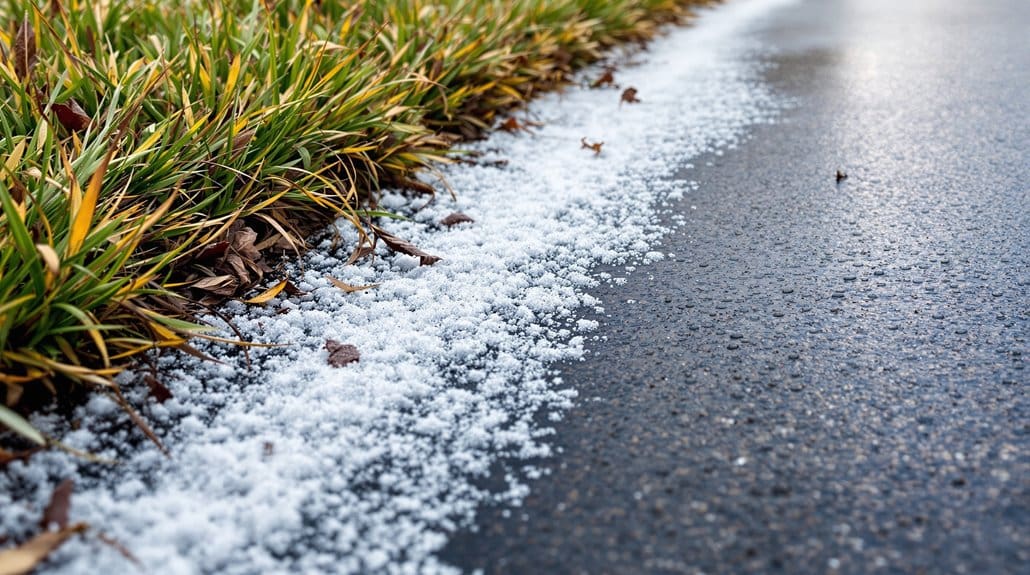
If you’ve ever wondered why the strip of grass nearest the road looks tired by mid‑summer, here’s the blunt truth: road salt finds its way into lawn edges quickly and it doesn’t leave quietly. You see, salt from roads and driveways sprays, melts and runs off, carrying chloride straight into your turf, and that salt buildup in the root zone dries and poisons grass. Now, don’t beat yourself up — we’ve plowed snow onto the lawn too. Here’s what to do: keep a 12–18 inch untreated buffer strip, or better yet a gravel strip or berm to catch runoff before it hits the grass. Something to bear in mind, try to plant turf at least about 2 m from salted pavement when you can. Consider installing a gravel strip along the pavement edge to intercept runoff and protect your lawn.
Pick Safer Deicers (Calcium, Magnesium, Potassium Options)
Now that you know how and where road salt sneaks into your lawn, let’s talk about picking deicers that do less damage. Now, choose calcium chloride when you need salt that works in bitter cold and won’t need constant reapplication, it cuts repeats and total salt load. Something worth noting: magnesium chloride works well below freezing and is gentler per use than rock salt, but don’t overdo it. If you want low corrosion and a nutrient boost, potassium chloride can help, though it’s only good down to about 20°F and can still burn turf if overapplied. Try calcium magnesium acetate if budget allows. Do this: apply de-icing products sparingly, use a spreader for even cover, and keep a 12–18 inch buffer from grass to protect edges. For homeowners, organizing and storing these products safely in your shed helps prevent accidental overuse and preserves product life; see our shed organizers for options.
When and How to Salt Less : Timing, Dosage, and Spreader Tips
Now start by shoveling or snow-blowing early and often so you don’t have to rely on chemicals later, because I’ll admit I’ve piled salted snow against the lawn before and paid for it. Do this: salt only when ice or compacted snow is present, in the 15–20°F and warmer window for common sodium chloride, apply about a handful (30–50 g) per square yard to icy spots, and make one slow pass with a handheld or push spreader to avoid doubling up. Something to keep in mind: mix in sand or grit for traction and leave a 12–18 inch no-application buffer along grass, and don’t pile treated snow near planting edges. Also consider storing de-icing products in a proper fuel-safe container and keeping them covered and dry to prevent moisture clumping and accidental spills.
Salt Early, Shovel Often
You’ll want to start early and keep moving: shovel or snowblow fresh snow before it gets packed down, because loose powder needs far less deicer and often means you won’t have to salt at all for light storms. Step 1 — clear promptly, don’t wait. Now, apply deicer sparingly, a handful per square yard, and target icy spots, not the whole driveway; trust me, I once blanketed everything and regretted it. Step 2 — use a handheld or push spreader, aim carefully, keep a 12–18 inch buffer from lawn and planting edges to cut salt spray onto turf. Something to weigh: pre-wet granular deicers or thin liquid anti-icing before storms, they reduce bounce and lower overall salt use. Consider using a hose timer to automate watering and minimize additional stress on lawn edges from manual overwatering.
Measure And Spread Sparingly
Step 1 — measure and spread sparingly, because even well-meaning salters can do more harm than good when they pour it on. Now, do this: apply deicer only to actual paths and icy spots, aiming for about 30–50 g per square yard, roughly a handful, so you don’t overload the verge. Use a handheld spreader or small push model, set light, make one slow pass, and resist extra rounds — been there, dumped too much, learned the hard way. Something to keep in mind: keep a 12–18 inch buffer between pavement and grass, choose higher-efficiency products in smaller doses, mix with sand for traction, and when you finish, sweep salt back onto pavement so crystals don’t drift into your lawn. Choose a durable, easy-to-pour gas can for safe refilling and storage of equipment gas can selection.
Shovel, Chip, and Remove Snow First to Reduce Salt Need
Now, shovel or run the snow blower early and often, taking off just a few inches at a time so you don’t compact snow into stubborn ice. Something to keep in mind: chip or pry up any hardened patches with an ice chipper or square‑point shovel before you reach for salt, because deicers barely work on thick, compacted ice. Do this first, remove piled snow away from lawn edges, and you’ll use far less salt — trust me, I’ve learned the hard way. Also consider using lawn-friendly equipment to clear snow and minimize damage to turf and nearby irrigation components.
Shovel Early And Often
Frequently, the best defense against salt damage starts before the first flakes pile up, so grab your shovel or snow-blower as soon as you see 1–2 inches and get it off hard surfaces before it compacts into ice. Now, shovel early and often, every few hours in a storm if you can, so you avoid chipping and overusing deicer later. Clear a 12–18 inch buffer zone along edges, don’t pile snow into concentrated snowbanks that create salt runoff, and move plowed piles away from turf. Something to keep in mind: doing this saves product and lawn grief, and yes, we’ve all skimped once and paid for it. Do this, not that—remove snow first, salt sparingly, protect the grass. For homeowners, having the right lawn care equipment on hand makes these tasks faster and reduces long-term damage.
Chip Ice Before Salting
Chip away at that slick surface before you reach for a bag of salt—do it early, do it right, and you’ll cut how much deicer you need by a lot. Now, grab an ice chisel or metal-edged shovel and chip ice down to pavement, because deicers work on loose, thin ice, not thick slabs. Do this for driveway or sidewalks, then remove the debris instead of piling it on the lawn, or you’ll funnel salt into turf. Something to keep in mind: rock salt won’t help below about 15–20°F, so don’t scatter it and hope. Apply sparingly, about one handful per square yard where you’ve exposed pavement. Been there — chipping first saves grass, money, and heartache.
Create a 12–18 Inch Buffer Zone Between Pavement and Turf

You’ll want to carve out a tidy 12–18 inch strip of gravel, mulch, or decorative rock between the pavement and your lawn, because that narrow band is your first line of defense against salty spray and runoff; think of it as a sponge and barrier in one — it catches and slows salty water so it drains into permeable material instead of seeping straight into grass roots. Now, keep that 12–18 inch buffer continuous, grade the edge slightly away from turf, and use gravel mulch decorative rock so meltwater soaks into the strip, not the grass. Don’t over-salt to the edge; stop treatments back 12–18 inches and use a handheld spreader. In spring, rake out contaminated material, flush soil to leach residual salt, and plant salt-tolerant groundcover to help trap future spray.
Build Physical Barriers and Buffer Strips to Intercept Spray
Now let’s put a few simple barriers in place so salty spray and slushy runoff don’t eat your lawn edge alive. Step 1 — lay a 12–18 inch gravel buffer strip along driveways and sidewalks, it catches concentrated salt before it soaks into turf roots; do this, not scatter beyond pavement. Step 2 — build low curb edging or a slight berm with a 2% slope away from grass so meltwater is steered toward drains or mulch beds, not your lawn. Step 3 — in winter add removable snow fence screens or burlap 3–5 feet tall to block spray. Something to ponder: plant salt-tolerant shrubs beyond a 2 m setback, maintain a 12–18 inch no-salt zone, and be patient.
Regrade and Install Simple Drainage to Redirect Salty Runoff
When water from melting snow and the salt it carries keeps pooling at your lawn edge, regrading and adding a few simple drains will stop most of the damage before it starts; let’s go through the practical steps so you don’t end up wasting time on fixes that don’t work.
Step 1 — Regrade: regrade hardscapes to a minimum 2% slope away from turf, about 1/4 inch per foot, so salt-laden runoff heads to the street, not your grass. Now add shallow channel or trench drainage sized for 1–2 inches/hour, it really helps.
Step 2 — Buffer and drain: install a 12–18 inch gravel buffer between pavement and lawn, and contemplate a French drain just upslope to carry saline water to a safe discharge. Something to bear in mind: low curbing or a berm redirects concentrated meltwater, do that instead of hoping for magic.
Temporary Screens and Planting Choices That Block Salt Spray
Now start with a simple screen: you’ll want to stretch burlap or snow fencing 3–4 feet high along the pavement to catch spray and drifting salt, because I learned the hard way that nothing’s worse than watching your lawn brown from the road. Then plant a narrow strip of salt-tolerant shrubs or coarse gravel 12–18 inches wide a couple feet back from the pavement, the living screen or rock trench will trap runoff and protect roots better than just hoping the snowplow won’t oversalt. Something to bear in mind: use evergreen or salt‑tolerant species close to the road and plan to remove temporary windscreen panels in spring, then give the turf a heavy flush of water to wash out any built‑up salt.
Burlap Or Snow Fencing
Burlap screens and commercial snow fencing give you a simple, low-cost line of defense that actually works if you set it up right, so let’s walk through the basics: place a 3–4 foot tall porous fence about 1–2 feet back from the pavement where plow splash and salt spray hit hardest, and run it in fairly long, continuous stretches — aim for at least 150 feet along the worst-exposed edges — because short gaps just let wind and traffic scatter salt farther than you expect. Now, use burlap fencing or mesh, porous not solid, so snow settles on the fence instead of whipping salt onto plants. Add a 12–18 inch buffer strip of mulch or gravel, clear salty snow in spring, then flush soil to leach residual salt from the root zone.
Evergreen Shrub Windbreaks
Evergreen windbreaks—think rows of tough arborvitae or a hedge of Rugosa rose—give you a living shield that actually stops a lot of salt spray before it ever hits the turf, so plant them with purpose and a bit of common sense. Now, plant salt-tolerant evergreens at least 12–18 inches from the driveway edge, and use multiple-row plantings—two staggered rows 3–6 feet apart—to make a thicker windbreak that captures road spray and slows wind. Something worth noting: avoid sensitive broadleaf evergreens close to salted surfaces, I've learned the hard way. In winter, add temporary snow fence; after thaw, brush or rinse salt off lower branches, then flush soil to move sodium away from roots. Do this, not that.
Salt‑Tolerant Plant Strips
You’ve already seen how a living windbreak can stop a lot of spray before it hits the lawn, so let’s build on that with narrow, salt‑tolerant strips and winter screens that actually take the hit for your turf.
Step 1 — Do this: plant a 12–18 inch buffer strip of salt-tolerant shrubs or grasses right at the driveway edge, rugosa rose or tall fescue work, they’ll intercept spray and runoff. Step 2 — Do this: add a temporary burlap or snow-fence 3–4 feet high in winter, it saves young plants. Step 3 — Do this: use a gravel strip nearest the pavement and a planted strip behind it to cut salt infiltration. Something to keep in mind: removable planter or straw-mat boxes can cut deposition dramatically. Don’t plant tender species too close, you’ll thank yourself later.
Flush and Leach Salt Out of the Root Zone (When and How)
Now’s the time to flush salt from the root zone, and while it’s tempting to blast water everywhere, do it carefully so you move the salt down and out instead of just puddling it back into the grass. Now, here’s what to do: wait until soil thaws, then use a gentle, wide spray to soak the 12–18 inch buffer strip, repeating soak-and-drain cycles three to four times so dissolved salt leaches below feeder roots. Something to ponder: for heavy buildup, apply gypsum first so calcium frees sodium for leaching, then follow with heavy watering. Do this during thaw or early growth, and if water just pools, fix drainage or add temporary drains before repeating. You’re not alone—been there, learned that.
Use Gypsum and Topdressing to Repair Salt‑Affected Soil
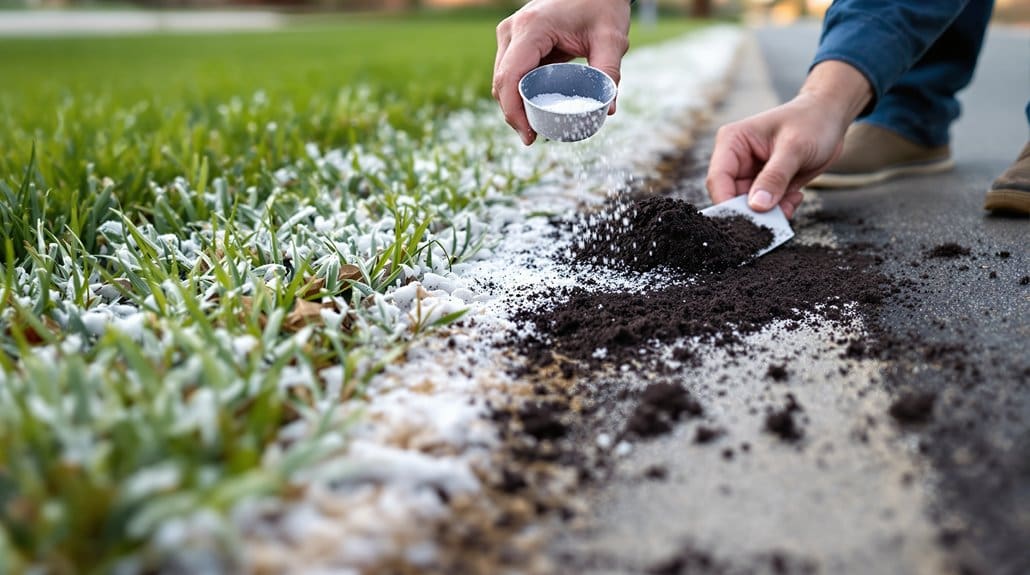
When roadside salt has left a stubborn white crust or thin dead strip along your lawn, a smart one-two punch is to apply pelletized gypsum and follow it with topdressing, and yes, it works better than just hoping rain will wash the stuff away. Step 1 — spread gypsum evenly with a lawn spreader at about 20–40 lb per 100 sq ft, two passes near driveways if needed, don’t overdo it, then water to dissolve and leach displaced sodium-sulfate below roots. Now flush until pooling, repeat 3–4 times when unfrozen. Step 2 — topdress salt‑affected soil with 1/4–1/2" compost or clean topsoil to dilute salts and make a seedbed. Something to weigh: overseeding after leaching, once soils warm.
Quick Seasonal Checklist: Inspect, Repair, and Prevent Next Winter
Spring’s the time to give your lawn edges a careful once‑over, because if you skip it those thin brown scars from winter salt can turn into a bigger repair job later. Step 1 — Inspect within about 2 m of roads and driveways, look for white crust, browning, thinning; remember areas ≤0.6 m took the worst salt damage. Now, repair: rake away contaminated debris, topdress edges with 1/4–1/2 in compost or 2–3 in mulch as a temporary buffer, then overseeding bare spots with salt‑tolerant mixes. Step 3 — Flush salt-contaminated soil when thawed by watering until pooling, repeat 3–4 times. Something to contemplate: apply pelletized gypsum, water it in, and keep a 12–18 in buffer between deicer and turf next winter.
Some Questions Answered
How to Protect a Lawn From Road Salt?
You can protect your lawn from road salt by creating buffers and choosing tougher plants. Now, install barrier plantings and windbreak installation to slow spray, use soil amendments and irrigation timing to flush salts in early spring, and seed or overseed with salt tolerant grass rather than stubborn favorites that die. Something to keep in mind: lay gravel or mulch edges, apply gypsum, and use gentler deicers—yes, we’ve all learned that the hard way.
How to Prevent Road Salt Runoff?
“A stitch in time saves nine.” Now, prevent road salt runoff by grading toward drainage swales and installing permeable pavements, so water soaks in, not into your turf. Build vegetative buffers and diversion berms to catch and filter salty melt, and use temporary barriers during storms. Here’s what to do now: avoid piling salted snow on grass, flush edges after big melts, and yes, we’ve all skimped on upkeep—don’t.
How to Neutralize Road Salt on Lawn?
You flush salted areas with seasonal watering until pooling, then test with soil testing to check salinity, gypsum or alkaline amendment if sodium’s high, and remove crusts before topdressing. Now overseed with salt-tolerant plant selection like tall fescue, and install a mulch barrier or gravel strip to block spray. Something to keep in mind: be patient, you’ll redo spots, we’ve all learned that the slow fixes work best.
How to Protect Against Road Salt?
Use mulch buffers and barrier plantings now, and favor salt tolerant grasses at the edges so you stop losing turf every spring. Grade or choose porous pavements to move meltwater away, not across, and flush soils after thaw, applying gypsum if needed. Something worth weighing: temporary burlap fences in winter really help. You’ll learn from past mistakes, but these seasonal practices will protect your lawn, reliably and with less fuss.