Stop heavy nitrogen now and sharpen your mower—trust me, I learned the hard way—then pick a true southern winterizer or a colorant. Now, set final heights (St. Augustine higher, bermuda low, zoysia moderate), follow the one‑third rule, and get a soil test before adding potash. One thing to keep in mind: overseed only if you’ll irrigate and manage disease. Here’s the thing—you’ll protect crowns, cut stress, and set up a much easier spring if you follow these steps, and there’s more practical detail ahead.
Some Key Points
- Stop heavy nitrogen by mid–late October and switch to a low‑N, higher‑K winterizer based on a current soil test.
- Raise mowing height for the final cut, follow the one‑third rule, and sharpen blades to reduce stress and disease.
- Reduce irrigation to about ½–¾ inch every 10–14 days, water early morning, and avoid watering before frost.
- Manage pests and diseases proactively: treat grubs in late summer and consider fungicide for recurring large patch or overseedings.
- Choose overseed for true winter green if you accept extra care, or use colorants for low‑maintenance winter color and faster spring recovery.
Timing: When to Stop Feeding and Start Winter Prep

If you want your warm-season lawn to survive winter without a fuss, now’s the time to stop feeding it heavy nitrogen and start thinking like a winterizer, not a grower. Now, watch soil temperatures; once they stay below about 65°F, usually mid–late October for much of the South, you stop feeding nitrogen-heavy mixes. One thing to weigh: switch to a low-N, higher-potassium winterizer to raise tissue potassium and boost cold tolerance, or apply murate of potash if a soil test shows K deficiency. Here’s the thing, don’t use northern high-N blends—they’ll soften turf and invite trouble. Do fall fertilization several weeks before frost, base choices on a current soil test, and let turf harden for dormancy. Consider slow-release fertilizer options to provide steady nutrients and reduce risk of leaching slow-release fertilizers.
Final Mow and Blade Care for St. Augustine, Bermuda, and Zoysia
Now, set your final mower height for each grass—St. Augustine at about 2.5–4 inches to protect the crowns, Bermuda at 1–1.5 inches so you don’t stress the turf, and Zoysia at 1–2 inches, being careful not to scalp since it regrows slowly. One thing to bear in mind: sharpen your blades before that last cut, because dull blades tear grass, invite disease, and slow spring recovery—yeah, I’ve mowed with dull blades and regretted it. Here’s the thing, only mow on dry days above roughly 50°F and never touch frosted or frozen grass, do this and you’ll give your lawn a much better start after winter. Choosing the right blade makes a big difference; consider blade type when replacing or sharpening to match your mower and grass type.
Final Mower Height
When growth finally slows and soil temps drop into the mid‑60s, do a careful final mow and leave your grass a little taller than you might think you need to — this isn’t the time to shave it down. Now, set your cutting height to winter levels: St. Augustine 2.5–3.5", Zoysia 1–2", Bermuda 0.5–1.5". One thing to keep in mind, follow the one-third rule on that final mow, never removing more than a third at once, or you’ll stress crowns before dormancy. Here’s the thing: sharpen mower blades beforehand so cuts are clean, and don’t mow frosted or wet grass — that tears tissue and compacts roots. You’ve probably cut too low before; you’re not alone, and this time you’ll protect the lawn. Proper blade care and maintenance improve cutting performance and extend equipment life, so inspect and sharpen blades for clean cuts before your final mow.
Blade Sharpening Tips
Sharpen those blades before you touch the grass — seriously, a clean edge makes the difference between a crisp cut and shredded tips that invite disease and slow recovery. Step 1: sharpen mower blades before your final mow, you’ll thank yourself when St. Augustine’s wide blades and Bermuda’s fine blades don’t fray. One thing to ponder: set St. Augustine’s cutting height to 2.5–4 inches, Bermuda ~0.5–1.5, Zoysia ~1–2, then cut. Step 2: restore a 30–45° bevel angle with a file or grinder, honest mistakes happen, I once overground one edge. Step 3: check blade balance to avoid vibration, clean sap off, store blades or mower in dry, climate-controlled space. Here’s the thing: do this, not rough, dull hacks. For routine care, invest in quality edger blades and follow simple maintenance blade care to keep your equipment lasting longer.
Fertilizer Choices: Southern “Winterizers,” Potassium, and Soil Tests

Now, start by choosing a true southern “winterizer” with low nitrogen and higher potassium, not the high‑N northern mixes that’ll push tender growth right before dormancy. One thing to ponder: only apply potassium, like muriate of potash (0‑0‑60), if a soil test shows K is low — too much K can burn foliage and upset magnesium uptake, so follow extension lab rates. Here’s the thing, get a routine soil test through your local extension so you’ll know whether to use a winterizer or a straight potash shot, and you’ll avoid the common mistake of overfeeding with nitrogen late in the season. Consider adding lime products if your soil test shows low pH and calcium needs to be corrected for optimal warm‑season turf health and nutrient uptake, since many southern lawns benefit from soil pH management.
Southern Winterizer Selection
Curious which “winterizer” to pick for your warm‑season lawn? Step 1 — know your grass and goals. For bermuda and zoysia, choose a southern winterizer with low nitrogen and higher potassium (K), like a 16-0-4 style, to strengthen roots without pushing tender late shoots, because late-season fertilization with high N invites winter injury. Now, one thing to bear in mind: don’t blindly add muriate of potash unless a soil test shows low K, or you’ll risk foliar burn and nutrient imbalance. Here’s the thing, you’ll learn from past overenthusiasm—routine N, P, K during the season cuts the need for special late feeds. Step 2 — get a lab soil test, then act on the results. Our shop carries supplies tailored to homeowner needs, including reliable potassium fertilizers and testing tools.
Potassium: When To Apply
If you want the best winter survival from your bermuda or zoysia, start by testing the soil—don’t guess—because applying potassium only helps when the lab shows a true deficit, and trust me, I’ve wasted time and money dumping muriate of potash on lawns that didn’t need it. Now, here’s what to do: get soil test results, compare them to extension recommendations, and only treat a soil K deficiency with a winterizer higher in potassium to build root hardiness rather than green growth. One thing to keep in mind, avoid excessive potassium, it won’t help and can cause foliar burn or block magnesium. Here’s the thing: use murate of potash(0-0-60) only to correct measured shortfalls, not as a blanket fix. For best results, pair appropriate soil amendments with regular maintenance and equipment suited to homeowner lawn care.
Test Soil Before Fertilizing
Before you reach for a bag of “winterizer,” take a breath and get a lab soil test from your local extension—trust me, I’ve wasted money and patience guessing at potassium needs—because the single best thing you can do for bermuda or zoysia is to know exactly what your soil lacks. Now, get that soil test, and read it. One thing to ponder: southern winterizer blends should be low N and higher in potassium if the report shows K deficiency, otherwise skip heavy K fertilization. Here’s the thing, don’t use northern high‑N mixes when soil temperatures dip below about 65°F, they spur tender growth and freeze risk. Do follow recommended K rates to avoid burn, and plan fall application with dormancy in mind.
Adjusting Irrigation: How Much and When to Water in Cooler Weather
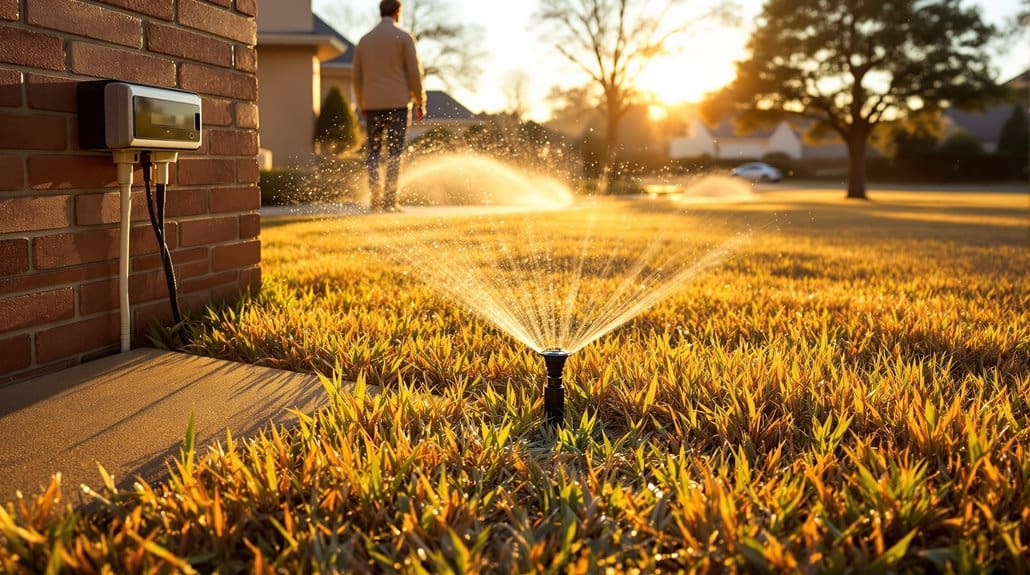
When temperatures drop and your warm-season lawn quits its summer sprint, you’ll want to cut back on watering so you don’t drown what’s trying to rest; think roughly ½–¾ inch every 10–14 days instead of the 1–1.5 inches per week you used in July. Now, adjust irrigation to those amounts, and water early in the morning so blades dry during the day, which lowers disease risk. One thing to keep in mind: skip watering before frost events and don’t irrigate when air temps are near or below 40°F, or you’ll get frozen droplets—been there, not fun. Monitor signs—folded leaves or bluish-gray turf—and only run irrigation in dry stretches. Here’s the thing: for zoysia, err on the drier side; it rewards restraint.
Pests and Diseases to Watch in Mild Winters (Large Patch, Grubs, Winter Weeds)
You’ve cut back irrigation and kept the blades from staying wet all night, so now pay attention to a few pests and diseases that like mild winters almost as much as you like skipping chores; they’ll show up different ways and need different fixes. Now, one thing to ponder: large patch shows as tan rings on your warm-season lawn when soil temperatures sit in the 50–70°F range, so use soil moisture management and ponder a fall fungicide if it’s recurring. Here’s the thing about grubs: they make turf spongy in fall and winter, you prevent them best by treating late summer–early fall when larvae are small. And winter weeds respond to early autumn pre-emergent herbicide, or spot-treat on green turf.
Winter Green Options: Ryegrass Overseed vs. Turf Colorants
You’ll want to pick a winter-green strategy that fits your lawn life, because the wrong choice can mean extra work, disease headaches, or a slow, cranky spring changeover. Now, choose ryegrass overseeding if you crave true green through winter and don’t mind the extra care; ryegrass overseeding establishes in about 7–14 days, needs irrigation needs met, regular mowing, and often a preventive fungicide on bermuda zoysia to lower large patch disease risk. One thing to contemplate: overseed can delay spring changeover back to warm-season lawn growth. Here’s the thing, turf colorants give immediate green with minimal maintenance, avoid overseed-related disease and moisture, and let winter dormancy and spring changeover happen fast. Do this, not that.
Protecting Dormant Turf and Quick Spring-Ready Tasks
Even though your warm‑season lawn looks asleep, don’t treat it like it’s dead — the crowns are alive beneath the surface, so avoid heavy traffic that can bruise them and cause slow, spotty springs. Step 1: protect — when turf goes dormant as soil temperatures fall below roughly 50–55°F, remove leaves and debris so sunlight and air reach crowns; bag or compost, don’t smother. Step 2: prep — raise mower height for your final cut, stop regular mowing, service blades and equipment; trust me, I once waited too long and cursed a dull blade. Step 3: water and feed — irrigate sparingly, morning soaks only every 10–14 days, skip nitrogen winterizer fertilizer unless a soil test calls for potassium. One thing to keep in mind: apply pre-emergent herbicide timed to your spring wake‑up.
Some Questions Answered
How to Care for Warm-Season Grasses?
You’ll protect warm-season grass like a pro, not panic—seriously, it’s your lawn, not a death star. Now, start with soil testing, adjust fertilizer choice to low-N winterizer, and use irrigation scheduling to water sparingly. One thing to bear in mind: shade management and thatch control improve health, and seed overseeding or root pruning only when proven needed. Monitor pests, admit past overwatering mistakes, and act steadily, not frantically.
How to Keep Warm-Season Grass Green in Winter?
Keep warm-season grass green by overseeding or using a turf colorant, but don’t fertilize late, since fertilizer timing and added N invite frost damage. Now, manage irrigation scheduling to prevent drought stress, water mornings sparingly, and improve root development with soil amendments if needed. One thing to ponder: shade management and microclimate effects shape disease prevention, so remove leaves, sharpen blades, and limit frosty foot traffic—learn from past mistakes, then relax.
When to Cut Warm-Season Grasses?
You cut warm-season grasses through fall, tapering mower frequency as soil temperatures fall and growth slows. Now, keep the best height slightly higher for the final mow, check soil moisture so you mow only dry turf, and confirm blade sharpness before starting. One thing to keep in mind: follow clipping management and edge maintenance to avoid matting, stop nitrogen late, respect seasonal timing for cold tolerance. Here’s the thing: don’t mow frost.
How to Winterize a Southern Lawn?
Here’s what to do now: do a soil testing first, then stop heavy N and use a potassium winterizer if needed. One thing to keep in mind: edging techniques and thatch removal before dormancy, don’t mulch too thickly when doing mulch application. Adjust irrigation, cut back to ½–¾ inch every 10–14 days, protect against frost, and pick seed selection carefully. Compost topdressing helps recovery; been there, learned the hard way.