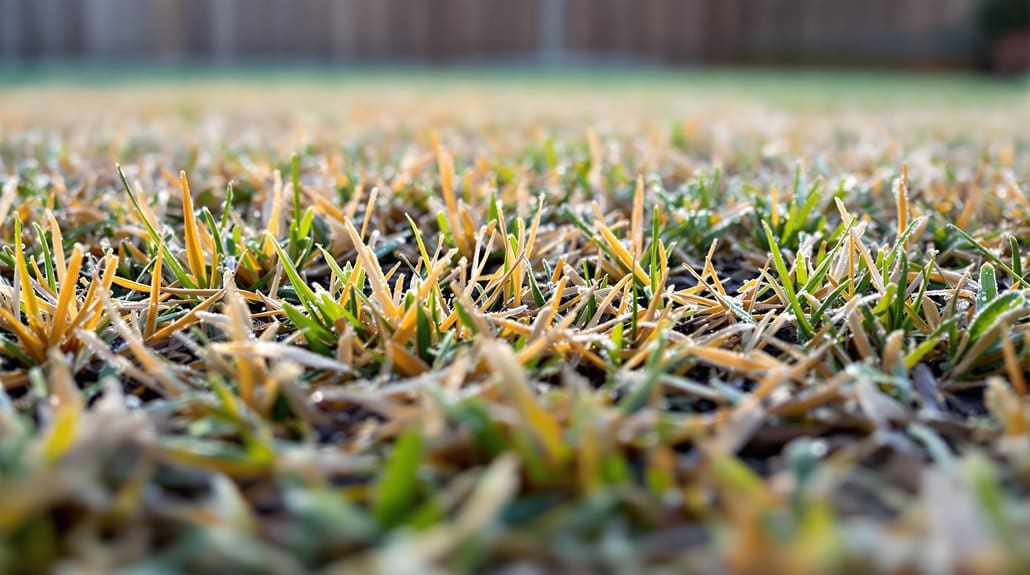
Quick Check: Is Your Lawn Dormant or Dead? — You’re not imagining it, lawns often go straw-colored and sleep through winter; now, do this: gently tug a few clumps—if blades resist and crowns stay intact, it’s likely dormant, not dead. One thing worth evaluating: dig a small plug and rinse roots—white, firm roots mean life, brown mush means loss. Don’t fertilize or spray; water briefly if dry. Here’s the thing: try a short watering trial for a few days, and if you want the step-by-step fixes and repair options, keep going.
Some Key Points
- Uniform straw-colored grass across the yard during cold spells usually indicates dormancy, not death.
- Perform a gentle tug test; resistance and intact crowns mean likely dormancy, easy pull-outs suggest dead patches.
- Dig and rinse a small plug to inspect crowns and roots; healthy roots are white and firm, dead roots are brown or mushy.
- Short watering (3–5 days) that triggers green regrowth confirms dormancy; no change suggests loss.
- Avoid fertilizer, weed killers, heavy traffic, and major repairs until visible green-up confirms recovery.
Quick Check: Is Your Lawn Dormant or Dead?
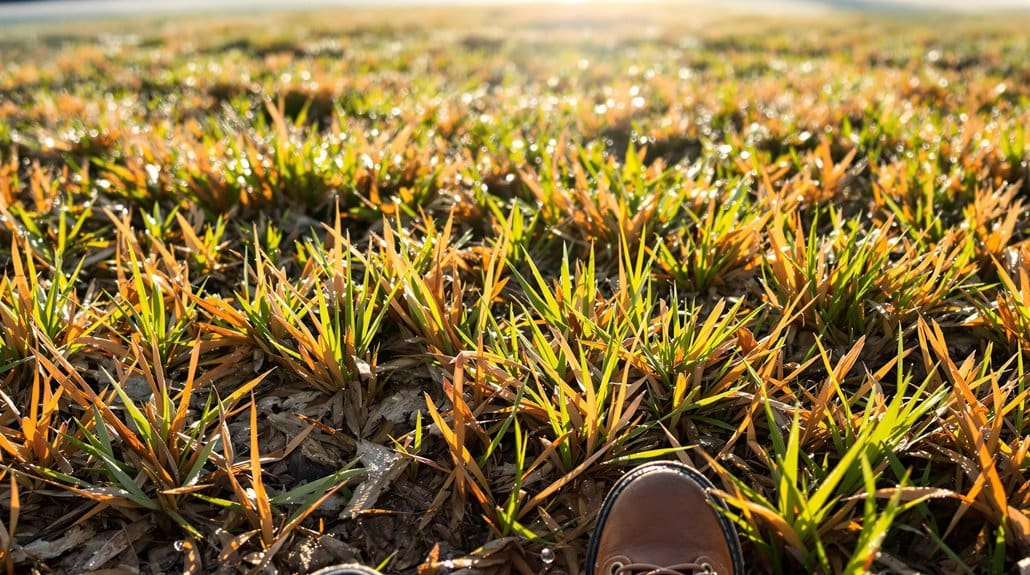
Now, before you panic and start tearing up every square foot of turf, do a few quick checks that’ll save you time and money. Now, one thing worth thinking about is uniform color: if the whole yard’s that straw tone during heat or winter, you’re probably looking at dormant grass, not dead grass, so don’t rush to reseed. Here’s the thing, you’ll want to do a gentle tug test in a few spots — sorry, I learned the hard way by yanking too hard — because blades that resist removal with roots intact usually mean dormancy, while easy pull-outs hint at death. Also think about drought stress and timing for your grass type, be patient, and don’t overreact. For typical homeowners maintaining turf, understanding specific care for Kentucky bluegrass can help you decide whether to wait or act.
Simple Tests You Can Do Now (Tug Test, Crown/Roots, Watering Trial)
Now, start with a simple tug test: gently grab a tuft and pull—if the crown holds fast and roots feel anchored, you’re probably looking at dormancy, but if it slips out with loose or missing roots, that patch may be dead. One thing to keep in mind is digging a small plug and rinsing the soil away to inspect the crown and roots—white, firm roots and a plump crown mean life, while brown, mushy roots or a collapsed crown tell a different story. Here’s the thing, don’t overwater or panic on first sight; try these hands-on checks first, and yes, I’ve mistaken dormant grass for dead before, so trust what the roots and crown are saying, not just the color. Properly maintained equipment, including a well-sharpened blade, makes clean cuts that help turf recovery, so consider checking your blade sharpener before spring.
Tug Test Technique
Grasping a small clump of brown grass and giving it a gentle tug is one of the quickest, cheapest checks you can do to tell if your lawn is sleeping or gone for good—so let’s get your hands dirty and stop guessing. Step 1 — tug test: grab a tuft, pull gently; if blades resist and the base holds, it’s likely dormant, not dead or dormant by mistake. Now, don’t yank hard like I did the first time and panic. One thing worth considering: if the bunch comes out easily with loose or missing roots, the lawn is dead there. Here’s the thing — repeat across the yard, note patterns, and you’ll know whether you’re dealing with seasonal sleep or real loss. Also consider inspecting nearby mower blades and cutting habits, since dull or improperly chosen blades can damage turf and affect recovery mower blade selection.
Inspect Crowns & Roots
Start by digging up a small plug, because seeing the crown and roots up close will tell you more than another worried walk around the yard—trust me, I learned that after too many panicked bagging sessions. Now, gently tug a clump: if the crown stays anchored it’s likely dormant, if grass pulls out with soil the roots may be dead. Carefully wash that plug; healthy roots are white and firm, dead ones go brown, black, mushy, or crumbly. One thing to ponder: a plump crown at the soil surface usually means viability and recovery is possible. Here’s the thing—try a short watering trial for 3–5 days; green regrowth confirms dormancy, no change suggests loss. You’re not alone in mistakes; we’ve all misread it. If you want to make future checks easier, keep a few basic lawn care tools on hand for regular inspections and minor repairs.
How Timing, Species, and Weather Explain Browning
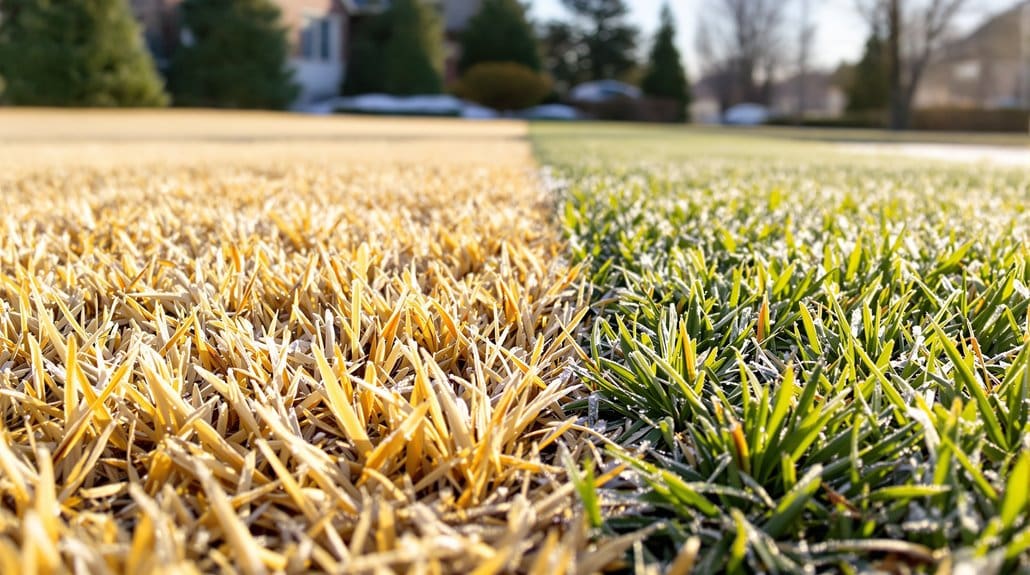
When your lawn turns brown, don’t panic — start by thinking about timing, species, and recent weather, because those three things usually tell the story. Step 1: Identify your grass. One thing to ponder: cool-season grasses often go yellow-brown in sustained cold, they pause growth but their crowns and roots usually survive, so they’ll green up come spring. Warm-season types brown in cold or drought, and can tough it out for weeks. Step 2: Note the pattern and timing. Uniform straw-colored browning points to dormancy; patchy dead-looking spots often mean pests or disease. Here’s the thing, try the tug or check roots before you overreact; I’ve rushed to reseed too soon, and regretted it. Now, wait and observe. If you maintain your lawn regularly, basic practices and the right equipment help keep fescue lawns healthy through seasonal dormancy.
Immediate Do’s and Don’ts to Protect Dormant Turf
Now, here’s what to do: limit foot traffic and keep heavy equipment off the brown lawn, because those crowns are fragile and you’ll regret compacting them when spring arrives. One thing to contemplate — don’t fertilize or apply weed controls while turf is fully dormant; I’ve learned the hard way that early nitrogen just stresses crowns and invites weak, disease-prone growth later. Here’s the thing: water only for survival during long dry spells, skip any scheduled spring-type irrigation, and wait until visible green-up before treating or overseeding to give your lawn the best chance to recover. Consider using a home core aerator to relieve compaction and promote healthier spring recovery.
Limit Foot Traffic
You’ll usually want to treat dormant turf like it’s fragile — because it is — so avoid strolls, games, or heavy foot traffic that can crush crowns and compact the shallow roots just when the grass can least afford it. Now, here’s what to do: keep off the lawn except for essentials, and remember that your dormant turf grass is doing its best underground. One thing to bear in mind is pets and gear — repeated pressure creates compressed crowns and thin spots that may not come back, trust me, I’ve learned the hard way. Use temporary pathways like plywood or stepping boards if you must cross the yard. Here’s the thing, postpone aeration and heavy work until growth returns. You’ll thank yourself in spring. Consider keeping basic lawn care gear on hand so you can handle seasonal needs efficiently.
Skip Fertilizer Applications
Almost always resist the urge to feed a sleeping lawn, because applying nitrogen or any pushy fertilizer while roots are inactive will usually do more harm than good — I learned that the hard way after a rookie late-fall feeding left burned crowns and a mess to fix come spring. Now, treat dormant turf gently: skip fertilizer through winter, don’t trigger weak, shallow growth, and wait until active spring green-up before any regular feeding. One thing worth pondering, if you need a winterizing treatment, pick a low-nitrogen, slow-release product labeled safe for your grass and follow timing closely. Here’s the thing, avoid quick fixes like weed-and-feed or soil stimulants on dormant grass; they sit unused and can hurt recovery.
Withhold Weed Controls
Withhold weedkillers while your lawn’s brown and resting, because spraying herbicides on dormant grass usually does more harm than good — I learned that the hard way when a late-season spot treatment burned crowns and left patches to nurse back in spring. Step 1 — Don’t spray: When turf is dormant, weedkillers often won’t move into plants, and you risk injuring turf crowns, so wait for green-up. One thing to weigh — pull by hand: If weeds bother you now, remove them mechanically rather than chemically to protect stressed crowns. Here’s the thing, timing matters: hold off on pre-emergents until soil temps and active growth match label directions. If it’s urgent, consult a local pro.
When Browning Means Disease, Pests, or Permanent Damage
If your lawn goes brown in patchy, irregular spots rather than turning an even straw color, don’t assume it’s just sleep — that pattern often signals disease, pests, or real damage, and you’ll want to act differently than you would for harmless dormancy. Now, check for signs: a musty smell or gray-black spores means fungal trouble, and if stressed turf pulls out easily with brown, mushy roots, think grub damage or severe disease. One thing worth considering, you might’ve overwatered or mowed too short before—been there—and those mistakes invite problems. Here’s the thing: dig into roots gently, look for dead versus dormant crowns, and prioritize diagnosis over guesswork. If roots are gone, it’s not sleep; it’s Dead turf.
Recovery and Repair: Watering, Overseeding, and When to Replace
Starting recovery means being deliberate, not desperate — you’ll want to nurse the lawn back with the right water, then decide whether to seed, sod, or walk away. Step 1, water carefully: short, survival watering keeps crowns alive, about 1" monthly for cool-season or every 1–2 weeks for warm, don’t drench and provoke weak growth. One thing to bear in mind, dethatch and core aerate before you overseed in early fall, use a starter fertilizer higher in phosphorus to help roots, and keep seedbeds lightly moist until seedlings establish. Here’s the thing: if roots are mushy or tufts pull out, remove dead turf, amend soil, reseed or sod patches; full replacement is only when most crowns are Lawn Dead. Don't rush, raise mower height, and give it time.
Some Questions Answered
Is October Too Late to Mow?
Yes — October isn’t automatically too late to mow. Now, lower clutch and keep blade height at 3–3½ inches, cutting only the top third, and use leaf mulching to feed soil instead of raking. One thing to contemplate: skip late fertilization, avoid mowing saturated turf to prevent soil compaction, and stop before the first hard frost. Here’s the thing, you’ll learn from past scalping mistakes — go gentle, you’ve got this.
Will Grass Grow Back if It Is Brown?
Absolutely — usually it will, even if it looks like a million-year nap; winter recovery hinges on root health and the right growth triggers. Now, water brown patches as a watering cue for several days, check crowns and roots, and resist ripping up turf too fast. One thing worth noting: dormant grass resists tugging, dead grass pulls out. Here’s the thing, be patient, fix watering, then watch green return.
How to Tell if Your Lawn Is Stressed?
You’ll tell a stressed lawn by checking root depth, compacted soil, shade stress, and disease signs. Now, dig a small plug, wash roots—if they’re shallow or mushy, you’ve got trouble; if compacted, aerate, not thatch rake. One thing to ponder: water deeply for days, watch for green from the base. Here’s the thing, we’ve all overreacted before—start gentle, repair hotspots, call pros for mystery diseases.
How to Revive a Completely Dead Lawn?
About 70% of lawns recover faster with proper prep—so don’t guess. Now, dig to confirm death, then do soil remediation, remove dead turf, loosen compacted soil, and proceed with turf replacement by sod, plugs, or seed, keeping irrigation upgrades in mind for steady moisture. One thing to contemplate is shade management before reseeding. Here’s the thing: treat pests or fungus first, then seed, water gently, and be patient.